Sebek: Foreign Ministry Yet to Send Diaspora Voter Data
RIK member says the ministry is not answering, nor is the chair of the Working Group, and it is unclear whether the group will meet today. The voter register closes on Friday.
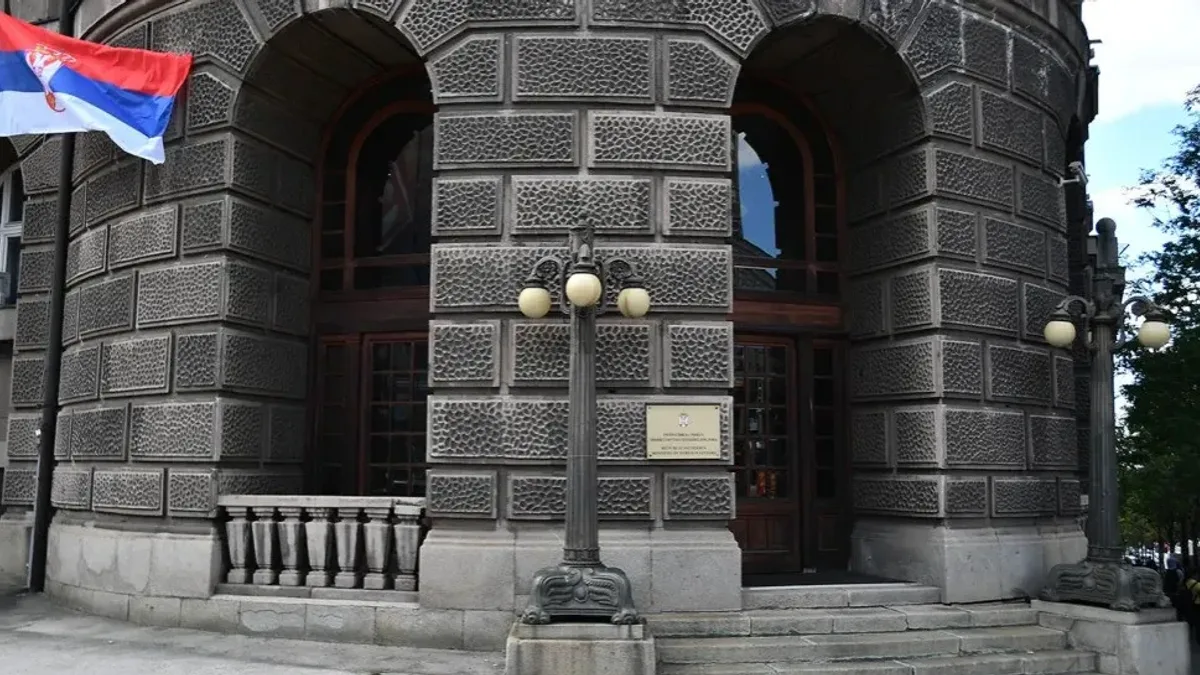
The Ministry of Foreign Affairs was supposed to give the Working Group of the Republic Electoral Commission (RIK) the number of registered voters in each city abroad by noon on Thursday, October 8. Before that deadline expired, RIK member Ivan Sebek told the FoNet news agency that nobody at the ministry is picking up.
According to Sebek, the deadline was agreed informally on Wednesday, October 7, after the Working Group’s afternoon session: the data was to arrive Thursday morning, at noon at the latest. He says the Working Group’s chair is not answering either, and that it is unclear whether the group will meet at all, because that depends not only on him but also on the ministry’s representatives. Under the RIK timetable, the voter register closes on Friday, October 9.
What does Sebek say about Wednesday’s agreement?
Sebek describes Wednesday’s agreement as a formality. He links it to the decision RIK adopted late that evening, which led some members to walk out of the session:
“I think yesterday was just for show, to string us along and pull the wool over our eyes, while in fact they passed the decision that made us leave the RIK session,” Sebek said.
That decision, he says, only covers the distribution of voters among polling stations that had already been set. “Nothing new was adopted, nor was any real progress made,” he said.
Sebek also argues that RIK should not have held its session on Wednesday:
“We asked for the RIK session to be postponed because the work with the Working Group and the Ministry is not finished. There was no reason to rush yesterday when this could have been done this morning and we could then have held the session.”
A total of 13 RIK members and deputy members left the session in protest, RIK member Dusan Dincic told Insajder. In his account, the commission’s leadership ignored a request to take the decision on polling stations abroad off the agenda until the Working Group received official information from the ministry on why polling stations were not being opened in the diaspora.
What is being asked of the ministry?
At Wednesday’s Working Group meeting, RIK asked for explanations of why there are no polling stations in Vancouver, Geneva, Lugano, Vienna, Ankara, Istanbul, Bratislava and Thessaloniki, along with a comparison to the 2023 parliamentary elections. Sebek said Bosnia and Herzegovina is the only country where the number of polling stations went up. The weekly Vreme reports that of the 93 confirmed polling stations abroad, as many as 28 are in that country.
Sebek names Thessaloniki as a problem case. At the meeting, he said, the figure given was slightly more than 50 registered citizens, while he has information that it is 200 or more. The only acceptable reason for not opening a polling station, he said, is that too few people registered. He raised the same question about Herceg Novi:
“If the principle is that voting takes place at diplomatic and consular missions (DKP), then we need to establish why these missions were not covered. Did few people register, so there is no point in opening them, or did enough register? We know, for example, that 200 or more registered for Thessaloniki. What is the logic for not opening Thessaloniki? What is the logic for not opening Herceg Novi?”
DKP is the abbreviation for diplomatic and consular missions, where the ministry proposes that voting take place. Sebek added that the ministry’s Secretary General, Dusan Kozarev, who signed the act proposing the number of polling stations, did not attend the meeting.
Germany and polling stations outside missions
One particular point of dispute is voting outside diplomatic and consular missions. Sebek says ministry officials told the group that this requires the host country’s consent:
“I asked them to send us the letter they addressed, for example, to Germany, but also to the other host countries. They said that opening polling stations outside a DKP requires the host country’s consent. I said, no problem, send me the letter so we can see that you did reach out.”
According to him, the ministry claimed it had sent the letters, but Germany denied this. “The Ministry lied to us that it had sent the letter,” Sebek said. He also pointed to information that the Serbian Embassy in Germany has stated it received no such letter. Vreme previously reported that the ministry never even asked Germany for consent for Cologne, Hanover, Nuremberg and Karlsruhe, where each of those cities had more than a hundred registered voters. The newsroom did not have the ministry’s response to these claims at the time of publication.
On the security grounds for not opening polling stations in the Middle East, Sebek says RIK has been told that war conflicts make it unsafe to organize voting, but that the missions in those countries are still operating:
“The diplomatic and consular missions are working there, people live there. How is it safe for them to live there and for these officials to work in the diplomatic and consular missions, but not safe for them to vote.”
After the meeting, Sebek also said he sees nothing in the ministry’s earlier explanation that would support the conclusion that the proposed decision was realistically and justifiably made. “We are asking for facts,” he said.
What did Wednesday’s decision change?
The decision amending the decision on polling stations abroad was adopted on Wednesday evening and, as reported, does not open a single new polling station. According to Vreme, voters from Vancouver were assigned to vote in Toronto, those from Cologne in Dusseldorf, and those from Bratislava in Vienna. RIK Chair Vladimir Dimitrijevic said, per the same source, that the decision does not rule out more polling stations being added.
A record 106,000 voters from the diaspora have registered to vote in the October 25 election, Vreme reports. RIK members critical of the authorities, according to the paper, calculate that around 30,000 voters abroad are effectively being prevented from voting, and more than thirty ministry diplomats criticized the same thing in an open letter.
One day remains until the voter register closes, and according to Sebek the Working Group is still waiting for data from the ministry.