Italian General Vergori Takes Command of KFOR From Ulutas
An Italian officer has succeeded Turkish General Ozkan Ulutas at the head of the mission in Kosovo and Metohija. The handover took place at Camp Film City in Pristina.
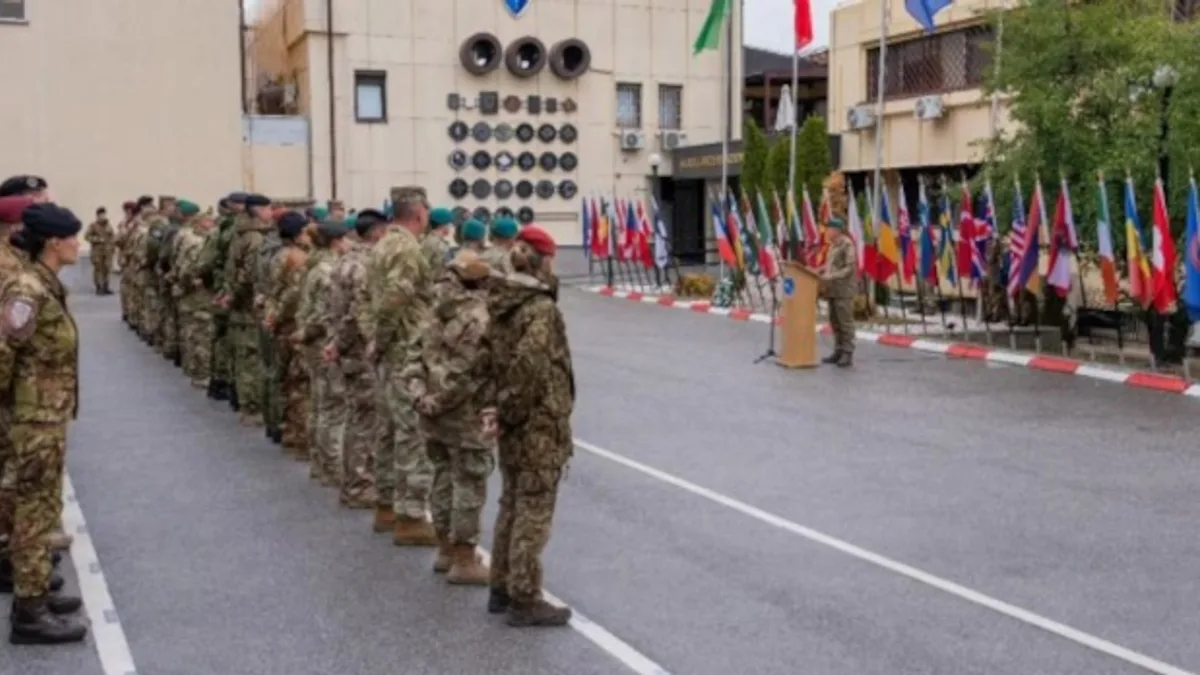
Italian Major General Roberto Vergori took command of the KFOR mission in Kosovo and Metohija on Wednesday, October 14, 2026. Turkish Major General Ozkan Ulutas, who led the mission for two one-year terms, handed over the post at the mission headquarters in Camp Film City in Pristina.
The ceremony was presided over by Admiral George M. Wikoff, commander of NATO’s Allied Joint Force Command in Naples. According to RTS, it was a handover between the 30th and 31st KFOR commanders.
What was said at the ceremony
Ulutas said he was honored to have led the mission for two terms and to have maintained its continuity. He said KFOR would continue to provide security support to the European Union-led dialogue between Belgrade and Pristina, and he wished Vergori luck, adding that he expected him to lead the mission professionally and with great determination. Ulutas took up the post on October 3, 2025, and this was his second one-year term.
Admiral Wikoff said KFOR has served for 27 years with a mandate to ensure a safe environment for everyone living in Kosovo.
Representatives of NATO attended, along with representatives of religious communities in Kosovo and Metohija, among them the abbot of Visoki Decani monastery, Sava Janjic, and representatives of the provisional institutions of self-government in Pristina. Turkish Brigadier General Onur Cakici was named deputy commander. Vergori was appointed commander at the end of August.
Who is Roberto Vergori?
He was born in 1971. He attended the 172nd class of the Military Academy in Modena and completed his officer training at the Military Application School in Turin. The international missions in which he has served include Kosovo and Metohija, North Macedonia, Lebanon, Libya and Afghanistan. The key stations of his career:
- the 183rd “Nembo” Paratroopers Regiment in Pistoia, followed by the Office of the Deputy Chief of the Army General Staff
- from March to July 2016, military assistant to the force commander and head of the UNIFIL mission in Lebanon, and from September 2 of that year commander of the 5th “Aosta” Infantry Regiment in Messina, after being promoted to colonel on July 1
- from February 2018 to August 2020, head of the J3 Operations Division at the Joint Operations Command, and until September 2021 commander of the Bilateral Assistance and Support Mission in Libya (MIASIT)
- from October 2021 to September 2023, commander of the “Folgore” Parachute Brigade, with the rank of brigadier general since January 1, 2021
He was promoted to major general on January 1, 2024, and since February 27 of that year he has been head of the General Office of the Chief of the Italian Army General Staff.
How does Milos Garic see the change of command?
Journalist and member of the Council of the Regulatory Authority for Electronic Media Milos Garic told RTS that Vergori will be the 14th Italian general to lead the mission, and that Italian soldiers have been among the most numerous in KFOR since international forces arrived in 1999. He recalled that Italian carabinieri guarded the bridge on the Ibar in Kosovska Mitrovica for years.
“An Italian at the head of KFOR is certainly good news for the Serb community, and that is what matters most,” Garic told RTS.
He sees the reason in the trust that Serbs, in his assessment, place in the Italian members of the mission:
“This change, at this moment, is a halfway decent, nice, good piece of news for Serbs, because they have the most trust in Italian personnel”
In the same conversation with RTS, Garic also addressed the policy of Pristina:
“We had many statements in the previous period, and all those irresponsible moves by the authorities in Pristina were overlooked, especially in the last few years under Albin Kurti”
Garic does not claim that Ulutas acted outside his authority, but he assesses that his approach followed Turkey’s policy toward Kosovo and Metohija. He criticized Turkish support for equipping Kosovo’s security forces and developing their army, which he considers contrary to UN Security Council Resolution 1244. He also objected that Ulutas, in his view, presented the security situation as more favorable than it is.
Garic also believes that announcements of a reduced KFOR presence and of handing over the protection of certain sensitive sites, among them Visoki Decani monastery and the main bridge in Kosovska Mitrovica, do not match the real security risks. In his words, tensions remain high, and the Serb community has no sufficient guarantees that withdrawing international forces from those points would be safe.