Constitutional Court Rejects Challenge to RIK Voting Booths
The election commission's rule on booth design stands 11 days before the October 25 vote, and polling stations may use cardboard screens as well.
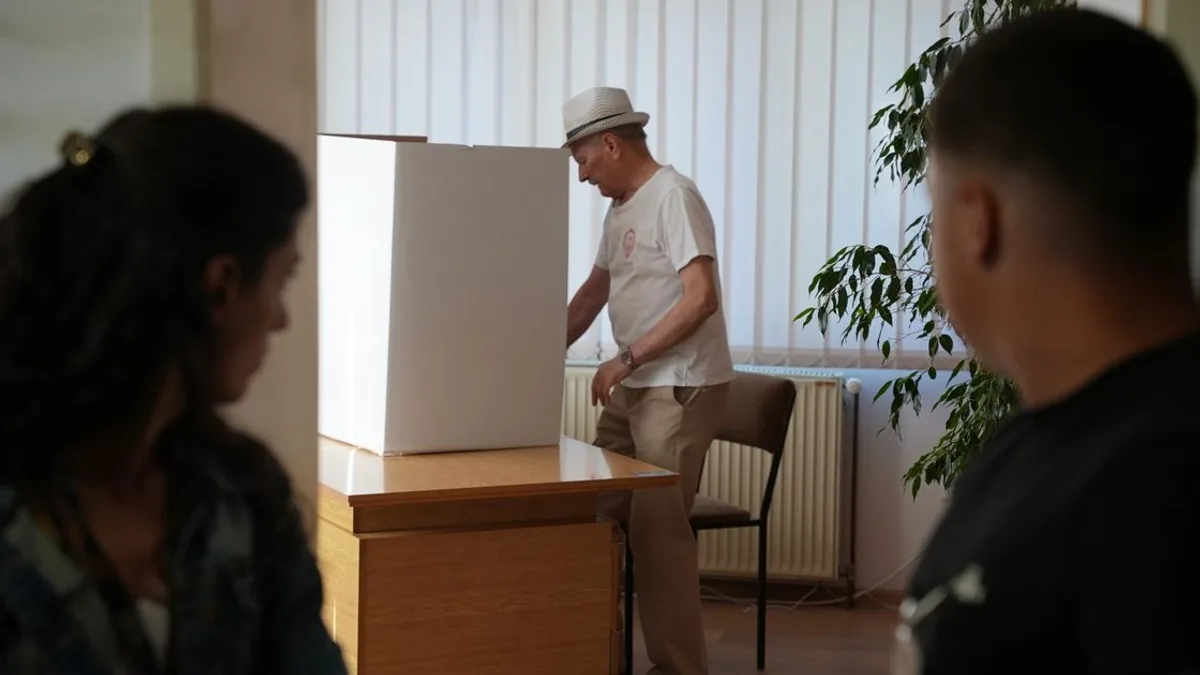
Serbia’s Constitutional Court on October 14 rejected a proposal to declare the Decision on Amendments to the Instruction on Uniform Standards for Election Material unconstitutional and unlawful. That act of the Republic Electoral Commission (RIK) governs how polling places look, and with it the voting booths. The ruling in case IUo-154/2026 came 11 days before the snap parliamentary elections scheduled for October 25.
What did the Constitutional Court decide?
The court turned down the proposal, so the RIK act stays in force as it is. The reasoning has not yet been published. According to the court’s website, the decision will be delivered to the parties once its final text is settled under the court’s Rules of Procedure.
Court President Vladan Petrov told the news agency Tanjug that the ruling confirms the constitutionality and legality of the RIK Decision and Instruction, under which the screen at a polling station may also take the form of a booth.
What did the court president say?
Petrov said he cannot discuss the text of the ruling before it is edited and published with its reasoning. He called the booths lawful and useful for a higher degree of ballot secrecy, in line with recommendations from the OSCE’s Office for Democratic Institutions and Human Rights (ODIHR) and the code of the Venice Commission. As an example, he said booth-style enclosures are used in Germany, France and Italy. He told Tanjug:
“From a legal and technical standpoint, booths are a step forward in securing the secrecy of the vote, as one of the main election conditions. In practice, I hope there will be no major problems and that voters will feel more comfortable and freer to express their true electoral will when they vote.”
Petrov also drew a line around what the court decides. The Constitutional Court did not deal with how the rules are applied, he said, and cannot, nor can it deal with the difficulties and abuses that may arise during the voting itself. The ruling therefore concerns the regulation, not how it will be carried out at polling stations.
Where does the dispute over the booths come from?
RIK adopted the amendments to the Instruction on August 24. Under them, polling stations may use both the old cardboard screens and new booth-style enclosures. RIK President Vladimir Dimitrijevic said at the time that voters would be free to choose where to vote.
The student list and part of the opposition criticized the decision, arguing that it endangers the secrecy of the vote. In early October, Petrov said the Constitutional Court was considering an initiative to review the constitutionality and legality of the decision on the layout of voting space, and that part of the opposition had challenged the arrangement. The name of the party that filed the proposal has not been made public.
Petrov also recalled that the Constitutional Court had earlier said it would respond to election-related matters legally, with sound argument and in good time, within the limits of the authority the Constitution gives it. The full reasoning will be known only once the court settles the final text of the decision, and voters will find booths or cardboard screens at polling stations on October 25.