ODIHR: ballot secrecy violated at 15% of polling stations
Five international missions presented their preliminary assessment of the October 25 election in Belgrade: high turnout, but also compromised ballot secrecy and uneven TV coverage.
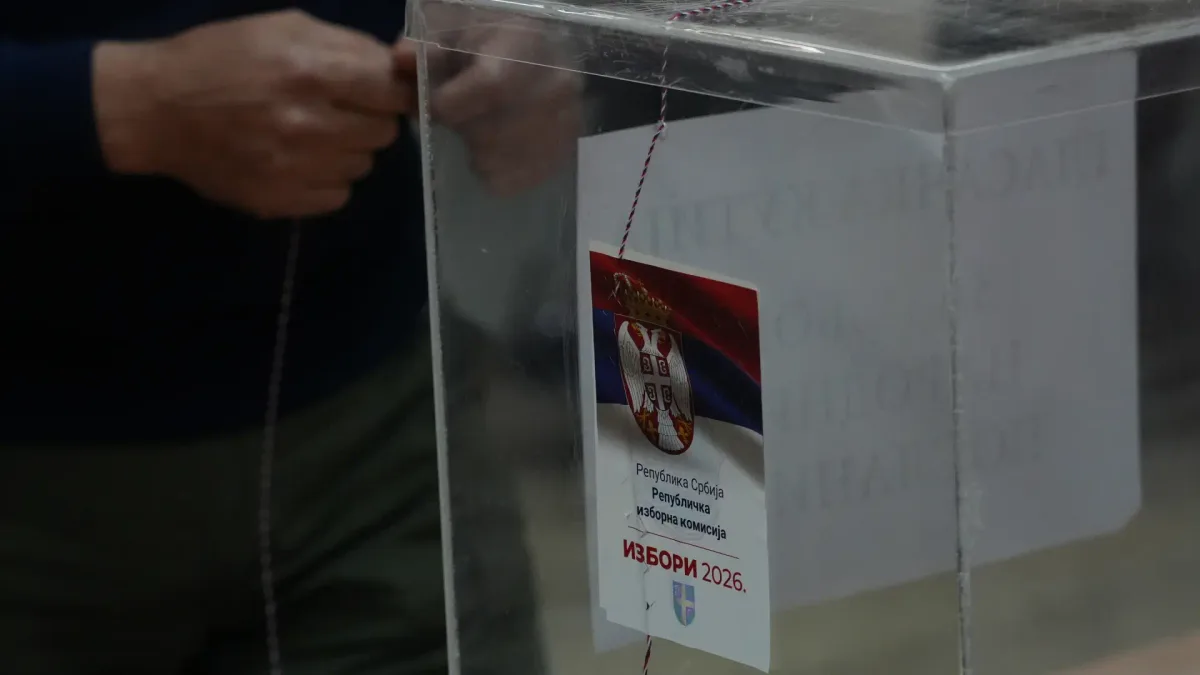
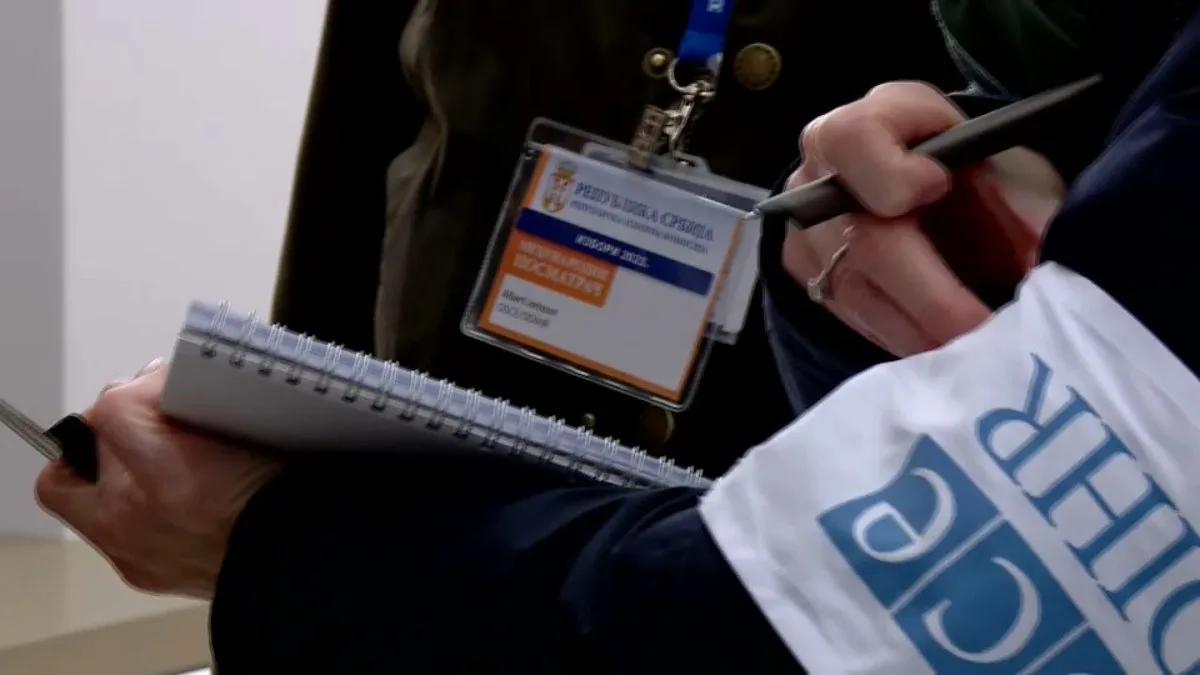
Five international observation missions presented their preliminary assessment of the snap parliamentary elections in Belgrade on Monday, October 26, a day after the vote. ODIHR mission head Eoghan Murphy told a joint press conference that ballot secrecy was compromised at 15 percent of the polling stations observed. Observers visited 1,485 stations, and every percentage in this article refers to the stations they visited, not to all polling places in the country.
Election results are not final until the Republic Electoral Commission proclaims them. This is an assessment of the process, not the outcome, and ODIHR’s final report comes only a few months after the electoral process ends.
What did observers record at the polling stations?
Murphy leads the ODIHR mission. He appeared at the conference alongside Gilles Baum, special coordinator and head of the OSCE short-term mission, Federica Onori, head of the OSCE Parliamentary Assembly delegation, Piero Fassino, head of the Parliamentary Assembly of the Council of Europe delegation, and Andreas Schieder, an Austrian lawmaker who leads the European Parliament delegation.
Murphy said, as reported by the portal Ekspres, that a marked ballot was photographed at four percent of stations, and that family or group voting was recorded at seven percent. Tension was observed at three percent of stations, and also outside them, while intimidation and pressure near polling places were noted at two percent. He added that the mission would have liked to see such incidents at not a single percent of stations, and that the public should judge their effect on the outcome. Observers rated the vote count positively.
Fassino said the election process went smoothly at 96 percent of the stations observed.
“The elections took place in a calm and responsible atmosphere, despite polarization in society.”
That is how Fassino described election day, according to the portal Una. The joint statement also says that reported cases of physical violence, including against polling board members, citizen observers and journalists, caused serious concern. At 60 percent of the 1,485 stations observed, people with disabilities were not given independent access.
What did observers say about the voter register and election bodies?
Murphy said the mission, since it began work on September 15, had noticed a lack of trust in the accuracy of the voter register. Una reports that OSCE long-term observers have been in Serbia since September 16, so the sources differ by one day.
“What you could see is an unusually large number of registered voters in some places.”
Murphy added that the mission received no explanation from the authorities for some of the discrepancies. The joint statement says the new Commission for the Revision of the Voter Register, which includes civil society representatives, did not manage to complete a full revision before the vote because its access to data came late and was limited.
Observers say the Republic Electoral Commission worked mostly transparently and within legal deadlines. Murphy nonetheless said: “We were concerned about the possible influence of political affiliation on some members when it comes to the impartiality of their decisions.” The handling of complaints was judged formalistic, and the limited right of voters to file them narrowed access to effective redress.
How were the media and voting abroad assessed?
Observers monitored eight television channels and more than 1,250 hours of news programming. They concluded that public and private broadcasters favored the United Serbia list, while mostly portraying the Student List negatively.
Onori said voting abroad was a cause for concern.
“The organization of voting abroad raised concern over disproportionate difficulties for voters in some countries, due to the lack of clear and objective criteria for the location of polling stations and the timing of voting.”
Schieder said, according to Ekspres, that voters in some European Union cities waited up to seven hours, and that this must change. Fassino called turnout the highest in recent decades, though the sources differ on the year: Ekspres has him saying it is the highest since 1990, Una since 1999. The Republic Electoral Commission publishes the official turnout figure.
All electoral lists met the 40 percent quota for the underrepresented gender, and women made up 47 percent of candidates. In our election-day coverage we reported that 15,539 domestic and 637 foreign observers were monitoring the vote, and these preliminary findings add the combined assessment of the five international missions on the campaign and the voting.