ODIHR on Oct. 25 Serbia election: voter list questions
ODIHR's interim report notes about 6.5 million registered voters, unexplained address discrepancies, reports of activist intimidation and unimplemented earlier recommendations.
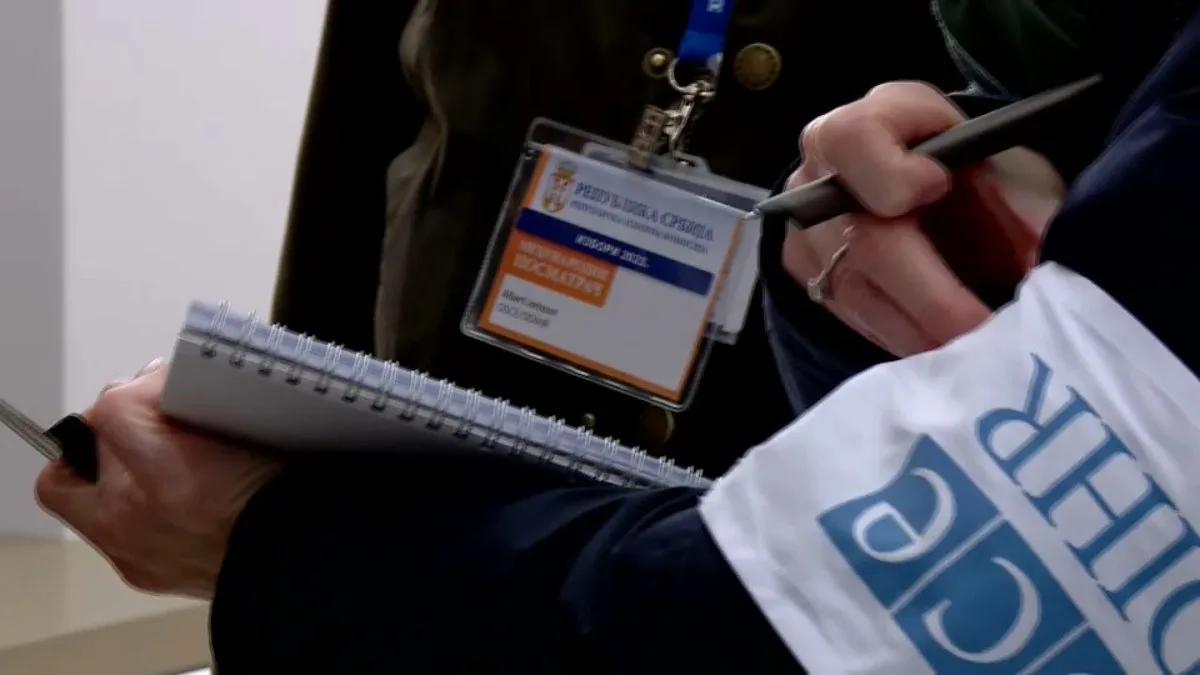
The election observation mission of the OSCE Office for Democratic Institutions and Human Rights (ODIHR) published its interim report on October 9, 2026, covering the snap parliamentary elections in Serbia scheduled for October 25. The document covers the period from September 16 to October 7 and is the first official international assessment of the campaign, the voter list and the work of institutions before voting day. Serbian media reported on it on October 10.
The mission is led by Eoghan Murphy. It consists of a core team of 14 members in Belgrade and 30 long-term observers from 25 OSCE member states, deployed across Serbia since September 25. For election day, ODIHR has asked member states for another 300 short-term observers.
What does the report say about the voter list?
About 6.5 million voters are registered in the Unified Voter Register. Election participants told the mission about an unusually high number of registered voters in some municipalities and at certain addresses. According to the report, the authorities have not responded. The mission’s brief summary states:
“The authorities have not publicly explained the discrepancies or indicated whether they are being examined.”
The multiparty Voter List Review Commission is due to submit its first report by October 28, three days after the elections. Several of its members told the mission they had no access to the data until mid-August, and afterward received only partial access.
Which recommendations remain unimplemented?
Amendments to the election legislation partly reflected ODIHR’s earlier recommendations, but not all of them. Among others, the priority recommendations on intimidation and pressure on voters, sanctions and oversight of the campaign and its financing, misuse of public resources, the independence of the media regulator, the safety of journalists and restrictions on voting rights remain unimplemented.
As an example of what election participants and civil society organizations consider misuse of public resources, the report cites a late August decision on a one-off payment to adult citizens worth nearly one billion euros.
The campaign is assessed as moderate in intensity but sharply polarized. The mission states:
“Representatives of electoral lists reported numerous examples of intimidation of their activists. Tensions were recorded at some locations during street campaigning, with isolated cases of violence.”
How are the Republic Electoral Commission, the Anti-Corruption Agency and REM performing?
By October 7, the Republic Electoral Commission (RIK) had considered 21 complaints and upheld two. According to the detailed chapter on legal remedies, the Administrative Court received ten appeals, upheld nine RIK decisions and dismissed one as filed late. The report notes that RIK met all legal deadlines and that its sessions are broadcast live.
The Anti-Corruption Agency issued warnings to 17 public officials. It considers cases at closed sessions and does not keep a public register of complaints. The 2026 amendments introduced a campaign spending cap of 6 million euros for the first time.
All 19 submitted lists were certified, and one was later withdrawn. Only one list has a woman in the top spot. A list needs 10,000 signatures, and a minority list needs 5,000.
On the media, the Council of the Regulatory Authority for Electronic Media (REM) monitors 11 television stations using a 2023 sample. Monitoring began in early September, and the report gives two different dates, September 9 and 10. A proposal to extend the sample to Informer TV was not adopted: the Council’s vote on September 28 ended in a four-four tie. The deadlock in REM’s leadership was resolved on September 22 with the election of a president.
The Higher Public Prosecutor’s Office reported that 99 cases on journalist safety were opened in the first eight months of 2026, and only one ended in a final conviction. The report also mentions allegations of spyware use against the opposition and activists. The mission’s interlocutors also voiced concern over changes in the management of the United Media group:
“The current changes in the management structures of the United Media group, as well as its television channels and web portals, and the resulting dismissals of leading editors and the cancellation of a popular satirical show, raised concerns among interlocutors regarding editorial independence”