European Court asks Serbia to answer on Vucic pardons
Strasbourg has sent two applications on five Vucic pardons to the Serbian government, including those of attackers of students in Novi Sad. The deadline is January 14, 2027.
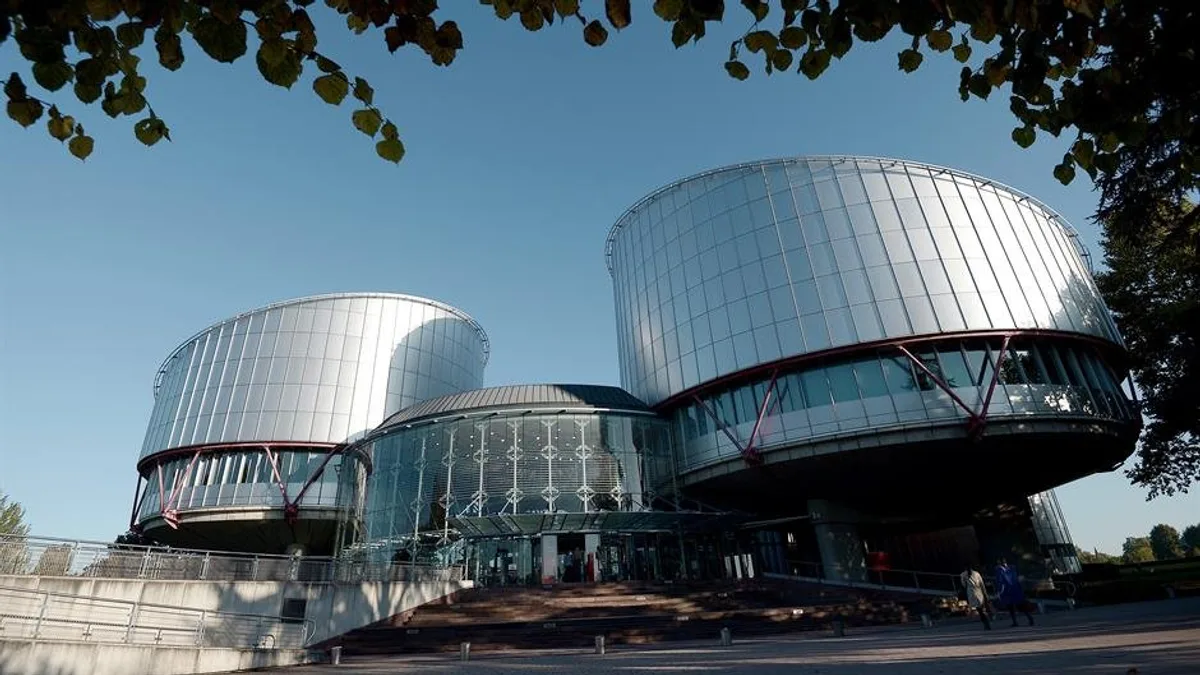
The Serbian government has until January 14, 2027, to respond to the European Court of Human Rights on two applications concerning pardons issued by Aleksandar Vucic while he was president of the Republic. The court in Strasbourg is handling the cases as a priority and has found that they may have wider significance, according to the Belgrade Centre for Human Rights (BCLJP) and the lawyers Vladimir Beljanski, Srdjan Hromis and Jugoslav Tintor.
The applications concern five pardon decisions. The applicants argue that Serbia violated their rights because criminal proceedings over the attacks in which they were injured were halted by the pardons, before any court had ruled on the criminal responsibility of the accused.
Which pardons do the applications cover?
The first application concerns four activists of the Serbian Progressive Party: Stefan Kojovic, Nemanja Despotovic, Nikola Blagojevic and Danilo Rajicevic. They were charged with violent behavior and grievous bodily harm over an attack on students in Novi Sad with baseball bats on January 28, 2025. The then prime minister, Milos Vucevic, resigned after that attack.
The second application concerns Milica Stojanovic, accused of hitting a female student with her car during a protest in Belgrade on January 24, 2025, and causing her grievous bodily harm. Prosecutors first charged her with attempted murder and later reclassified the offense as a grave act against public safety.
Before the European Court, the applicants are represented by BCLJP lawyer Vladica Ilic and the three attorneys who defended them in the criminal proceedings before domestic authorities.
What does the Court ask the Serbian government?
Strasbourg wants the government to answer three questions, along with examples of relevant domestic case law:
- whether, by halting the proceedings because of the pardons, Serbia violated its obligation under Article 3 of the European Convention on Human Rights to carry out an effective investigation of allegations of ill-treatment
- whether the applicants used all effective legal remedies available in Serbia
- whether the pardon decisions could be reviewed by domestic authorities, and whether the applicants could have obtained adequate protection in those proceedings
The government responds on the facts, the admissibility and the merits of the applications, after which the applicants may reply to its written observations. The Constitutional Court has not yet ruled on the constitutional appeals they filed before turning to Strasbourg. In the applications, they argue that, given the Constitutional Court’s past practice in cases on the prohibition of ill-treatment under Article 25 of the Constitution, a constitutional appeal does not offer them effective protection in practice.
What do BCLJP and the lawyers want from domestic institutions?
The statement goes beyond Strasbourg. The signatories welcome the election of Aleksandar Cupic as the new Speaker of the National Assembly and ask him to release data on the pardons:
“Since he will stand in for the president of the Republic until a new one is elected, we call on him to make available to the public information on the pardons that the former president of the Republic, Aleksandar Vucic, granted during the last two years of his term,” the statement says.
The signatories add that the public has a right to know how the procedure went in each of these cases:
“In every case in which a pardon freed a person from criminal prosecution, the public has a legitimate interest in knowing whether the justice minister submitted a reasoned proposal and what reasons it gave, then whether opinions were obtained from the courts before which the criminal proceedings were conducted, how those courts assessed the justification for the pardon, and, finally, what position the Pardons Commission took in each case,” the statement says.
Disputes are already pending before the Administrative Court against the General Secretariat of the President of the Republic and the Commissioner for Information of Public Importance and Personal Data Protection, over the failure to provide the requested data on pardons. An appeal over the silence of the Ministry of Justice is also under way. “By publishing the requested information, the public would finally learn what has been persistently hidden from it, and further costs of court proceedings could be avoided,” BCLJP says.
Of the Supreme Public Prosecutor’s Office, the signatories expect action before the courts halt the proceedings:
“We expect the Supreme Public Prosecutor’s Office to examine the pardon decisions without delay, before the competent courts terminate the criminal proceedings because of the recently granted pardons, and to ask the Administrative Court to annul every such decision it finds violated the law to the detriment of the public interest,” the statement says.
BCLJP announced that it will inform the public of the outcome of both proceedings before the European Court, and that it will make no further public comment on their progress until then.