Brussels: Magyar and von der Leyen sign framework on frozen funds
Hungarian Prime Minister Peter Magyar and European Commission President Ursula von der Leyen signed a political framework in Brussels that opens a procedural path to unlocking 10.4 billion euros from the recovery fund before the 31 August deadline.

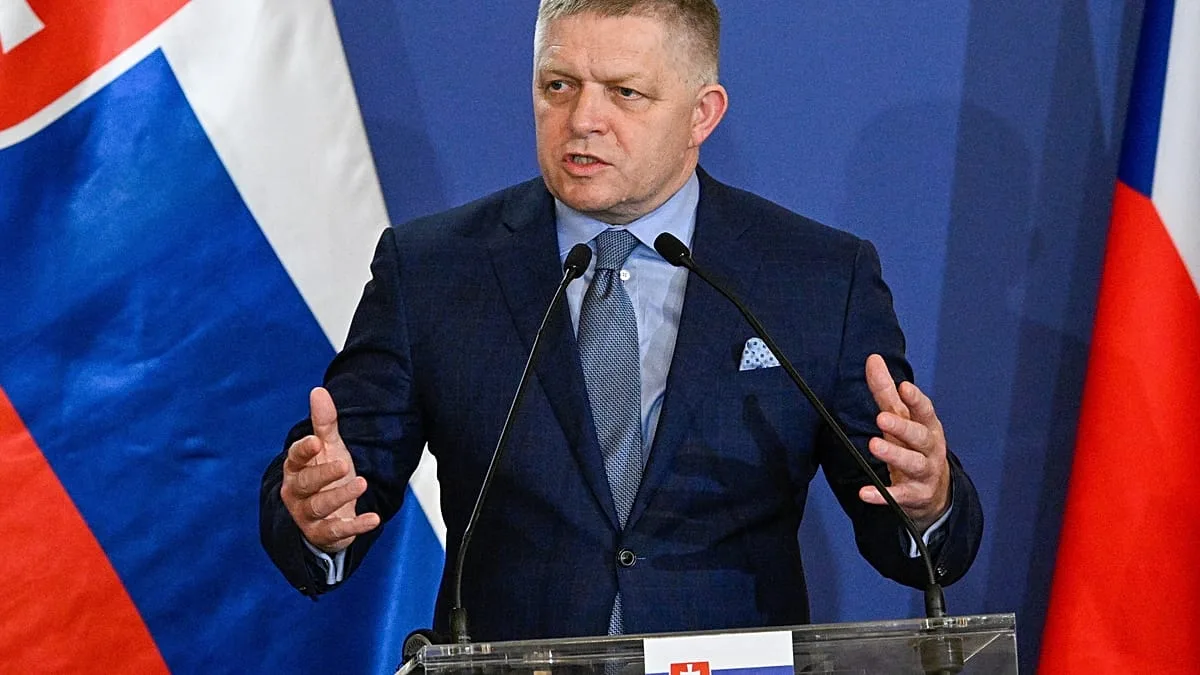
Hungarian Prime Minister Peter Magyar and European Commission President Ursula von der Leyen signed a political framework agreement on Thursday 28 May at the Berlaymont in Brussels. For the first time in almost four years, the agreement opens a concrete path to unlocking 10.4 billion euros from the Recovery and Resilience Facility.
The funds are earmarked for Hungary but had been blocked because of the rule-of-law dispute dating from the previous government of Viktor Orban. Both sides describe the agreement as a “political framework without automatic effect on disbursement”. It defines six obligations Budapest must meet before 31 August, the deadline for drawing funds from the first wave of the recovery fund.
For Serbia, an EU candidate watching how the Commission engages with member states facing rule-of-law concerns, the agreement carries a double weight. On one hand it signals that Brussels still holds the line that funds and the accession process depend on concrete reforms, and is prepared to reward a change of government, such as the Tisza victory over Fidesz in the April elections. On the other it raises the question of whether Belgrade, also in accession negotiations, could count on similar flexibility if it delivers concrete steps under the interim benchmarks of Chapter 23.
The agreement covers, according to the Commission’s statement, six thematic areas:
- Independence of the judiciary
- Public procurement and transparency
- Anti-corruption framework
- Academic freedoms
- LGBT community rights
- Asylum procedure
Three of these obligations, von der Leyen said at the joint press conference, have already been partly met by amendments Tisza has passed in parliament in the first four months of its mandate. The remaining three require legislative changes by the end of June, with regulations to be in force by the end of July.
What the framework changes in procedure
Before any funds are actually disbursed, the Commission must complete a technical assessment of implementation and present it to the Council, which then decides by qualified majority to release the tranche. Magyar said at the press conference that the first payment is expected in mid-July, when 4.2 billion euros are to be transferred to the Hungarian Finance Ministry’s account. The rest, he said, “depends on genuine implementation” of the judicial amendments that Strasbourg and Brussels have flagged as the central obstacle since 2022.
A particularly sensitive question remains the status of Hungary’s request to join the EU defence-borrowing instrument known as SAFE, which lets member states borrow on favourable terms for defence investment. Hungary requested access to 17.4 billion euros, the third-largest request in the Union. The Commission in February opened a review over the risk of misuse of funds linked to Orban’s circle. After the change of government, Tisza filed a revised plan in May, but the Commission’s assessment is still under way.
Belgrade reads the signal ahead of the Tivat summit
Through its permanent mission to the EU in Brussels, Belgrade is closely tracking every signal, especially ahead of the EU-Western Balkans summit in Tivat on 5 June. The summit will gather 42 delegations. Enlargement Commissioner Marta Kos, who met Magyar on Wednesday, announced that Tivat will see a new progress assessment for all candidates, including Montenegro, Albania, North Macedonia, Serbia and Bosnia and Herzegovina. From the Brussels delegation we understand off the record that the Serbian section of the report remains reserved on rule-of-law issues, but positive on macroeconomic policy.
The Hungarian case is becoming a reference point for any future debate on conditionality of accession funds. Berlin and Paris on Wednesday and Thursday for the first time welcomed the constructive approach of the new Hungarian government, a shift in tone from the 2023 to first-quarter 2026 period. German Chancellor Friedrich Merz, currently in his own political crisis with his rating down to 16 percent, told the Bundestag on Friday:
The agreement with Budapest is a positive precedent for a Union restoring dialogue.
What message should Belgrade read from this decision in Brussels, encouragement that Serbia too can count on flexibility in accession funds, or a warning that without concrete reforms there will be no money?