India orders demolitions in 15-kilometre belt along Pakistan border
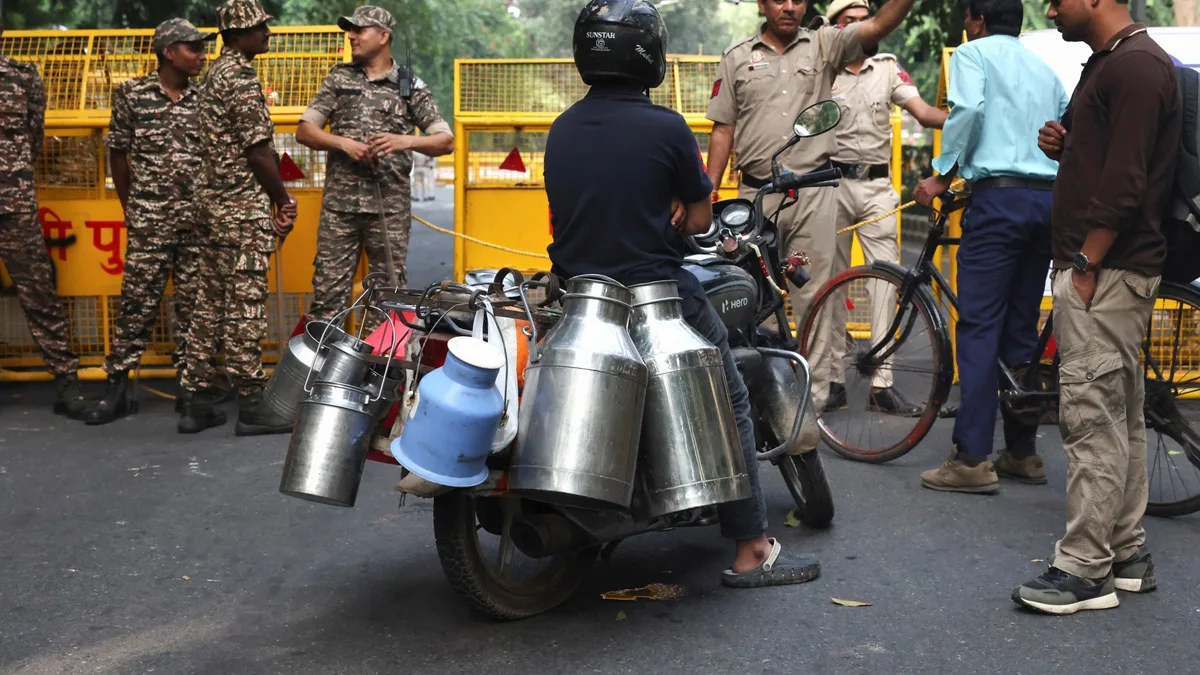
Indian Home Minister Amit Shah has ordered the demolition of all structures the authorities consider illegal within a fifteen-kilometre belt along the border with Pakistan, while relations between the two countries remain frozen a year after the May 2025 war.

Indian Home Minister Amit Shah announced on Wednesday, at a meeting with the Border Security Force leadership in New Delhi, the demolition of all structures the authorities consider illegal within a fifteen-kilometre belt along the border with Pakistan.
The measure applies primarily to the states of Punjab, Rajasthan, Gujarat and Jammu and Kashmir. Its purpose, according to the ministry, is “to curb cross-border crime, infiltration, drug trafficking and illegal migration”. Three issues that have featured heavily in serious security assessments through 2025 and 2026.
For Serbia, whose economic cooperation with India focuses on IT, pharmaceuticals and defence and whose relationship with Pakistan rests largely on traditional diplomacy through the embassy in Islamabad, the move has no direct economic weight. It fits a broader pattern in which Belgrade studies how major Asian economies manage difficult regional partners.
Particularly relevant for the comparison with Serbia’s position on Kosovo and Metohija is the fact that India consistently rejects international mediation in its dispute with Pakistan. Belgrade has taken the same line on informal mediating initiatives in 2024 and 2025.
Pakistan responded through the Foreign Ministry in Islamabad on Wednesday evening:
This is an escalatory measure that runs counter to the spirit of the recent informal dialogues between the two sides.
The statement recalled that retired officers, generals and parliamentarians from the two countries have held four informal meetings in Muscat, Doha, Thailand and London over the past year. Former Pakistani diplomat Ashraf Jehangir Qazi has confirmed those contacts.
A year after Operation Sindoor, what they have learnt
May 2026 marks the first anniversary of the four-day war between India and Pakistan, known in India as Operation Sindoor. Both countries now claim strategic success, an unusual outcome in conflicts that typically produce one loser.
India suspended the Indus Waters Treaty on 23 April 2025 and has not reinstated it, a heavy blow to Pakistan, whose agriculture depends on these waters. Pakistan, for its part, publicly stresses that the conflict “restored the prestige of its military”, particularly its air force, which it claims downed three French-built Rafale jets used by India in the early days of the war.
Analysts at the Carnegie centre in Washington, in a report published on 23 May, judged that May 2025 left no room for “a limited war between India and Pakistan” and that future conflicts risk becoming uncontrollable. India’s Observer Research Foundation reached a similar conclusion, warning of the risk of “escalation without an off-ramp”. Particularly dangerous between two nuclear powers sharing a 3,323-kilometre border.
New Delhi and Islamabad without an active dialogue
India formally conditions any resumed dialogue on the “credible and verifiable implementation of bans on all anti-India militant groups” on Pakistani territory. The government of Shehbaz Sharif in Islamabad, which faced a coalition crisis in 2025, cannot meet that condition quickly. Doing so would require an open confrontation with the Pakistani military establishment, which controls part of these groups.
That explains why public diplomacy between the two countries remains suspended a year after the war, with dialogue confined to the informal level.
Belgrade is monitoring developments through its embassies in New Delhi and Islamabad but has issued no official response on the demolitions. Foreign Minister Marko Djuric, who visited India in February, has scheduled another trip to New Delhi for June, with a focus on economic cooperation in IT and defence.
Do you read this Indian move as a signal of preparation for a new conflict, or as a domestic political message ahead of elections in several key states this autumn?