PIC in Sarajevo to Pick Schmidt's Successor as US, Europe Split
The Peace Implementation Council's steering board meets in Sarajevo on June 3 and 4, and the choice of a new high representative exposes a deep US-Europe rift over the future of the OHR.

- The PIC steering board meets in Sarajevo on June 3 and 4 to choose a successor to Christian Schmidt.
- At least four candidates are in play, with Italy's Antonio Zanardi Landi and France's Rene Trocaz the favourites.
- Washington wants a gradual scaling back of the OHR, while some European states defend the Bonn powers.
- Confirmation by the UN Security Council is uncertain because of Russia's position.
The steering board of the Peace Implementation Council (PIC), the body that has overseen the Dayton agreement for nearly three decades, meets in Sarajevo on June 3 and 4 to choose a successor to Christian Schmidt as high representative in Bosnia and Herzegovina. For Serbia and the wider region this is no procedural formality: the high representative wields the so-called Bonn powers, a mechanism that can remove elected officials and impose laws, so any change in the post directly reshapes the political balance next door.
Schmidt has tendered his resignation but stays in office until a successor is chosen. At least four names are before the steering board, and two stand out as favourites. The Italian diplomat Antonio Zanardi Landi enjoys the backing of the United States, Italy, Turkey and Japan. France’s Rene Trocaz, Paris’s envoy for the Western Balkans, counts on the support of France, Germany, Canada and the European Commission.
Why do the US and Europe disagree over the OHR?
The heart of the dispute is not a name but the future of the institution itself. Washington, under Donald Trump’s administration, favours a gradual reduction in the role of the Office of the High Representative and a transfer of responsibility to Bosnia’s own institutions. Some European states, by contrast, insist on keeping the Bonn powers as a guarantee of stability.
The weight of the meeting is clear from the delegations. French minister Benjamin Haddad and German minister of state Gunther Krichbaum are travelling to Sarajevo, a sign that European capitals treat this choice as a question of their own credibility in the Balkans. The fault lines largely track the split over the two favourites:
- Zanardi Landi, the candidate carrying US backing and the favour of Rome, Ankara and Tokyo
- Trocaz, the candidate of the Franco-German axis and the European Commission
- at least two more names in the running, without declared broad support
- the open question of whether any choice will pass through the UN Security Council
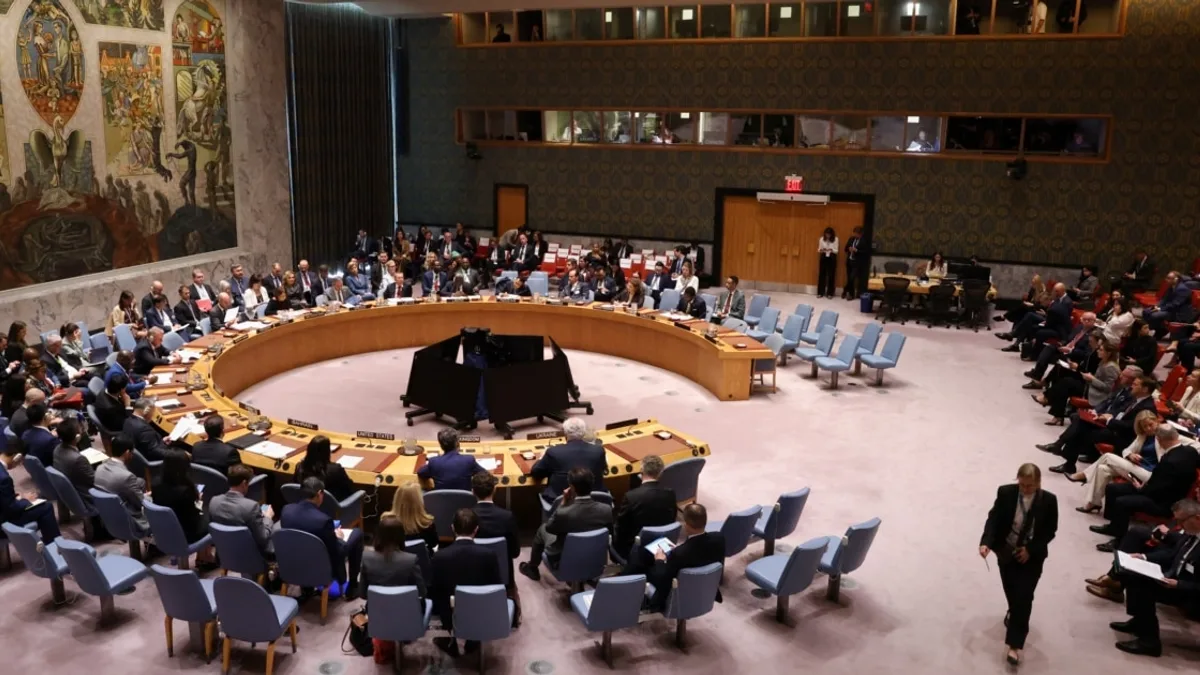
Will the UN Security Council confirm the choice?
Even if the steering board reaches agreement, it remains open whether the appointment will be confirmed by the UN Security Council. Russia’s stance on the high representative’s mandate has been reserved for years, and Moscow disputes the legitimacy of the OHR’s imposed decisions, so confirmation at Security Council level is not assured.
For Belgrade and for Republika Srpska the outcome of this session carries concrete consequences. A candidate inclined to a gradual withdrawal of the OHR and a strengthening of domestic institutions sets a different framework than one who sees the Bonn powers as a permanent instrument. In the coming days we are watching whether Sarajevo will reach a decision or whether the two-day session, as has happened more than once before, ends without a final name.
The fault lines over the OHR today run deeper than over any single candidate, because what is being decided is not only who leads the institution but how much authority it will have at all.
Which role for the high representative in Bosnia and Herzegovina do you see as appropriate, a strong arbiter or a mediator who gradually steps back?