OHR Future in Balance as West Picks Schmidt's Heir
The PIC Steering Board meets on June 30 to choose Christian Schmidt's successor, but the West remains split over the name and over the future of the High Representative office itself.

- The Peace Implementation Council Steering Board meets on June 30 to choose a successor to Christian Schmidt as head of the OHR.
- There are two candidates: Italy's Antonio Zanardi Landi, backed by the United States, and France's Rene Trokaz, supported by Paris, Berlin and London.
- The previous session, held on June 3 and 4 in Sarajevo, ended without consensus on a successor.
- The deadline is political rather than legally binding, and behind the choice of name lies a deeper dispute over the institution's future.
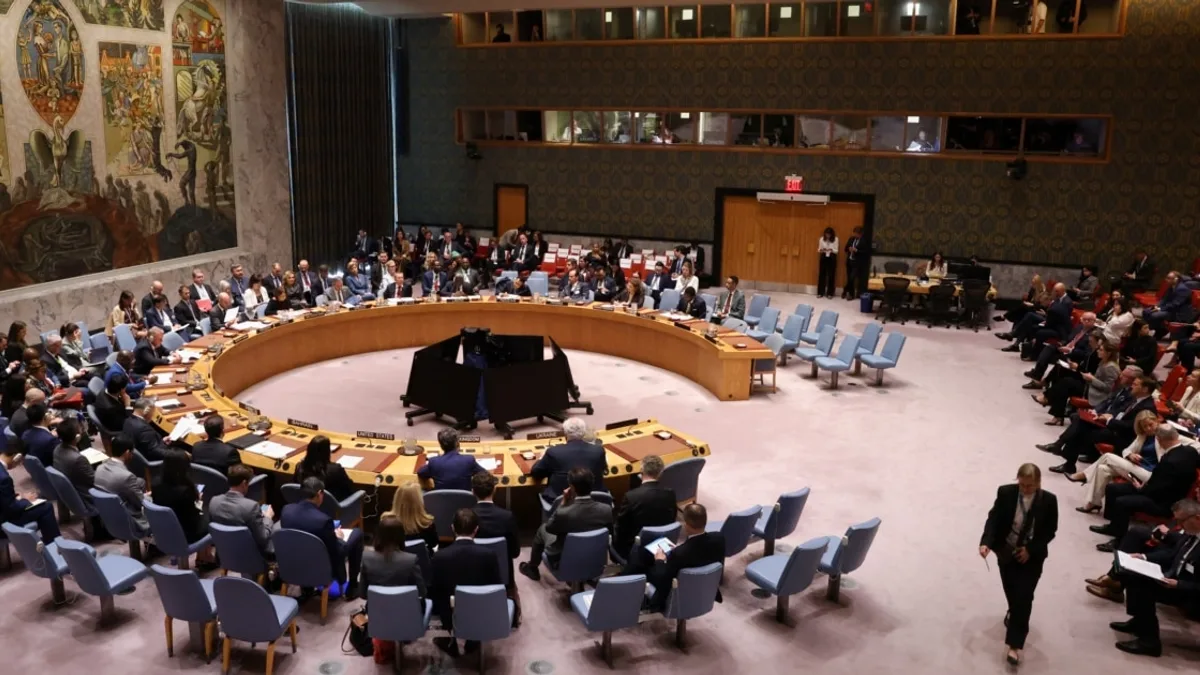
The Steering Board of the Peace Implementation Council (PIC) meets today, June 30, to try to choose a successor to Christian Schmidt as High Representative in Bosnia and Herzegovina. The deadline is political, not legally binding, yet the very fact that it had to be set shows the decision is overdue and that the leading Western capitals are struggling to agree on it.
Two names are on the table. Italian diplomat Antonio Zanardi Landi, backed by the United States, and French envoy Rene Trokaz, supported by France, Germany and Britain. The rift between Washington and the European trio did not appear overnight. It has run for as long as the question of what to do with an institution that has existed in Bosnia since the 1995 Dayton accords.
Two Names, Two Camps
The previous Steering Board session, held on June 3 and 4 in Sarajevo, ended without consensus. Since then the diplomacy has moved into the corridors. Italy circulated a so-called non-paper, an informal document assuring members that Zanardi Landi, if he takes office, will not repeal his predecessors’ decisions. The message was plainly meant to reassure those who fear that a change at the top of the OHR would also mean a change in policy.
The High Representative wields what are known as the Bonn powers, the ability to impose laws and dismiss elected officials. Those very powers are the sticking point. The State Department expects the new High Representative to take office by the end of June, which means today’s session is meant to deliver an outcome. Whether it will is another matter.
Does the West Even Know What It Wants From the OHR?
The dispute over names is only the surface. Beneath it lies disagreement over whether the OHR should exist at all in its present form. Russia, a PIC member, openly calls for the office to be abolished. The United States favours a High Representative with significantly fewer powers, and the US Embassy earlier warned it might reconsider its own presence in Bosnia. The European trio, by contrast, defends a strong mandate as a guarantee of the Dayton order.
So three logics collide in a single session. One that wants a strong OHR, one that would weaken it, and one that would shut it down. The candidate who emerges from that room will not just be a new name on the door in Sarajevo, but a signal of which of the three logics has prevailed for now.
For the citizens of Bosnia and Herzegovina, and for the wider region, the question is not who sits in the office, but how much that office will be able to do. A weak High Representative means handing matters to local actors, a strong one means continuing the contested practice of imposition. For years the West has failed to draw a clear line between those two poles.
Do you think the OHR still makes sense today, or is it time to return responsibility to domestic institutions in Bosnia and Herzegovina?