UN Assembly elects five new non-permanent Security Council members
The UN General Assembly votes in New York on June 3 to choose five new non-permanent Security Council members for the 2027-2028 term, with several seats contested.

- The UN General Assembly votes on June 3 to elect five new non-permanent members of the Security Council for the 2027-2028 term.
- The seats are allocated by regional group, with Austria, Portugal and Germany competing for two Western European places.
- The Philippines and Kyrgyzstan are vying for one Asia-Pacific seat, while Zimbabwe and Trinidad and Tobago run unopposed.
- A candidate needs a two-thirds majority of members present and voting to be elected.
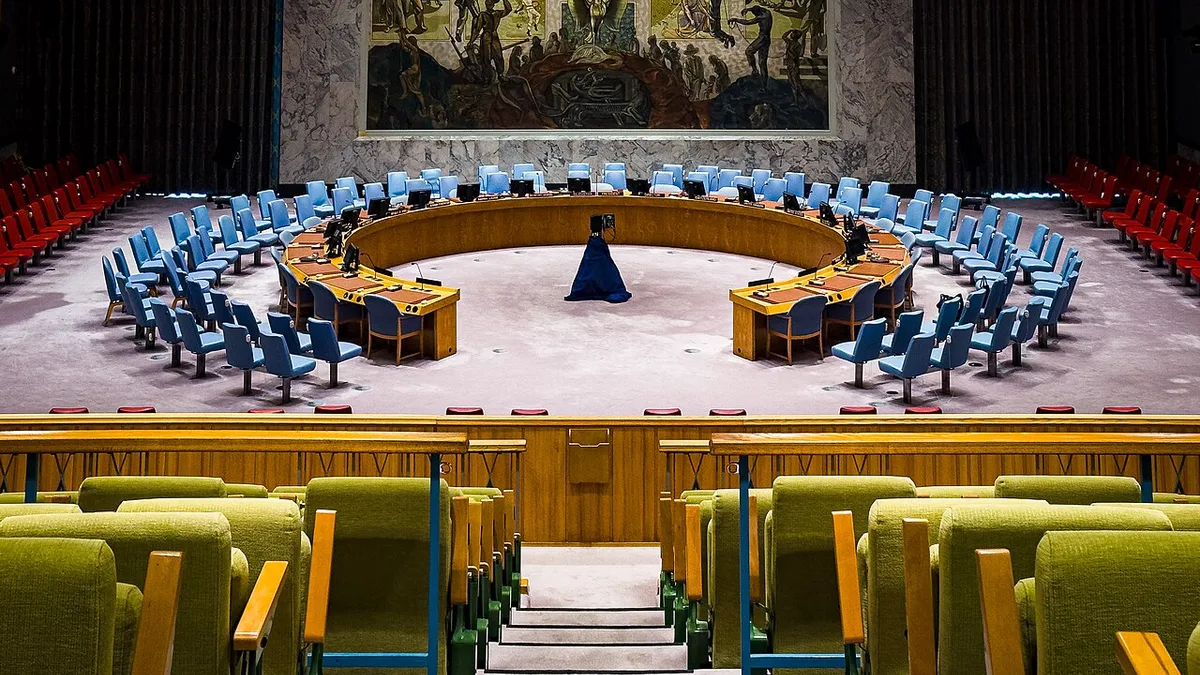
The United Nations General Assembly meets at the organisation’s New York headquarters on June 3 to elect five new non-permanent members of the Security Council, the UN’s most powerful body, for a two-year term that begins on January 1, 2027. The composition of the Council is far from an abstract concern for Serbia, whose foreign policy leans heavily on multilateralism and on international law in the dispute over Kosovo and Metohija: this is the body that issues binding decisions on peacekeeping missions, sanctions regimes and the crises that reach into the Western Balkans.
The Security Council has fifteen members. Five hold permanent seats with veto power (the United States, Russia, China, France and the United Kingdom), while the other ten non-permanent members serve staggered two-year terms, with half rotating out each year. The June 3 vote fills the five seats falling vacant at the end of 2026, leaving the remaining five elected members to serve through next year.
How the seats are allocated and who is running
The five seats up for election follow a long-standing regional formula. One goes to the African Group, one to the Asia-Pacific Group, one to the Latin American and Caribbean Group, and two to the Western European and Others Group. The arrangement keeps the Council geographically balanced at all times.
The most open contest is for the two Western European places, where three states are competing:
- Austria, returning to the Council after more than a decade
- Portugal, counting on backing from its European Union partners
- Germany, one of the largest members and contributors to the UN budget
With three candidates chasing two seats, one of these states will miss out. The Philippines and Kyrgyzstan are competing for the single Asia-Pacific seat, while the other two groups field so-called clean slates: Zimbabwe for the African Group and Trinidad and Tobago for the Latin American and Caribbean Group are running unopposed.
Why does non-permanent membership matter, and how is the vote held?
Although they lack a veto, non-permanent members are no mere onlookers. They take part in every vote, can hold the Council presidency under a monthly rotation, help shape the agenda and join negotiations on resolutions. For mid-sized and smaller states, a two-year term is a rare moment of genuine influence over the global security agenda.
The ballot is secret, and election requires a two-thirds majority of members present and voting, which at a full Assembly means at least 128 votes. The rule applies even to uncontested candidates: both Zimbabwe and Trinidad and Tobago must clear that threshold to secure their seats. If no candidate in a contested group reaches the required majority in the first round, voting is repeated until the seats are filled.
The make-up of the Security Council for 2027 and 2028 will decide who sits alongside the permanent members in deciding the hardest crises of the coming period. How much will the voice of mid-sized states truly count once questions of peace and sanctions land on the table?