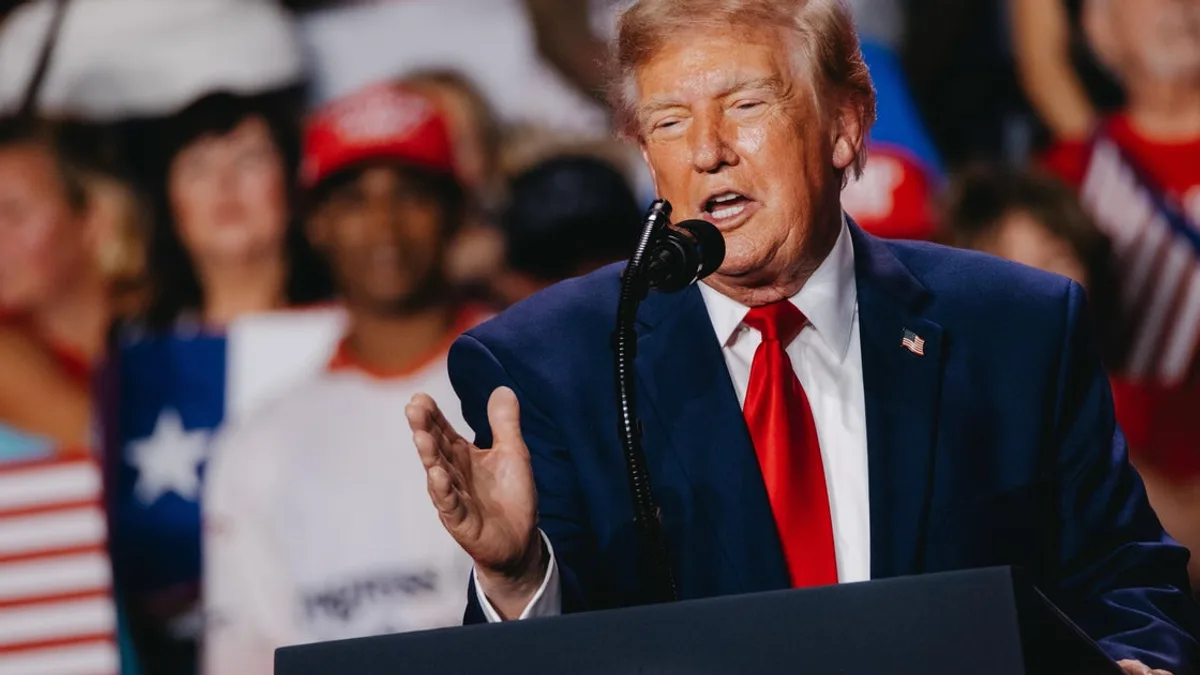
Trump Announces 60-Day Ceasefire With Iran
After US strikes and Iran's closure of Hormuz, Washington halts attacks and offers a memorandum reopening the strait and launching nuclear talks.

- Trump announced a 60-day ceasefire on June 11 and halted new strikes on Iranian targets.
- The memorandum provides for unrestricted navigation through Hormuz in both directions, toll-free, with mines cleared within 30 days.
- Iran commits not to develop nuclear weapons, while Washington demands the removal of highly enriched uranium stockpiles.
- China took part in the talks, and Iranian minister Abbas Araghchi visited Russia, Pakistan and Oman.
For Serbia, whose economy and fuel prices hinge on stable oil routes, the news from Washington carries immediate weight: President Donald Trump announced a 60-day ceasefire with Iran on June 11 and suspended new military strikes, only a day after ordering a wave of attacks on Iranian targets. The document now offered to Tehran is meant to reopen the Strait of Hormuz, the corridor that carries a fifth of the world’s oil, and to launch talks toward a final agreement.
The reversal follows a sharp escalation. On June 10 Trump ordered fresh US strikes, to which Iran responded by declaring the closure of Hormuz and threatening to target any vessel passing through the strait. That move, which sent the risk to global energy supply soaring within hours, accelerated the search for a diplomatic exit. Rather than escalate further, Washington a day later offered a framework giving both sides two months to negotiate every contentious issue.
What exactly does the memorandum provide?
The proposed memorandum centers on reopening the strait. It calls for unrestricted navigation through Hormuz in both directions, toll-free, with Iran obliged to clear all laid mines within 30 days. The US naval blockade would be lifted in proportion to the recovery of commercial shipping, with certain sanctions exemptions allowing the sale of Iranian oil. In short, de-escalation at sea is tied to measurable steps rather than a mere promise.
The second pillar of the document is the nuclear question. The memorandum contains an Iranian commitment not to develop nuclear weapons, while Washington insists on the removal of highly enriched uranium stockpiles. Trump framed his condition without ambiguity.
“Iran must agree it will never have a nuclear weapon. The Strait of Hormuz must immediately be opened, with no tolls, for unrestricted shipping traffic,” the US president said.
Vice President JD Vance remained cautious on timing. “We’re not quite there yet, but we are very close and we will keep working on it,” Vance said, signaling that the framework has not yet been turned into a signed agreement.
Who is sitting at the table?
This time the negotiations are not led by Washington and Tehran alone. China, the largest buyer of Iranian oil and a state with a direct interest in keeping Hormuz open, also took part. Iranian Foreign Minister Abbas Araghchi met with a Chinese diplomat and then traveled to Russia, Pakistan and Oman, showing that Tehran is seeking a solution through a network of partners beyond the Western channel as well.
For Europe, and for the region, the key question is whether the 60-day truce will hold. Any fresh incident at sea or dispute over the pace of mine clearance could send the sides back to square one, and with them the pressure on energy prices that quickly spills over to the Western Balkan market. Washington is betting that measurable steps, the reopening of the strait and oversight of the uranium, can turn the ceasefire into a more durable arrangement.
Will the two-month window be enough to settle the nuclear question and freedom of navigation through Hormuz at the table, or will the first crisis push the region back to the brink of conflict?