Drvar Marks 31 Years Since Expulsion of Serbs
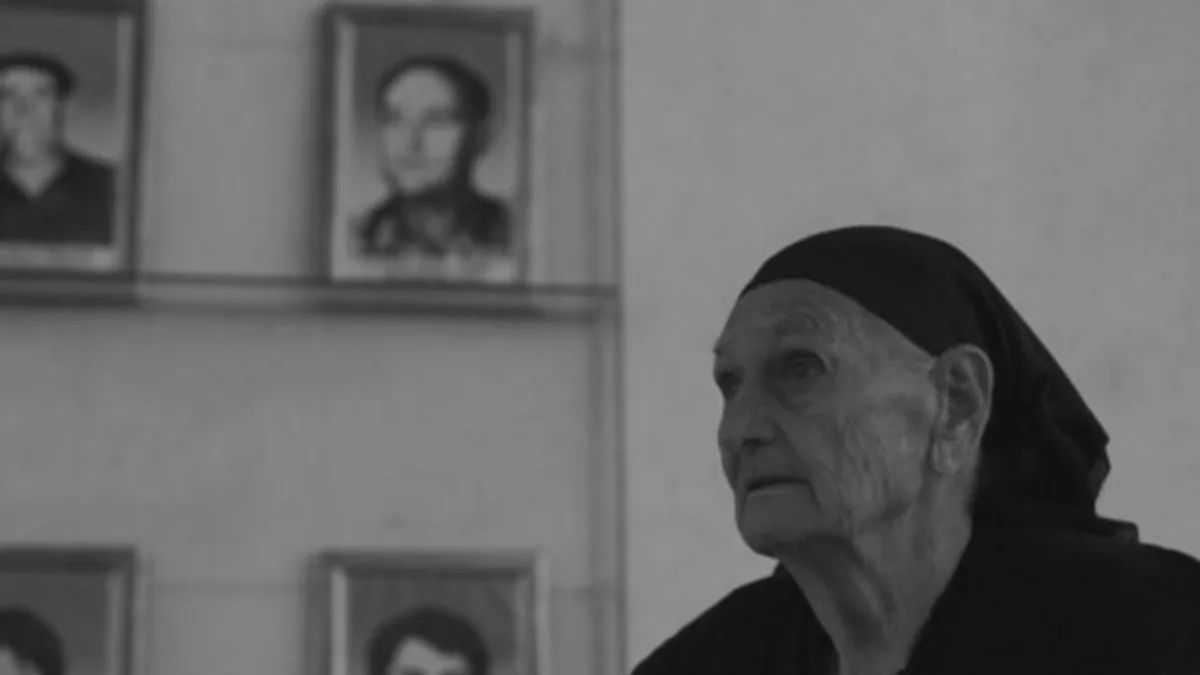
Drvar marked 31 years since the expulsion of its Serb population on September 13, with a memorial service and wreaths at the Central Monument. Miodrag Linta recalls 150,000 expelled, 2,000 killed.

On September 13, Drvar marked the Day of Remembrance for the Suffering of the Serbian People, the 31st anniversary of the expulsion of the town’s entire Serb population. For Serbia, this is not just a local commemoration in neighboring Bosnia and Herzegovina: it is a story Belgrade has kept open for years through requests filed with the War Crimes Prosecutor’s Office, through aid to the Serbs still living in Republika Srpska, and through the idea of a memorial center that would register victims from across the territory of the former Yugoslavia.
A memorial service was held at the Central Monument to fallen soldiers and civilian victims of the Defensive-Patriotic War, after which wreaths and flowers were laid. The same date also marks the founding day of the 1st Drvar Light Infantry Brigade of the Army of Republika Srpska, the unit that defended this part of Krajina as part of the 2nd Krajina Corps during the war.
Who laid the wreaths
Wreaths were laid by delegations from the municipalities of Drvar and East Drvar, from the veterans’ organizations of Drvar-East Drvar, Republika Srpska and Bosanski Petrovac, from the Republika Srpska Ministry of Labor and Veteran-Disability Protection, from the 2nd Battalion of the 2nd Krajina Corps of the Army of Republika Srpska, as well as by representatives of political parties. The organizers of the commemoration said that keeping the memory alive is a lasting duty:
Nurturing a culture of remembrance and preserving the truth about the victims and their sacrifice are our permanent obligation.
Linta: 150,000 expelled, more than 2,000 killed
Marking the anniversary, Miodrag Linta, president of the Union of Serbs from the Region, said in a statement to Tanjug on September 12 that the expulsion of 150,000 Serbs and the killing of more than 2,000 people from 13 municipalities of Western Krajina must be remembered, and that in scale and consequences the tragedy stands alongside the crimes committed against the Serbs of Upper Krajina during Operation Storm.
According to Linta, in the Croatian-Muslim military operations “Maestral,” “Sana 95” and “Juzni potez,” carried out from September 12 to October 10, 1995, the Serbian people underwent ethnic cleansing across 11 municipalities of Western Krajina: Sipovo, Drvar, Donji Vakuf, Jajce, Petrovac, Kljuc, Krupa na Vrbasu, Ripac, Kupres, Mrkonjic Grad and Sanski Most. Grahovo and Glamoc had already fallen earlier, in late July 1995, during Operation “Leto 95,” bringing the total number of affected municipalities to 13.
Linta says that 13 camps and 21 mass graves have been registered across Western Krajina. The largest are in Mrkonjic Grad, where 181 Serb soldiers and civilians were killed, and in the village of Kamen near Glamoc, where 108 soldiers and civilians were killed. As a particular example, he cited the crime in Bravnice near Jajce on September 13, 1995, when, according to him, members of the Croatian Army killed 81 Serb civilians, most of them women, children and the elderly. On the question of accountability for these crimes, Linta was blunt:
It is a tragic fact that no one has been held accountable for the mass, brutal crimes against Serbs in the 13 municipalities of Western Krajina.
Call for an investigation and a memorial center
Linta said the War Crimes Prosecutor’s Office of Serbia has an obligation to open investigations and, wherever evidence exists, file indictments for the crimes committed against Serbs in Western Krajina, even though, as he put it, those who ordered and carried out the crimes are known. That directly ties the story from Drvar to the work of Serbia’s judiciary, rather than leaving it as a commemoration confined to Republika Srpska.
The president of the Union of Serbs from the Region also said that Serbia must work systematically to preserve the memory of the suffering:
Serbia must launch a systematic fight for the truth about the suffering of the Serbian people and establish a Memorial Center for Serb Victims across the territory of the former Yugoslavia, in order to preserve the memory of the killed and expelled Serbs and present their suffering to the domestic and international public.
Linta added that the Government of Serbia should provide further help to the remaining Serbs in Western Krajina, who he says are in a difficult situation, through the reconstruction of roads and houses, resolving electricity and water supply issues, improving healthcare, schooling children in the Serbian language, and supporting agriculture, livestock farming and crafts.
Why Belgrade is watching this
Commemorations like the one in Drvar are not treated in Serbia as a closed-off regional matter, but as part of the broader question of how the suffering of the 1990s is addressed, a question that remains open in talks between Belgrade and Sarajevo, Zagreb and institutions in Republika Srpska. The proposal for a memorial center and the call to open investigations show that the story does not end with the memorial service and the wreaths, but carries forward into the next steps Linta is asking of Serbia’s judiciary and government.
There is, for now, no known date by which the War Crimes Prosecutor’s Office might respond to that request.