DPS Walks Out as Mandic Defends Condolences to Mladic's Son
Montenegro's opposition DPS is ending cooperation with the majority, and Andrija Mandic says condolences to Darko Mladic were not about his father. Elections are six months away, he says.

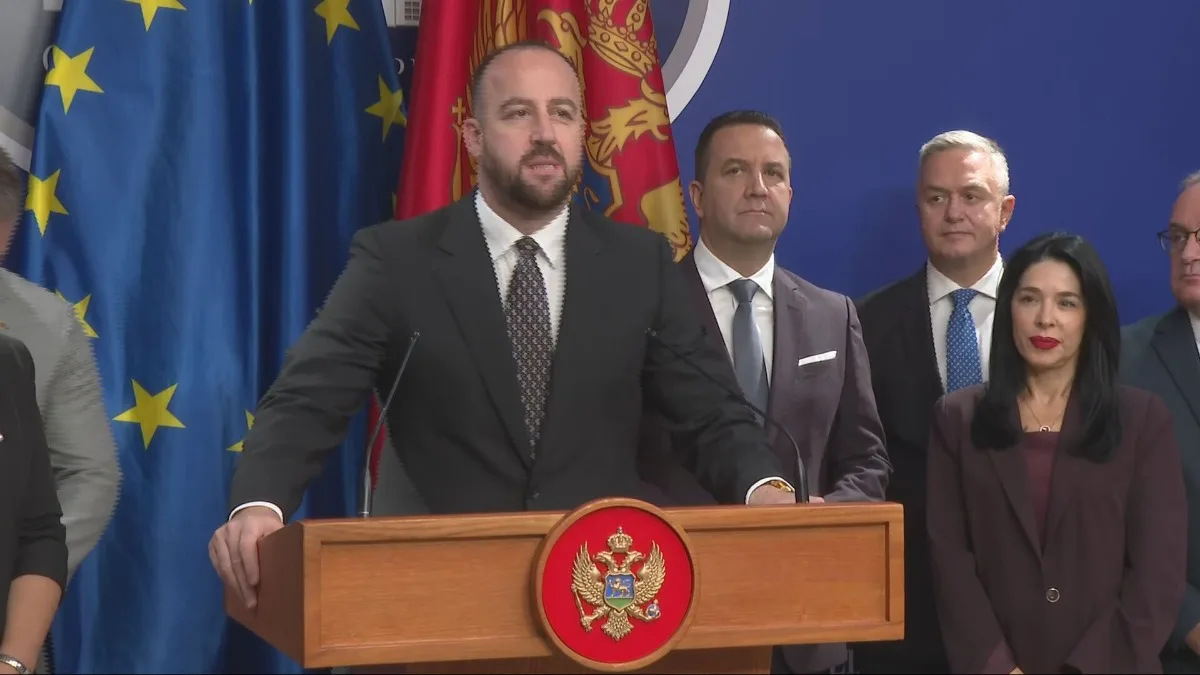
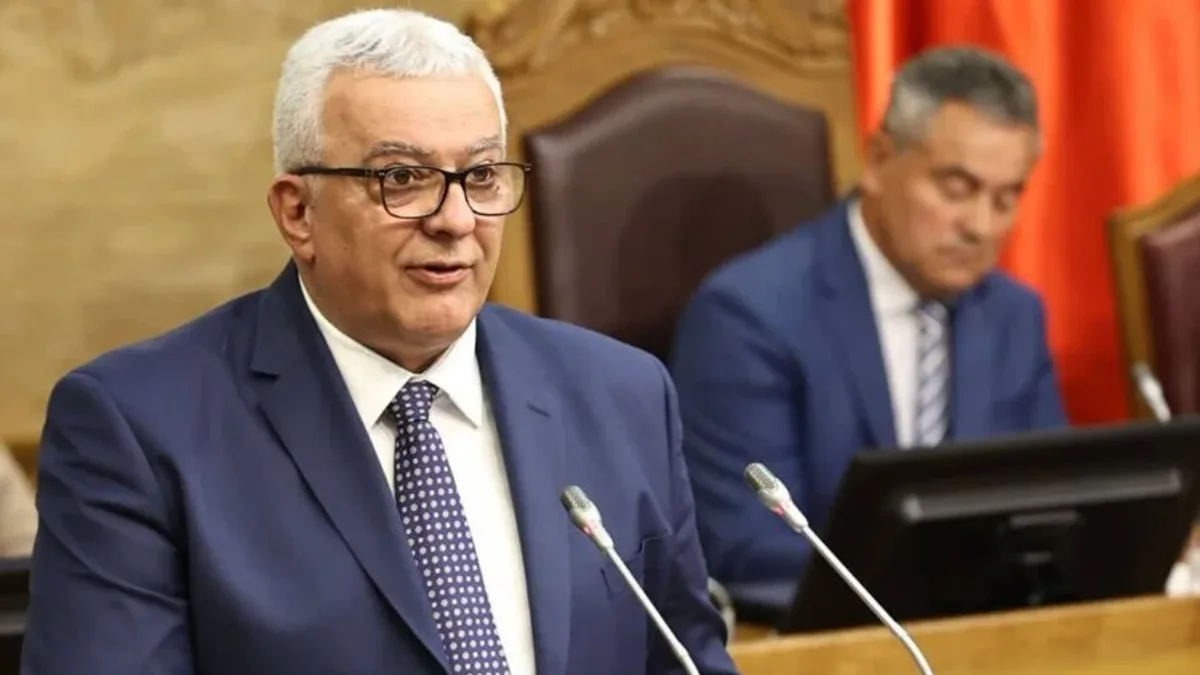
A crisis in Montenegro’s parliament that revolves around a man buried in Belgrade has entered a new phase. Deputies from the Democratic Party of Socialists (DPS) walked out of the Montenegrin parliament on Tuesday, September 29, before the session began, and Speaker Andrija Mandic answered in the chamber, for the first time since the session of September 24 fell through, to accusations over his condolences to the family of Ratko Mladic. The matter is not distant for Serbia: Mladic died on August 27 and was buried in Belgrade on September 7, and in the same speech Mandic said: “The state of Serbia delivered Ratko Mladic to the Hague Tribunal.”
The session started almost two hours late. DPS deputy Andrija Nikolic said before leaving the chamber that his party is not boycotting parliament:
“We are not boycotting parliament, nor will we leave the most important political stage in the country undefended.”
Nikolic added that there will be no cooperation or joint voting with the majority in the institutions until Mandic publicly says that Mladic is a war criminal and that genocide was committed in Srebrenica.
What did Mandic say about the condolences?
In a post after Mladic’s death, Mandic expressed condolences to his son, Darko Mladic, on his own behalf and on behalf of the New Serb Democracy party, and called the father “General Ratko Mladic.” At the session he insisted the condolences were addressed to the son:
“In offering condolences to Darko Mladic, I did not say a word about his father.”
He pointed to the Croatian parliament and to a funeral in Bosnia and Herzegovina as precedents:
“Neither I nor my party said a single word when the Croatian parliament held a minute of silence for General Praljak and offered condolences, and he was convicted just like Ratko Mladic. We said nothing either when Rasim Delic was buried in Bosnia and Herzegovina.”
He then set out his position on The Hague and on Mladic’s son:
“We want to be normal people, we do not want to shield anyone’s crime. The state of Serbia delivered Ratko Mladic to the Hague Tribunal. The Hague Tribunal made its decision and everyone respects that decision. But his son Darko Mladic is a decent and honest man who has broken no law.”
Mandic also said he never met Ratko Mladic, was never a member of the Army of Republika Srpska, and that DPS, in his words, did everything it could to help the Army of Republika Srpska. He added: “I will not accept an attempt to portray me as an enemy of Bosniaks and Albanians,” along with the line “I have not made a single Bosniak or Albanian mother cry.”
He also addressed the question of Montenegro’s European path. According to him, six months remain until elections, and nobody will destabilize a majority that has done a great deal for European integration over the past three years. He claimed parliament has passed about 500 laws aligned with European tradition and that DPS voted for 26 percent of the European laws. General elections are expected in the middle of next year, according to Mondo.
Who else demanded an answer?
URA deputy Zoran Mikic asked Mandic why there had been no debate on the initiative to remove him, and demanded a clear answer:
“Is Ratko Mladic a war criminal or a hero, for you?”
Boris Mugosa of the European Alliance recalled September 24, when the dismissal session was not held because ruling deputies did not show up and there was no quorum. Mugosa said Mandic had shown “political cowardice” that day, urged him to step down and added:
“It became clear then that this majority is anti-European, anti-constitutional and anti-democratic. Do not invoke the majority, because it was the opposition DNP that gave you the quorum to work.”
After the September 24 session, DPS leader Danijel Zivkovic told a news conference:
“DPS is ending all institutional cooperation with the Government and the parliamentary majority. We will not take part in a semblance of normality, nor will we use our votes to create a majority that does not exist while the authorities block voting whenever the result does not suit them.”
What is behind the dispute over constitutional changes?
The conflict soon spilled over into the Constitution. Milan Knezevic of the DNP told the European Parliament’s rapporteur for Montenegro, Marjan Sarec, that the DNP will not support constitutional changes that lack the Serbian language, a dual citizenship law and state symbols. About DPS he said:
“And I am curious how long these gentlemen from DPS will be able to hold out before they go back and vote for everything Johan Sattler ordered them to.”
A few days before the September 24 session, five members of the European Parliament, led by Sarec, urged Montenegrin deputies to vote according to their conscience. They said they were convinced that Mandic knew exactly what reaction he would provoke with official condolences to Ratko Mladic’s family.
The ruling Europe Now Movement of Prime Minister Milojko Spajic replied that the opposition has no principles, only an intention to slow the country’s European path:
“We see the announcements by individuals in the opposition that they will not vote for the constitutional changes, which are necessary for closing the negotiating chapters, as an attempt to seize power before the elections through blackmail over the European path.”
Such changes need a two-thirds majority, so the gap between the majority and the opposition is no longer only about the words spoken over Mladic’s son, but also about the number of hands in the chamber.