Mandic Short Three Votes for Ouster, Vote Set Sept. 24
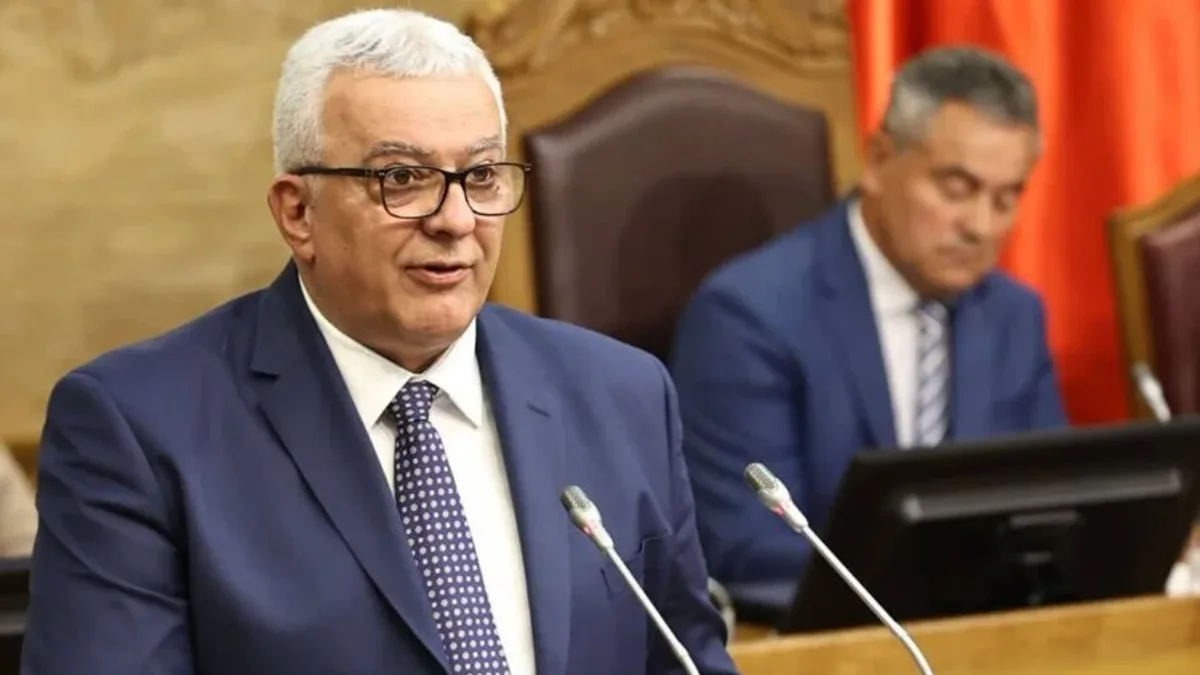
The DPS parliamentary group has filed a motion to remove Montenegrin parliament speaker Andrija Mandic and called an extraordinary session for September 24, backed by at least 38 lawmakers.

The parliamentary group of the Democratic Party of Socialists (DPS) filed a motion on September 8 to remove Montenegrin parliament speaker Andrija Mandic, requesting that it be debated at an extraordinary session scheduled for September 24. For Belgrade this is more than a neighboring parliament’s internal procedure: the trigger was a condolence telegram Mandic sent to the son of Ratko Mladic, who was convicted by a final verdict of genocide in Srebrenica, and the question of how to treat Mladic’s legacy has divided both Serbian and Montenegrin public opinion in recent weeks, just as Podgorica enters the final stretch of its European Union membership talks.
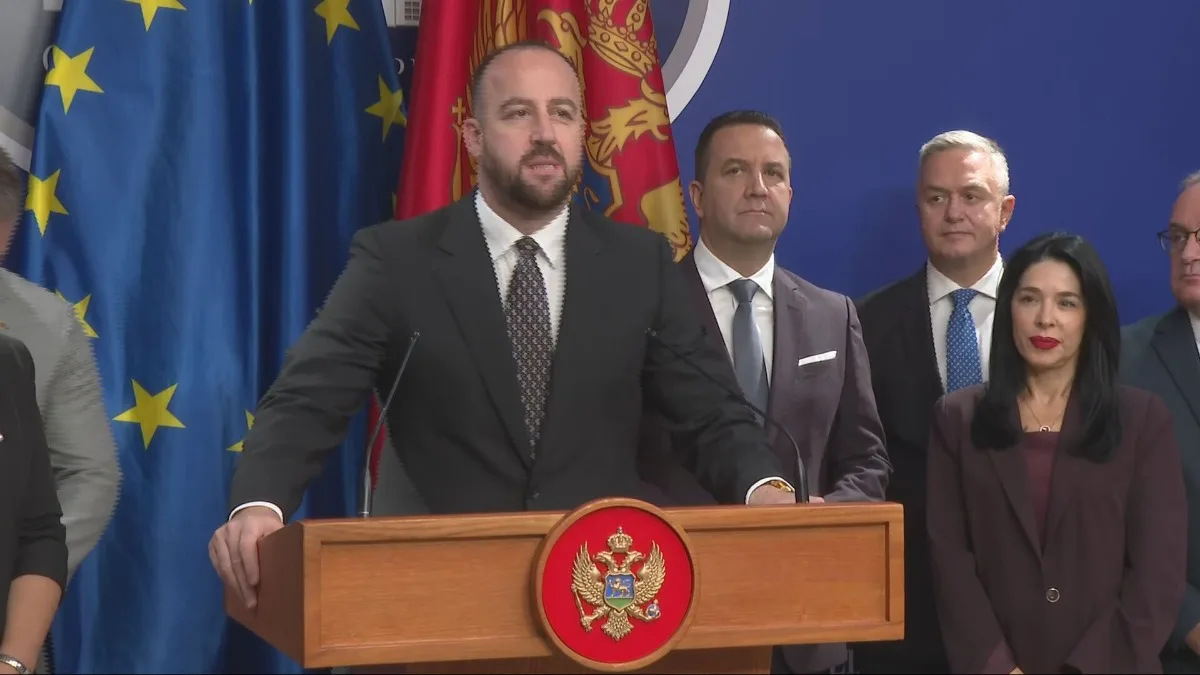
According to the DPS, the motion was signed by 35 lawmakers in total: sixteen from the party itself, six from the Bosniak Party, four from the Civic Movement URA and three from the European Alliance. Additional signatures came from Adrijan Vuksanovic, Mehmet Zenka, Nikola Janovic, Miodrag Lakovic, Artan Cobi and Ilir Capuni. Only ten signatures were needed to launch the motion, while 27 were required to call the extraordinary session, a threshold the sponsors cleared with room to spare.
The motion’s explanation states that Mandic’s conduct in office deepened social divisions and damaged both the reputation of the parliament and Montenegro’s international credibility. The DPS parliamentary group wrote in the text of the motion:
His actions damage the reputation of the parliament and Montenegro’s international credibility.
The immediate trigger, the document states, was Mandic’s decision to publicly offer condolences over the death of Ratko Mladic.
Reactions from Brussels and Zagreb
The motion’s explanation also cites a reaction from the European Commission, which said that glorifying war criminals runs counter to European values and has no place either in the European Union or in candidate countries. Croatia’s Ministry of Foreign and European Affairs, whose consent will be required in the final stage of Montenegro’s negotiations with Brussels, reacted similarly, saying such moves do not fit with Montenegro’s European path.
Who supports the removal, who opposes it
The Movement Europe Now (PES), the Democrats, the Democratic People’s Party, United Montenegro and the Socialist People’s Party have so far come out against the removal. Backing the motion, alongside its sponsors, are the Croatian Civic Initiative, independent lawmaker Nikola Janovic and PES lawmaker Seid Hadzic.
The circle of support grew on September 9, when independent lawmaker Jevrosima Pejovic told the Montenegrin outlet Vijesti that she would vote for Mandic’s removal.
That is what common sense dictates.
With her announcement, the number of lawmakers who have publicly backed the motion rose to at least 38.
Why Mandic is short three votes
Under the rules of the Montenegrin parliament, removing the speaker does not require an absolute majority of 41 lawmakers, only a majority of those present at a session attended by more than half of all lawmakers. An absolute majority of 41 votes would guarantee the removal regardless of how many lawmakers show up, and that is the threshold the sponsors are still three votes short of, even after Jevrosima Pejovic’s announcement. The final outcome of the September 24 vote will therefore also depend on how many lawmakers actually show up in the chamber that day.
Mandic from Vienna: no majority
Mandic learned of the motion while on an official visit to Austria, where he met in Vienna with National Council President Walter Rosenkranz. Speaking from Vienna, he said that, in his assessment, he lacks the parliamentary support needed for his removal.
So, to be completely clear, there is no majority needed to remove the speaker of the Montenegrin parliament.
Mandic called this, the opposition’s third attempt to remove him from the post, part of the democratic process, but also said the campaign over his condolences to Mladic’s son was extremely harsh and deeply untrue.
Serbian outlets have previously reported on the fallout from Mladic’s death in Montenegro: on the investigation opened against Metropolitan Metodije in Podgorica, on how Dajkovic and the Democratic People’s Party paid tribute to Mladic while President Jakov Milatovic responded, and on the parliament’s decision to strip the president and ministers of immunity.
The outcome of the vote will hinge on how many lawmakers are actually present on September 24, and Mandic, who has called this the third attempt to remove him, says that, as in the previous two, he expects to face it without the votes he needs in the chamber.