Ibrahimovic Says Zagreb's $2.7 Billion Claim Never Arrived
Montenegro's foreign minister says the $2.7 billion claim was not among the issues he inherited, and the commission on the Jadran ship meets for the first time October 9 in Zagreb.

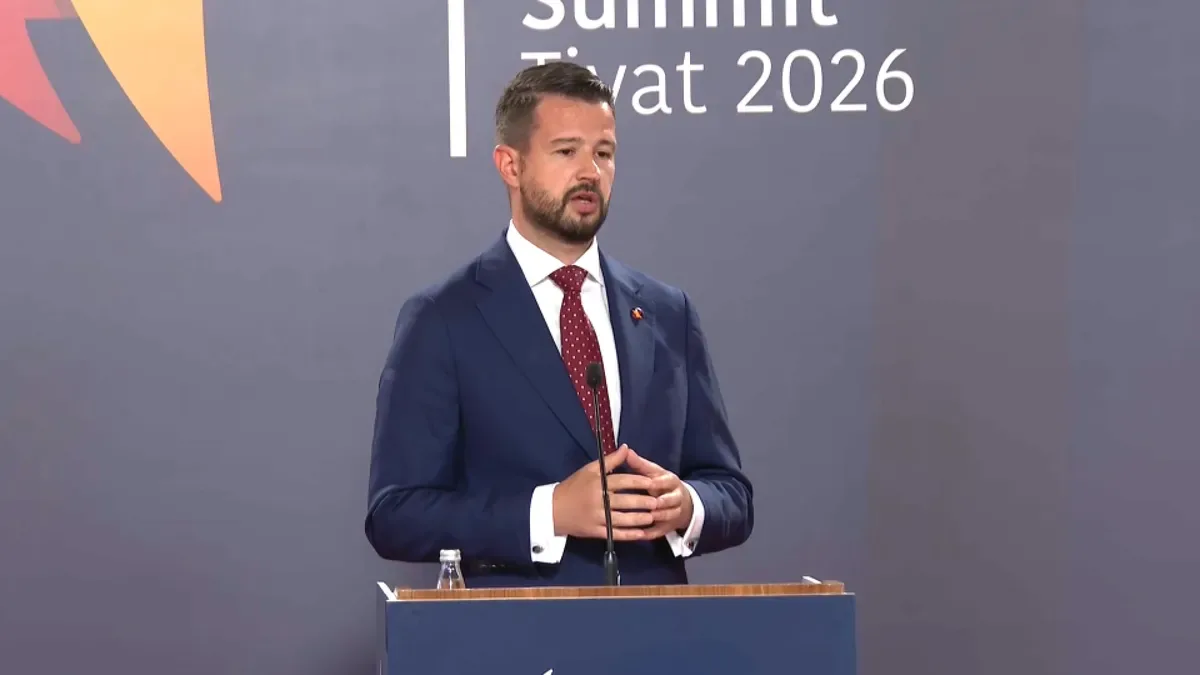
Montenegrin Foreign Minister Ervin Ibrahimovic said on Friday, October 2, that a Zagreb claim worth $2.7 billion has never reached him. The dispute between the two countries, which neighbor Serbia and are at odds over military property from 1990 and 1991, has now drawn a Montenegrin answer to the Croatian allegations. Podgorica is also sending a message about the European path: bilateral issues, Ibrahimovic says, must not be mixed with accession talks with the European Union.
Asked at a press conference to comment on the claims about Croatian demands, Ibrahimovic said that when he took office, less than four years ago, he inherited about ten open issues with Croatia, and this was not one of them.
“At that time the issue was not on the table, and I have not received it on the table now,” Ibrahimovic said.
What did the Croatian minister claim?
The trigger was a statement by Croatian Foreign Minister Gordan Grlic Radman, which we have already covered. After laying wreaths at the memorial plaque at the former Morinj camp, he said that Croatia is asking Montenegro not only for the training ship Jadran but also for other military property worth more than $2.7 billion.
Grlic Radman says Zagreb has interactive maps and documentation on that property. By his account, Croatia had about 207 vessels on May 31, 1990, against roughly thirty for Montenegro, while a year later the ratio was reversed. Among the missing property he named warships, submarines and a military hospital.
What is Podgorica saying about EU talks?
Ibrahimovic noted that open questions between the two states have dragged on for more than three decades, but that Montenegro has made progress in bilateral relations with Croatia in recent years.
“We are going step by step and we are close to resolving many open issues that three or four years ago were far from being thought solvable,” the minister said.
He then separated the two tracks. In his words, bilateral disputes should be settled through direct contacts, while the negotiating process with Brussels has to be measured by the reforms carried out:
“We resolve bilateral issues through bilateral contacts, and our negotiating process should be based on the implementation of reforms.”
Ibrahimovic also recalled that during its own accession talks with the EU, Croatia adopted a decision in parliament that bilateral issues should not affect the negotiating process. “I believe this principle will be followed now as well, and that bilateral issues will not be dominant in the coming period,” he concluded.
The tone stayed conciliatory. The minister said Montenegro is ready to defend its interests, but also to fulfill whatever it determines it is obliged to: “If we assess that we have an obligation to complete something they are claiming, we will complete it.” He described Croatia as an important partner on the road to the EU and said: “I believe Croatia will continue to be one of the strongest bridges between Montenegro and Europe.”
What happens on October 9 in Zagreb?
The first meeting of the commission on the status of the training ship Jadran and other questions of military property succession is scheduled for October 9 in Zagreb. Defense Minister Dragan Krapovic represents the Montenegrin side.
The governments of the two countries set up commissions to handle part of the open issues. They include ownership of the ship Jadran, compensation for Croatian detainees at the former Morinj camp, succession of military property and the return of property to Croatian citizens in Montenegro.
Whether the $2.7 billion figure will be on the table in Zagreb, sources do not say. For now, Ibrahimovic has said only what he told reporters: that he has received no such claim and did not find it among the open issues when he took office.