

Slovenia votes on four referendums, one on foreigners
Slovenian voters decide on Sunday on a parliamentary inquiry law and three advisory questions, including local voting rights for citizens of non-EU countries such as Serbia.
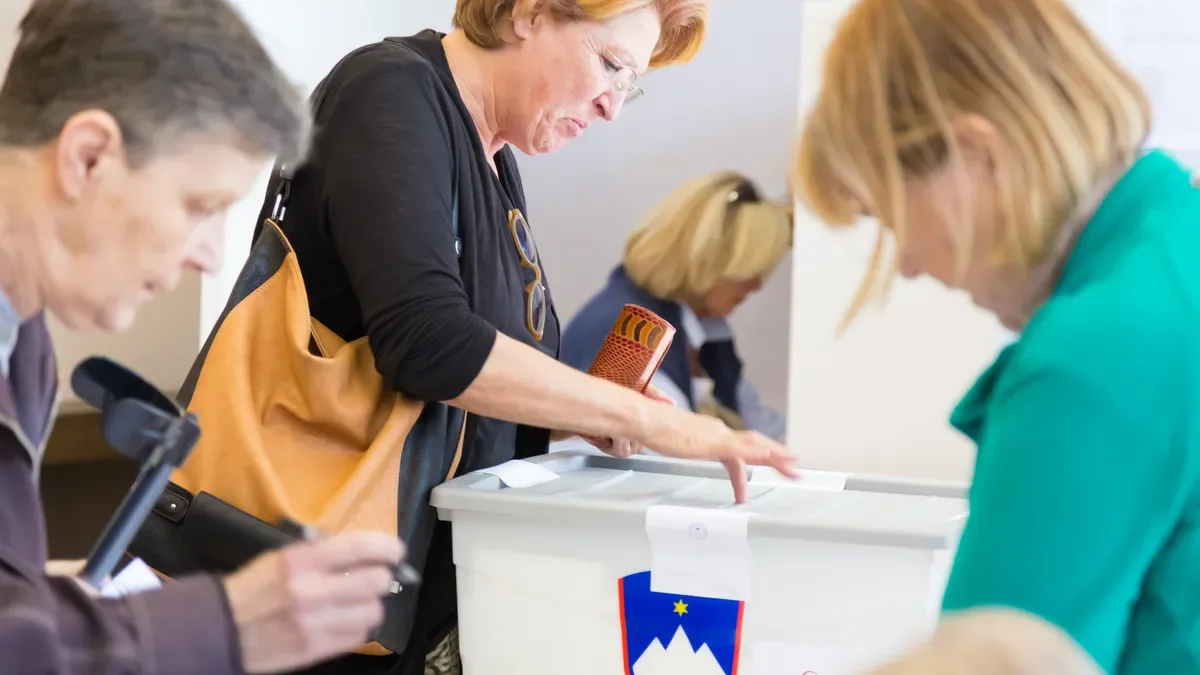
Citizens of non-EU countries with permanent residence in Slovenia, Serbian citizens among them, have lost the right to vote in local elections since September 2. On Sunday, October 11, Slovenian voters will give their opinion on that measure in an advisory referendum in Slovenia, one of four held on the same day. The election silence begins tonight at midnight, and polling stations are open on Sunday until 7 p.m.
Who can vote, and how many already have?
A total of 1,698,526 voters are eligible, according to the register as of September 1. The State Election Commission reports that 49,989 voters cast ballots in the first two days of early voting, or 2.94 percent of those registered. At the polling station, each voter decides how many ballots to take: all four questions, three, two or just one.
Slovenian analysts see this as the first major test of strength between the new governing coalition and the opposition. The coalition is made up of the SDS, New Slovenia (NSi) and the Democrats, with the Resnica party backing it in the National Assembly. The government of Janez Jansa was formed in June 2026. The coalition and Resnica are urging a “yes” vote on all four questions, while the opposition, which consists of Svoboda, the Social Democrats and Levica, is calling for four votes against.
The parliamentary inquiry law: the only question that changes the legal order
The legislative referendum decides on amendments to the parliamentary inquiry law adopted by the National Assembly on May 26, 2026. The referendum was requested by former members of the Human Rights Protection Committee, who gathered almost 45,000 certified signatures. The campaign has been joined by the non-governmental organizations CNVOS, Danes je nov dan and Umanotera, as well as opposition parties.
The amendments would considerably narrow the legal protection of people who end up before a parliamentary inquiry committee. An individual could no longer challenge the act ordering an inquiry before the Constitutional Court, and could file an administrative lawsuit only within eight days of receiving the committee’s final report. The organizers of the referendum warn that committees often never adopt such reports, so lawmakers can do irreparable damage to the reputation of those under investigation during the proceedings, with access to personal data and public hearings. The opposition sees in the law the creation of a political police.
The government argues the opposite: that the previous arrangement allowed abuses and procedural delays by which some influential people and politicians evaded parliamentary oversight, and that the new law reduces the chance that legal guarantees become a tool for blocking that oversight.
The law is rejected if a majority of voters are against it and at least one fifth of all registered voters, or 339,706 people, vote against. In that case the National Assembly may not adopt a substantially similar law for a year after the results are announced.
The three advisory questions
Advisory referendums are not legally binding for lawmakers. Voters will answer three questions:
- whether the mandatory subscription fee for Radio-Television Slovenia should be abolished, a matter the National Assembly settled at an extraordinary session in August, after a proposal by the coalition and Resnica submitted at the end of July
- whether the right to cash social assistance for able-bodied people with no objective obstacles to work should be tied to socially useful work, a proposal submitted by the coalition, with the initiative coming mostly from the ranks of NSi
- whether only citizens of Slovenia and other European Union member states, and not citizens of third countries, should have the right to vote in local elections
What does the question on voting rights for foreigners mean?
This question directly affects Serbian citizens with permanent residence in Slovenia, and it is also the legally strangest of the four. Foreign nationals with permanent residence have had the right to vote at the local level since 2002. In mid-June the National Assembly amended the local elections law and abolished that right, and the change has been in force since September 2. An advisory referendum therefore asks for an opinion on a measure that is already in effect, so its outcome changes nothing legally.
The opposition has for that reason asked for a constitutional review of the law. The Constitutional Court refused to temporarily suspend its enforcement, but is still deciding on the merits. The opposition and the non-governmental organizations that represent foreigners call the calling of the referendum after the law was passed an abuse of the referendum instrument, and critics note that a group of people is losing a right it has held for almost 24 years. The coalition replies that it wants the highest possible direct democratic legitimacy for its decision.
The result will therefore carry political weight mainly ahead of the local elections, which have been called for November 15, 2026. If the Constitutional Court later annuls the amendment, the will of Sunday’s voters could enter the debate over what happens next.


