Djukanovic rejects Mandic's fuel claims on Republika Srpska
Montenegro's former president tells Pobjeda he did not prolong the war in Bosnia with fuel, while the parliament speaker holds his reply until after the Constitution vote.
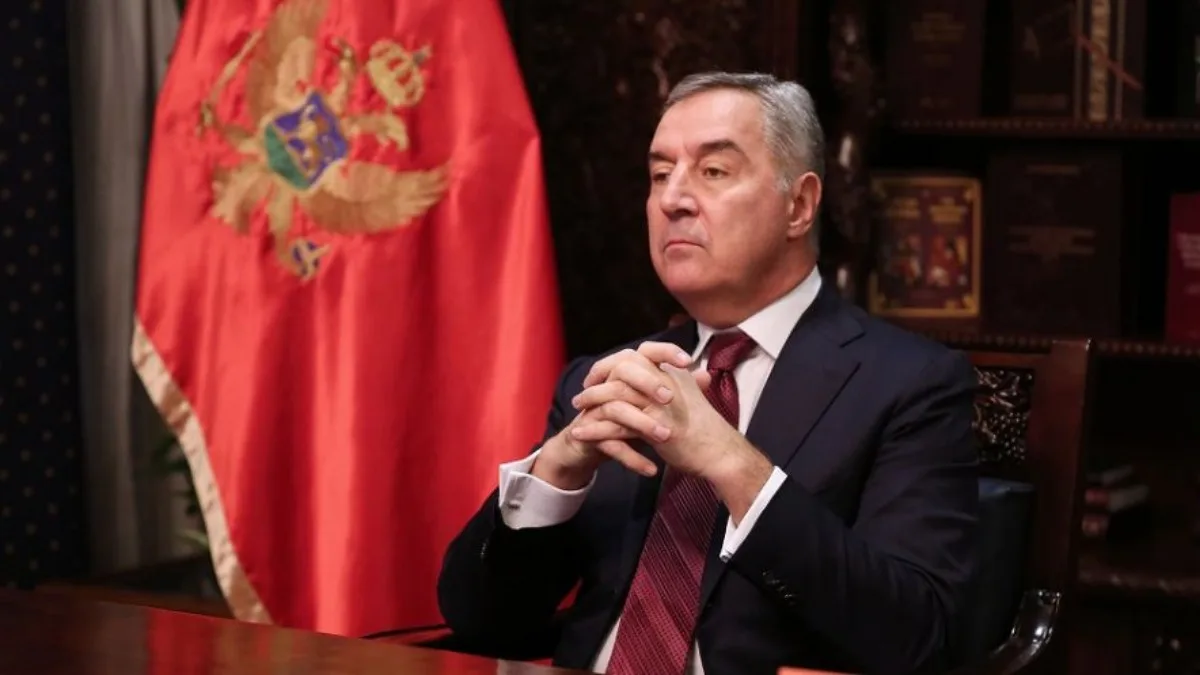
Milo Djukanovic, the former president of Montenegro, has rejected a claim by parliament speaker Andrija Mandic that he and the Democratic Party of Socialists (DPS) prolonged the war in Bosnia and Herzegovina by supplying fuel to Republika Srpska. Djukanovic made the denial in an interview with the daily Pobjeda. The dispute also touches Serbia, because Djukanovic points to findings of the Hague Tribunal on the help that the Yugoslav Army gave Republika Srpska and to the money that came from Belgrade.
Mandic had earlier accused Djukanovic and the DPS of a direct political and logistical role in the wars of the 1990s, including fuel for Republika Srpska that, in his words, prolonged the war in Bosnia. In the interview, Djukanovic says Mandic made the accusations in a fit of remorse over a telegram of condolence that he sent, in his own name and on behalf of his party, NSD, to the son of Ratko Mladic. The telegram was sent, but whether it prompted the accusations is Djukanovic’s interpretation, not an established fact. In the same conversation, Djukanovic called Mandic a Chetnik duke.
What does Djukanovic say about the fuel accusations?
The former president starts with the genocide in Srebrenica, with which, he says, his political opponents link his name:
“Lately there has been a rash of shameless fabrications by Greater Serbian nationalists and their lackeys in Montenegro claiming that I am nothing less than the culprit for the genocide in Srebrenica.”
He then cites the Hague Tribunal, which, according to him, established that the Yugoslav Army supplied the Army of Republika Srpska with ammunition, fuel, spare parts, training and technical assistance. Djukanovic also says that in 1993, 99.6 percent of the Republika Srpska budget came from Belgrade, and that Ratko Mladic, while commanding the Army of Republika Srpska, drew his salary through Yugoslav Army structures. From this he draws his conclusion:
“So they did not need ‘Djukanovic’s oil’ for their tanks, nor did they use tanks to kill more than 8,000 Bosnian Muslims in Srebrenica.”
Djukanovic also rejects Mandic’s claim that the war in Bosnia could have ended in 1994. He recalls that the Republika Srpska Assembly turned down the Vance-Owen plan on May 6, 1993, and the Contact Group plan on August 3, 1994. The government of the Federal Republic of Yugoslavia then cut ties with Republika Srpska on August 4, 1994, and closed the border with the territory held by Bosnian Serbs.
His verdict on the motives is short: “They cannot hide their historical or current shame even when they reach for Djukanovic’s name.” On the telegram of condolence he says: “It is not our tradition to send telegrams when someone you do not know dies.” Of those who accuse him, he says: “Wretches blinded by hatred want to pin that historical shame on me.”
How did Mandic respond?
On October 19, the day of the first vote on constitutional amendments concerning integrity checks, Mandic wrote on X that he would reply later:
“I reserve the right to respond to the brutal accusations and untruths of the former president of Montenegro.”
He explained the delay this way: he does not want the “solemn moment” of the Constitution vote to be spoiled or complicated by “very simple and irrefutable evidence” which, he claims, easily confirms even Milo Djukanovic’s command responsibility in the civil war across the former Yugoslavia. In the post he did not say what evidence he has or when he will reply.
He urged lawmakers to focus on the vote: “Let us all be equal to the task and to what more than 80% of the citizens of our country expect of us.” He described the vote with the words: “Today we are deciding on a better and European future for Montenegro.”
So a dispute over the war in Bosnia, in which Djukanovic shifted the weight of responsibility onto Belgrade and the Yugoslav Army, landed on the same day as the first vote on the constitutional amendments. Mandic put the vote ahead of his answer, while Djukanovic published his before the vote.