Montenegro Ends Cabinet Immunity in Corruption Cases
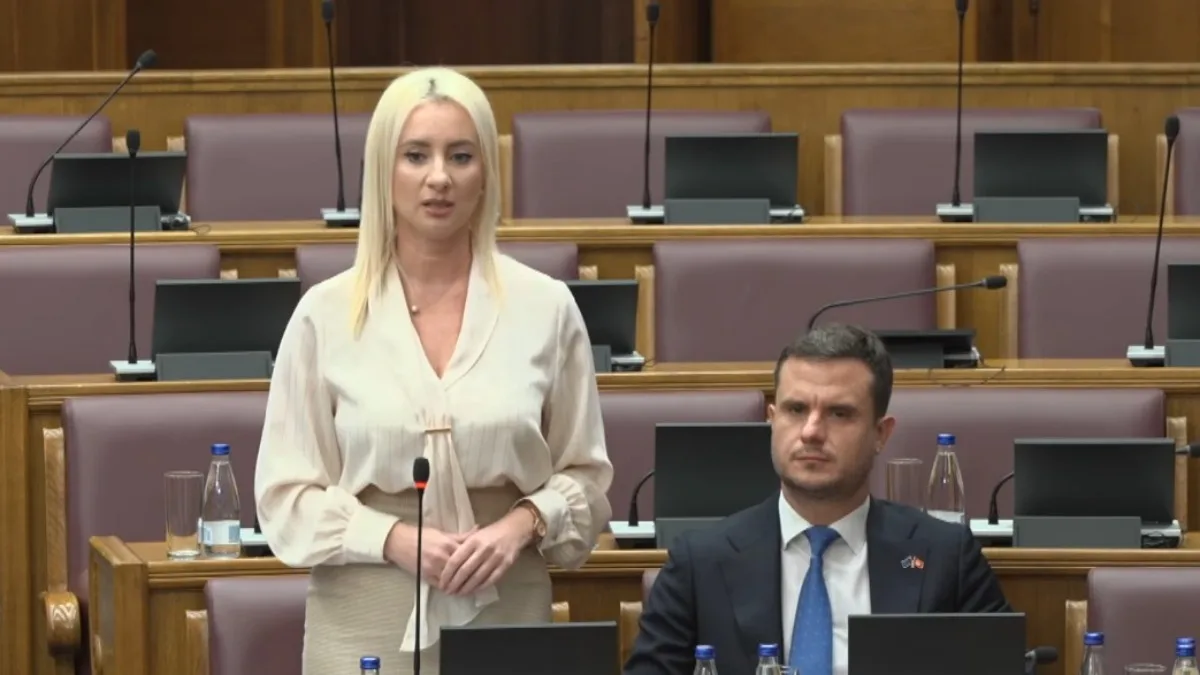
Parliament adopted the constitutional amendments with 62 votes, none against and none abstaining. The opposition walked out the same day, so the Judicial Council vote lacked a majority.
Montenegro’s parliament adopted amendments to the Constitution on October 14 that remove the immunity of government members for corruption-related criminal offenses. For Serbia, which shares a border with Montenegro and a path toward the European Union, this is more than a neighbor’s news: Montenegro’s deputy prime minister explicitly tied the change to the country’s European future, and in the same days Podgorica also received new messages from Zagreb about the conditions under which Croatia sees its membership.
How many votes were needed, and how many did it get?
62 lawmakers voted in favor, none against, none abstaining. Constitutional amendments in the Montenegrin parliament need a two-thirds majority, and since the chamber has 81 members, the threshold is 54 votes. The amendments passed with eight votes to spare and without a single vote against.
The amendments followed a proposal to change the Constitution that parliament adopted in early September. It was justified on the grounds that no executive office should serve as a shield from responsibility for criminal offenses involving corruption.
What did Momo Koprivica say about the change?
Deputy Prime Minister for the judiciary, the political system and anti-corruption Momo Koprivica said that justice is a pressing need of society and that no country has developed without curing its society of corruption and strengthening trust in institutions. In his words, the changes put all officials on the same footing as other citizens in criminal law.
He summed up the point in one statement:
“These changes send a strong message of Montenegro’s European future: corruption behind bars, and justice in official use. That is the key goal, and that is how we move along the path of legal certainty,” Koprivica said.
Koprivica thus linked the change to the country’s European path, not only to domestic legal certainty. In the same days, the outlet RTCG reported that Croatia set out eight conditions for Montenegro on October 14 before EU membership, and then that Prime Minister Andrej Plenkovic said Croatia wants Montenegro to advance toward the EU, but also wants open issues resolved.
What was left unresolved the same day?
Adopting the amendments was not the only item on the agenda. According to RTCG, the Judicial Council was also up for a vote, but the opposition left parliament on October 14, so there was no majority to elect it. The Judicial Council election remains open, while the immunity question is closed.
A day earlier, on October 13, an attempt by part of the opposition to remove parliament speaker Andrija Mandic failed: 37 lawmakers voted for removal and 41 against, out of 81 in total, as we have already reported.
What comes after the vote?
Debate on the constitutional changes in parliament continues. RTCG announced on October 14 that they would be discussed the following day as well, and on October 15 the Constitutional Committee backed amendments to the Constitution on integrity checks of officials. Those concern integrity checks, not immunity, so they are separate from the amendments adopted on October 14.
On that same October 14, RTCG also reported that Montenegro was among the first countries to sign the Council of Europe convention on confiscating property derived from crime. Together with the immunity amendments, that is another step on the same day in the fight against corruption and crime.