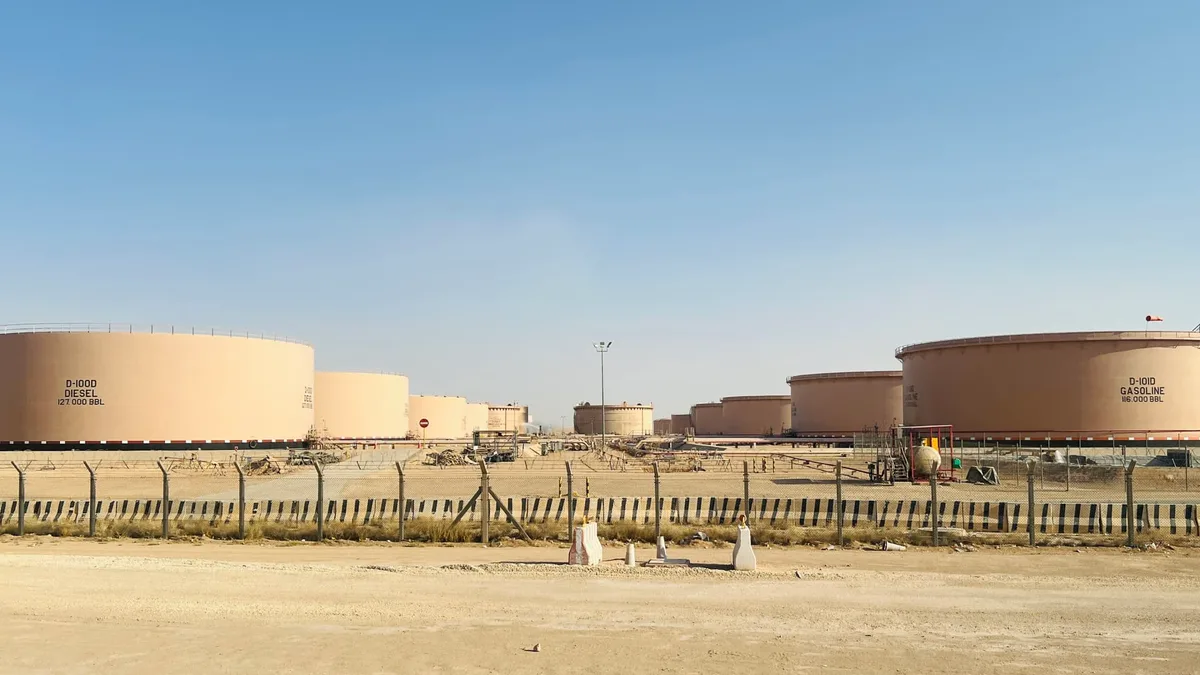
Brent Crude Jumps Past $88 After Iran Hits US Bases
Brent climbed to 87.95 dollars a barrel on Wednesday morning, up 4.6 percent, and touched 88.33 during the session. Three days of losses ended after Iranian rockets hit US bases in the Middle East.

Brent crude for September delivery rose 4.6 percent to 87.95 dollars a barrel by 9:41 on Wednesday morning. The oil price went as high as 88.33 dollars during the session, roughly 4.7 percent above the previous day, while US WTI traded at 82.89 dollars. Three straight sessions of losses were wiped out in a single morning.
Nothing in the inventory data caused it, and no producer changed its output. Iran fired rockets at American positions across the Middle East, and US Central Command (CENTCOM) said every projectile was intercepted and that no US position was hit. The reply came the same day: American and Saudi forces struck several logistics facilities and weapons depots in eastern Iraq, without hitting targets inside Iran.
What the market was actually pricing
Traders do not price the number of rockets fired. They price how many barrels could drop out of supply. An interception with no casualties is a failed attack in military terms, yet for the market it confirmed that the pause in strikes is not a ceasefire.
On top of that, Iraqi militias close to Tehran are sending drones at Saudi oil facilities. That shifts the risk from transit to production itself, and the difference matters: closing the Strait of Hormuz blocks the route from seller to buyer, while a hit on a processing plant cuts the volume that leaves the country at all. The second scenario carries the higher premium.
Why did the three-session slide reverse so fast?
Because it rested on an expectation rather than a signed document. Prices had been falling after the United States halted 13 consecutive nights of strikes on Iran, and the market began pricing a diplomatic settlement of the Hormuz dispute.
The arc of a few days shows how thin that premium is. Brent slipped below 100 dollars on July 25 on talk of negotiations, fell to 90.89 dollars on July 27, then broke through the 83-dollar line on July 28 and settled at 83.07, which we covered the same day. It is now back above 88.
US inventories and a reserve at its lowest since 1983
The fundamentals pushed in the same direction. According to the American Petroleum Institute (API) report:
- US crude oil stocks fell by roughly 3.3 million barrels
- 3.7 million barrels were released from the Strategic Petroleum Reserve, taking it to its lowest level since March 1983
- gasoline stocks rose by 918,000 barrels and distillates by 355,000 barrels
The reserve figure carries more weight than it looks. The strategic reserve is the tool Washington uses to knock prices down when the market panics, and a 1983 level means the tool is close to empty. If the escalation drags on, the next jump in crude will have far less to cushion it.
How much of this reaches the pump in Serbia
Not immediately, and not in full. Retail petrol and diesel prices in Serbia are set by a decree that is refreshed once a week, so a morning spike on the exchange only enters the calculation at the next reset. Excise duty and tax make up the larger share of the pump price, which dilutes a swing of a few dollars a barrel before a driver sees it.
The import bill moves faster. Serbia pays for crude oil and refined products in dollars at the world quotation, so every dollar of difference per barrel feeds into the trade deficit and into the numbers run by fuel importers.
The next mover is the official US inventory report, which usually confirms or corrects the API estimate. Until then the market is watching one thing: whether the rockets and the drones keep flying.