Pellet Costs 42,000 to 52,000 Dinars a Ton Ahead of Winter
Most depots sell a ton of pellets for 42,000 to 48,000 dinars, supply is better than in early September, and Professor Glavonjic sees no reason for another price rise.
In mid-October, a ton of pellets costs 42,000 to 48,000 dinars at most depots in Serbia, and at some it tops 50,000, reaching about 52,000 dinars. Those are the figures cited by Branko Glavonjic, a professor at the Faculty of Forestry in Belgrade, who estimates that pellets are about 50% more expensive than in October last year. The heating season officially starts on Thursday, October 15.
How much does a ton of pellets cost today?
The highest prices are paid for imported A1 pellets, the top quality class, at depots that mostly bring them in from Croatia. Glavonjic says that at some depots domestic pellets cost more than imported ones, and that prices also differ with the policies of individual producers and traders. Speaking to Biznis.rs, he assessed the price rise this way:
“The price of pellets this year is truly unjustifiably high, because production costs have not risen enough to justify such an increase. Compared with October last year, the price is about 50 percent higher. Producers and traders took advantage of the strong demand during the summer months and raised prices.”
In his assessment, the high prices cannot be fully explained by a raw material shortage or by dependence on imports, since Serbia has a relatively stable supply of wood.
For comparison, a 2022 decree capped the retail price of pellets at 38,000 dinars per ton, VAT included. Today’s 42,000 to 48,000 dinars is 4,000 to 10,000 dinars above that level, and 52,000 dinars is 14,000 above it. The sources do not say whether the current prices include VAT, so the comparison is approximate. The decree was adopted at the time to protect energy security, because of shortages caused by higher exports.
Are there enough pellets at the depots?
According to information the Faculty of Forestry receives from depots, more than 80% of sales points currently have sufficient stock. Glavonjic says the situation has improved since early September:
“Supply is significantly better than a month ago. Most depots have no waiting lists, and consumers can buy the quantities of pellets they need. In the vast majority of cases, a customer who pays for pellets today can expect delivery the same day, which was not the case in early September.”
Problems persist in some smaller towns, where local depots do not have enough money to build up larger stocks in advance. They order pellets when demand appears and quickly sell them to customers who have been waiting for delivery. Glavonjic nevertheless sees no reason to worry that pellets will run short this winter.
Serbia, as he puts it, relies mainly on its own production:
- imports amount to roughly 40,000 to 45,000 tons a year, mostly from Montenegro and less from Bosnia and Herzegovina and Croatia
- exports amount to roughly 30,000 to 35,000 tons
- between 90 and 92% of the pellets produced are sold on the domestic market
Imported pellets are generally more expensive than those from most domestic producers.
A figure from Politika shows how strong demand is: traders sold in nine months of this year as much as they did in all of last year, and producers made in eight months as much as in the whole of 2025, with everything sold.
Have prices settled?
The two sources give slightly different periods of stability. Glavonjic told Biznis.rs that prices at most depots have not changed over the past month, while according to Politika’s account he said they had stabilized over the last three weeks, with no new jumps. The conclusion is the same:
“Demand has already started to fall, as seen both in faster deliveries and in the fact that prices at most depots have not changed over the past month. If that trend continues, I see no economic reason for pellet prices to rise further.”
At a recent meeting at the Serbian Chamber of Commerce, producers and traders were told that the state will react immediately if they raise prices again, which Glavonjic confirmed to Politika. The names of those who attended have not been published. He believes the warning will bring to their senses those who raised prices because of heavy demand.
An unnamed source quoted by Politika adds that the state forestry company Srbijasume has not raised its price, but private forest owners and small depots have, since pricing is free. According to this source, one of the larger producers has posted a price of 39,000 dinars per ton, VAT included, on its website, so he asks why anyone at a small depot should pay more than 53,000 dinars. The same source expects that surplus stock that does not sell at home will go to export, to Italy and Austria, where pellets cost more.
On differences between products, Glavonjic told Politika that pellets made from round wood, as opposed to those made from wood residues, should cost between 41,000 and 42,000 dinars, while pellets made from residues are cheaper.
How much does firewood cost?
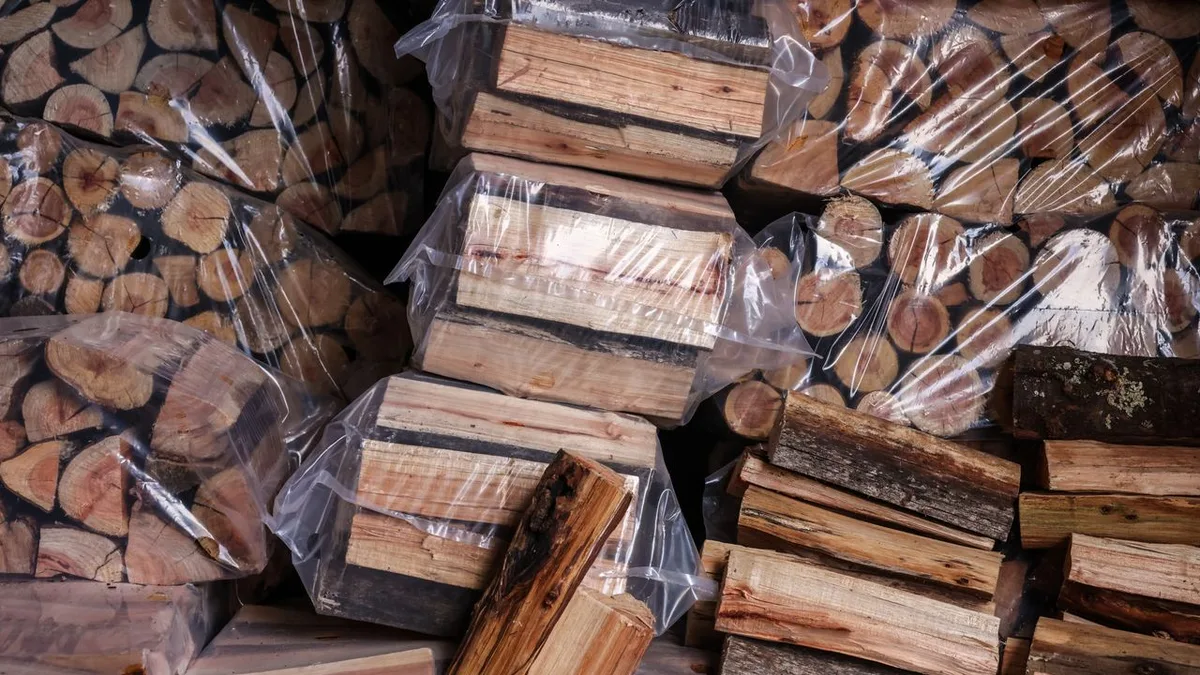
A cubic meter of stacked firewood costs about 8,000 dinars in parts of southern and eastern Serbia, 10,500 dinars in Belgrade and 11,000 dinars in Novi Sad. Glavonjic says the economics of gas versus wood differ by region:
“Gas is definitely the cheapest fuel for households that already have the installations and have used it for years.”
He adds that most wood users do not buy from depots at these prices, but rely on their own sources or buy from private entrepreneurs on better terms, so households’ actual costs of heating with wood can differ considerably.
What will drive pellet prices through winter?
Glavonjic does not expect disruptions in firewood, but he ties pellets to the price of electricity:
“When it comes to firewood, I do not expect any particular disruptions or any significant further rise in prices. With pellets, the situation will depend to a large extent on the price of electricity, because pellets and electricity are linked energy sources. If the cost of using one rises, it can affect demand for the other, and therefore prices.”
If the price of electricity stays unchanged and demand for pellets keeps falling, a new price rise, in his assessment, has no economic justification.