Alta Bank complaint: three addresses, 15 working days
The Deposit Insurance Agency says Alta Bank depositors can file a complaint with Alta Bank in bankruptcy, Postal Savings Bank or the Agency, with an answer due in 15 working days.
An Alta Bank depositor who believes an insured deposit was not paid out correctly has three places to send a complaint, and must receive an answer within 15 working days. The Deposit Insurance Agency published the guidance on November 18, 2026, with the payout only about a fifth of the way done.
Where can you file a complaint about the Alta Bank deposit payout?
A complaint can go to one of three institutions: Alta Bank in bankruptcy, Postal Savings Bank as the paying bank, or the Agency itself. Each accepts complaints in its own way.
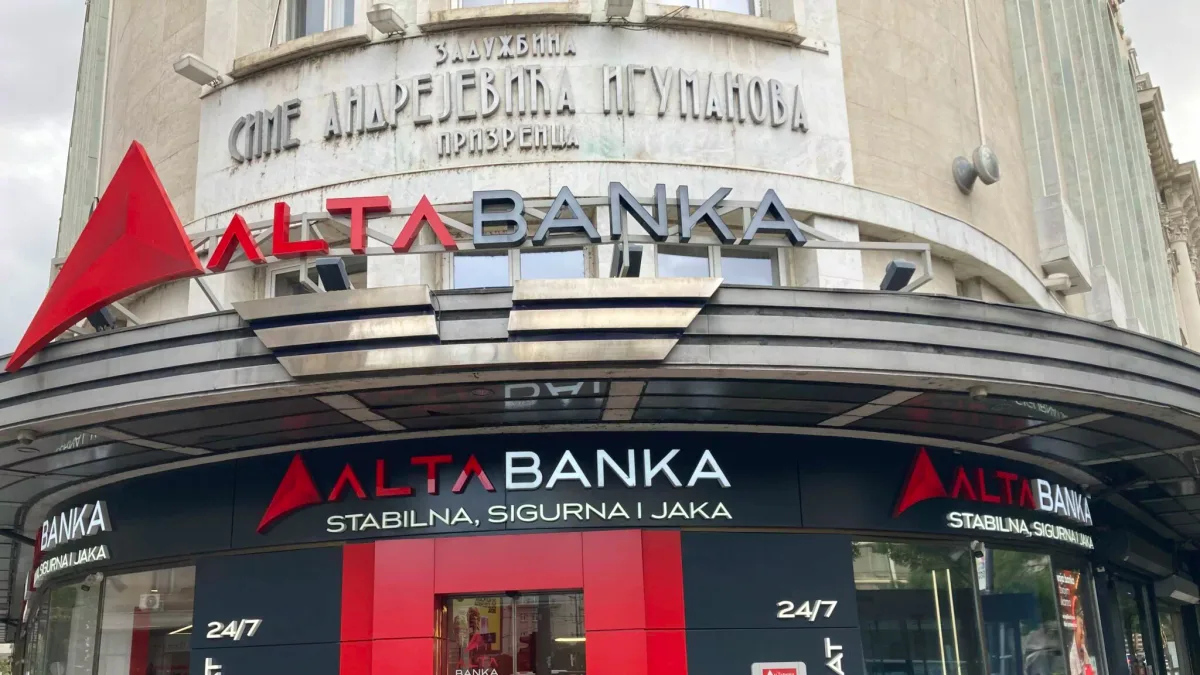
- Alta Bank in bankruptcy: in person at the counters at 121 Zorana Djindjica Boulevard in New Belgrade, by email at potvrde@altabanka.rs, or by registered mail to Alta banka a.d. Beograd u stecaju, Bulevar Zorana Djindjica 121, 11070 Novi Beograd.
- Deposit Insurance Agency: by email at reklamacijealta@aod.rs or by post to Masarikova 5, 11000 Belgrade.
- Postal Savings Bank: in person only, at the counter of any branch designated for paying Alta Bank depositors.
Anyone filing in person fills in a form and receives a stamped copy afterward. That copy is written proof the complaint was received. The form is available on aod.rs. The 15 working days run from receipt by the institution that handles the complaint, so days are not counted from the moment of sending.
What else did the Agency publish about certificates?
On the same day the Agency also published a notice about certificates issued by Alta Bank in bankruptcy. They cover three cases: the existence of a claim when the depositor has no original documents, an obligation on unused checks, and the validity of a power of attorney. A power of attorney issued before November 3, 2026 is valid only if the authorized person could fully dispose of the funds. Certificates are issued on working days from 9 a.m. to 3 p.m.
How much has been paid out so far?
As of 8:30 a.m. on November 18, Postal Savings Bank had paid out 3,105,434,831.40 dinars (about 26.5 million euros), or 22.60% of the dinar funds earmarked for the payout, and 48,051,857.60 euros, or 21.52% of the euro funds. That was paid over three working days and one Saturday, since the payout began on November 13. The previous snapshot, published on November 17, stood at about 15%.
Payouts are by appointment only, and 21,461 appointments have been booked through the bank’s portal. Appointments can be made at www.posted.co.rs, by calling 011 20 20 292 or at a branch. In a statement, the bank said:
Our priority remains that every client gets clear information, the support they need and efficient service
The Executive Board of the National Bank of Serbia revoked Alta Bank’s license on October 31, and the Commercial Court in Belgrade opened bankruptcy proceedings on November 3.
What has the state announced for Postal Savings Bank?
Finance Minister in a caretaker mandate Sinisa Mali told TV Tanjug that the state will buy back government bonds from Postal Savings Bank’s portfolio ahead of schedule, worth up to 50 billion dinars (about 426 million euros). The buyback will run in several tranches over this week and the next two to three weeks, so the bank has enough cash on hand (liquidity) to pay all depositors. According to him, the Government made the decision on Monday, November 16, after receiving reports from the National Bank of Serbia and from the bank itself.
Mali said the collapse of Alta Bank had affected the entire system:
People were withdrawing money, and I think they are still withdrawing money from their accounts, not trusting the stability of the banking system.
He explained the withdrawals from other banks this way:
People still have the memory of the 1990s when it comes to banks and the banking system. When you see one bank fail, then of course people start withdrawing their money from other banks too.
The minister added that no bank can survive if all of its depositors demand their money at the same time, because that money has been lent out to loans and projects.