Pilates or yoga: five differences that show which practice fits you
Pilates and yoga look similar on the mat, but their purposes pull in opposite directions. Five differences that help you decide which one suits your body and goals.
Are pilates and yoga the same thing under two names? Short answer, no. Both use a mat, controlled breathing and slow movement, but their goals point in opposite directions.
Joseph Pilates developed pilates in early 20th century Germany as a rehabilitation system for soldiers. Yoga has a tradition stretching back thousands of years in India, with a spiritual dimension that was later separated from the physical aspect in the West.
Treating them as the same is like treating swimming and running as the same. Both are sport, neither trains the body the same way.
What pilates actually does
Pilates targets the deep trunk muscles, the so-called core, and demands precise control over every movement. A typical class spends 50 to 70 per cent of the time on sets of 8 to 12 reps with focused posture and breath.
The effects are stronger lower back, less lumbar pain, better posture, defined abdominals without big volume, sharper coordination.
Pilates does not strip much weight. It reshapes the silhouette.
What yoga actually does
Yoga is a sequence of poses held from 30 seconds to several minutes, focused on stretching, balance and pranayama breathwork. There are many styles, from the dynamic Vinyasa and Ashtanga to the slower Hatha and Yin.
The effects are greater flexibility, lower stress, better sleep, a calmer nervous system, longer attention span. Regular yoga lowers blood pressure, confirmed by multiple Harvard Medical School studies.
Five key differences
- Tempo. Pilates is more dynamic, with continuous movement in sets. Yoga is slower, holding poses. If standing still for a minute bores you, pilates fits. If constant changes exhaust you, yoga fits.
- Focus. Pilates builds core strength. Yoga builds flexibility, balance and mental calm. Neither is better, only different.
- Breath. In pilates, breath syncs with movement, exhaling on exertion. In yoga, breath is a standalone practice with rhythms that take years to master.
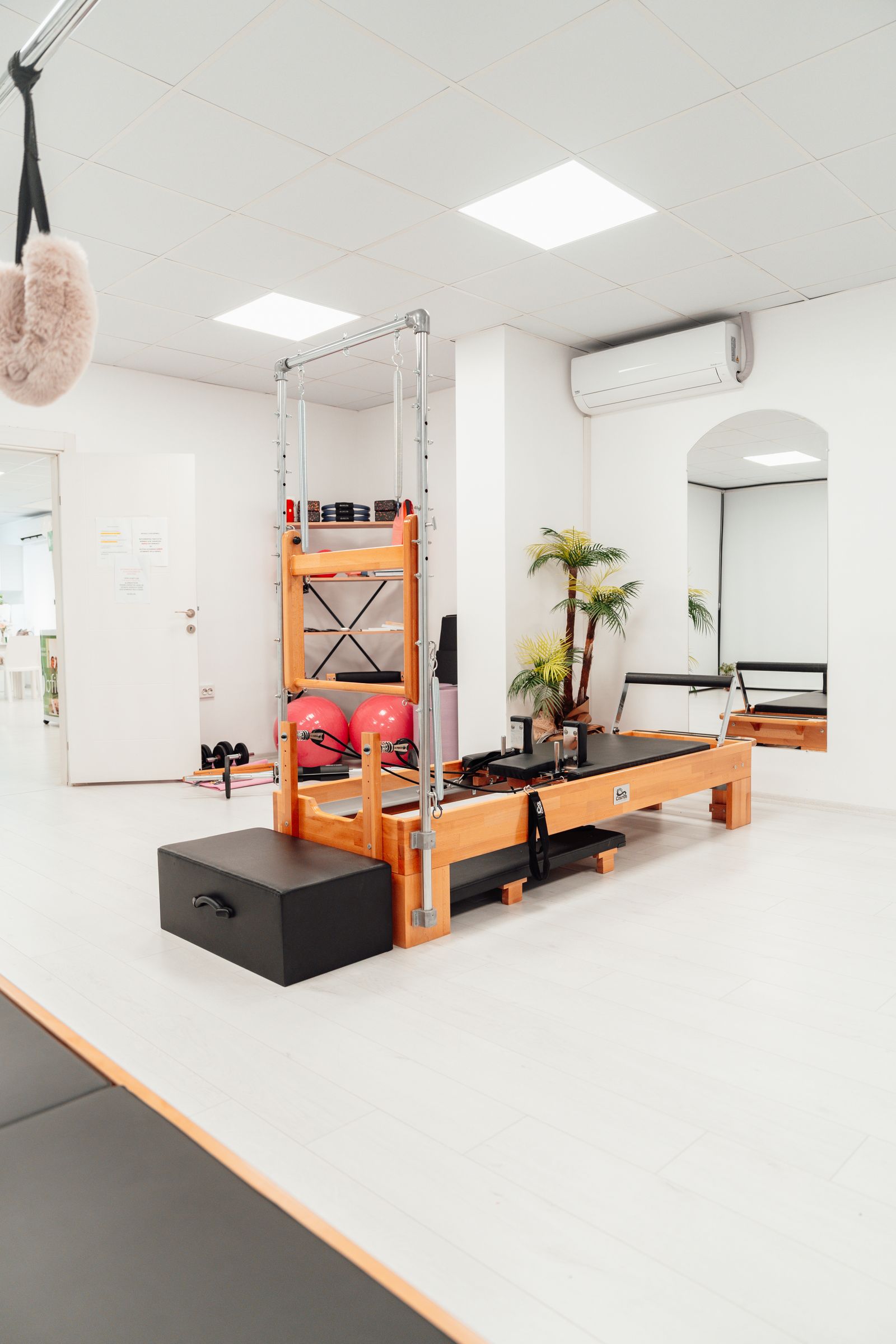
- Equipment. Mat pilates only needs a mat. Reformer pilates uses dedicated spring-loaded equipment that costs €800 to €2,000 per unit, which is why studio classes cost more. Yoga generally needs only a mat, a block and a strap.
- Results in a typical week. Pilates produces visible strength changes in four to six weeks of training three times a week. Yoga delivers calm and flexibility from the first class, with deeper effects in eight to twelve weeks.
Who each practice suits
Pilates suits:
- People with back pain, with their doctor’s approval
- Anyone with a weak core and poor desk posture
- Athletes looking for a complementary practice alongside cardio
- New mothers in the postpartum period, with their doctor’s clearance
Yoga suits:
- People in stressful jobs who want a calming tool
- Anyone with muscle tightness from sitting or training
- People struggling with sleep
- Fitness beginners who want a gentle start
What if both appeal to you
You can do both, you do not have to choose. The rule is to train different things on different days.
Pilates Monday, yoga Wednesday, repeat Friday.
The body gets enough variety, the injury risk drops.
Prices in Serbia for 2026
- Mat pilates group class, 800 to 1,500 dinars, roughly €7 to €13 per session
- Reformer pilates one-to-one, 2,500 to 4,500 dinars, roughly €21 to €38 per class
- Yoga group class, 700 to 1,200 dinars, roughly €6 to €10
- Yoga unlimited monthly, 4,500 to 8,000 dinars, roughly €38 to €68
- Private class, either type, 3,000 to 6,000 dinars, roughly €26 to €51
Online options exist for both, starting around 1,500 dinars per month for platforms with recorded classes.
A practical plan for the first month
If this is your first attempt, do not jump straight into private sessions. A small group of 6 to 10 people is economical and lets the instructor correct you.
Private sessions become worthwhile after the first month, once you know the basics and can target your weak points.
A practical rule, give a practice at least 5 classes before deciding it is not for you. The first class is always strange, the fifth starts to feel good, the tenth is already a habit.
Are you already practising pilates or yoga? What change did it bring you? Let us know in the comments.