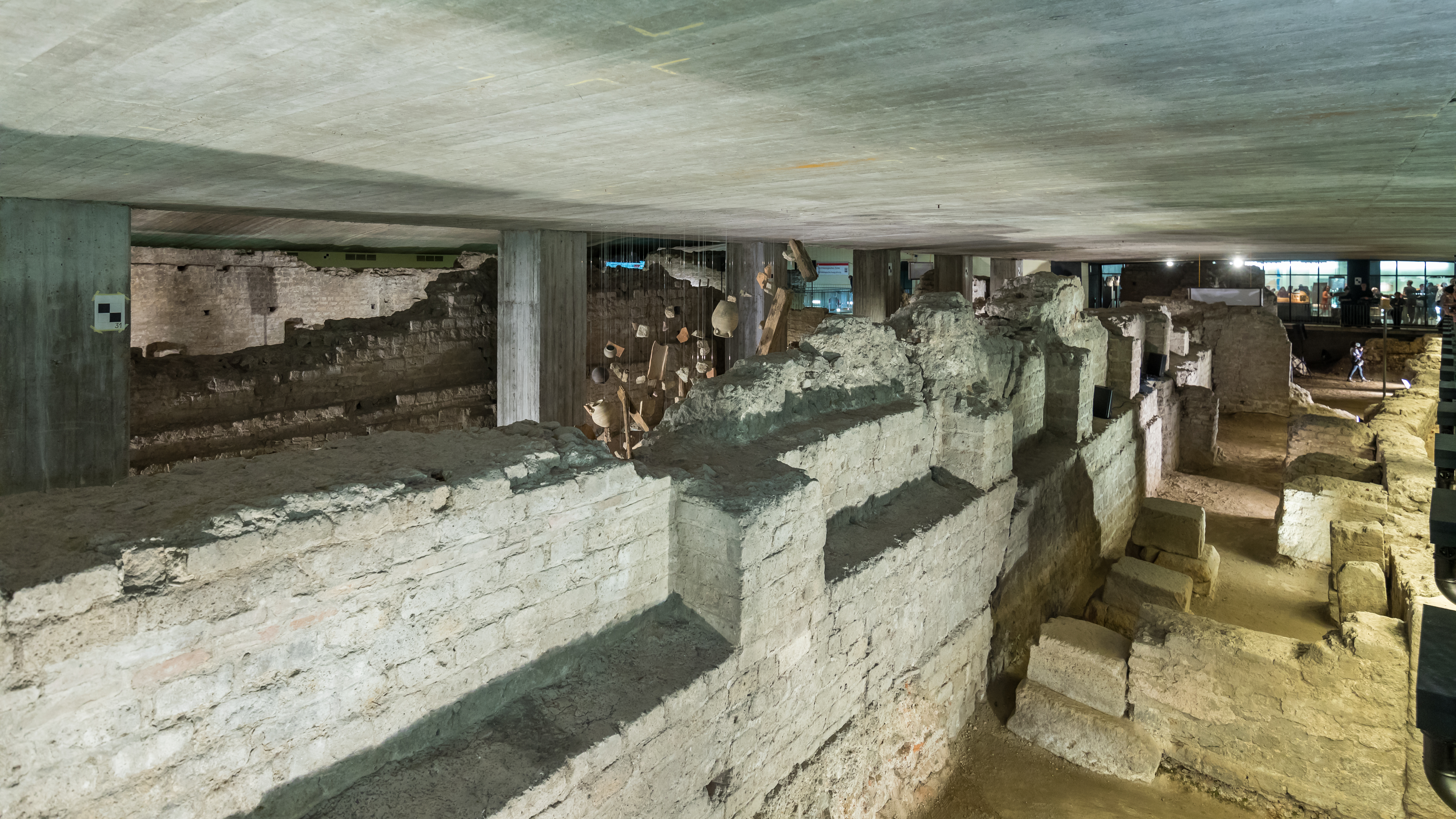
Bete I in Ivory Coast: humans lived in the rainforest 150,000 years ago, twice as early as previously thought
A team led by Eslem Ben Arous reports in Nature an analysis of stone tools from the Bete I site in southern Ivory Coast that, using optically stimulated luminescence and electron spin resonance, pushes the earliest confirmed rainforest occupation back by more than double.

- The Bete I site in southern Ivory Coast has been dated to roughly 150,000 years ago.
- Before this finding, the oldest evidence of rainforest occupation in Africa was about 18,000 years old.
- The dating relied on optically stimulated luminescence and electron spin resonance.
- The result reshapes the picture of Homo sapiens as primarily a savanna species.
A team of archaeologists and geochronologists led by Eslem Ben Arous has reported in Nature results that push the age of human occupation of African rainforests back by at least 132,000 years. The work centres on the reopened site of Bete I in the Aniama region of south-eastern Ivory Coast, first investigated by Francois Yode Gede in the 1970s.
Before this study, the earliest documented trace of human life in an African rainforest was about 18,000 years old, while the earliest rainforest trace anywhere on the planet, in South-East Asia, was about 70,000 years. The new finding changes the consensus about the kinds of ecosystem in which the biological and cultural evolution of early Homo sapiens took place.
What the team found
The researchers relocated the site in 2020 after half a century of neglect, during which it had been partly overgrown. Excavation produced a series of stone tools in layers below the surface, in a sedimentary context that can be reliably dated using modern laboratory methods.
The team applied two independent dating procedures:
- optically stimulated luminescence, which measures the time since quartz grains were last exposed to sunlight
- electron spin resonance, which uses defects in the crystal lattice of certain minerals as a calendar of radioactive exposure
Both procedures yielded a consistent age of about 150,000 years for the layer in which the tools were found. Consistency between methods is a standard control in geochronology.
What this means for evolution
This pushes the earliest known evidence of humans in rainforests back by more than double the previously established estimate, and challenges the picture in which the biological evolution of Homo sapiens was purely a savannah story.
Eslem Ben Arous stresses that the finding supports the picture, gradually firming up, in which human evolution is not a sequential advance from one ecosystem to another but parallel adaptation in different environments.
Methodology and limits of the study
The team is explicit about the limits:
- the available material consists of stone tools, with no human bones in the same dated sequence
- without bones it is not possible to identify with certainty who exactly lived in this rainforest area, whether anatomically modern Homo sapiens or another species of the Homo genus
- the age of the layers was measured in the sediments and not on the tools themselves, so a conservative reading is that the occupation of the site must be older than the lowest dated layer
- the southern part of Ivory Coast underwent large climate changes during the last 150,000 years, so the ecosystem at the site may have shifted between rainforest and wooded steppe
The team now plans to extend the work to nearby sites in the hope of finding human remains. Without them, the finding is important within its own frame but remains open to future revision.
Link to Serbian archaeology
The discovery is of interest because the dating methodology applied is identical to the one used by the Center for Archaeological Research at the Faculty of Philosophy in Belgrade for finds from the Palaeolithic phase at Salitrena Cave and Tabula Trajani. Scientific dialogue with international laboratories gives Serbian researchers independent calibration without local OSL and ESR infrastructure of their own.
Is it time to abandon the savannah hypothesis as the central frame for Homo sapiens evolution?
Share your view: was diversity of ecosystems in human prehistory the rule or the exception? Tell us in the comments.