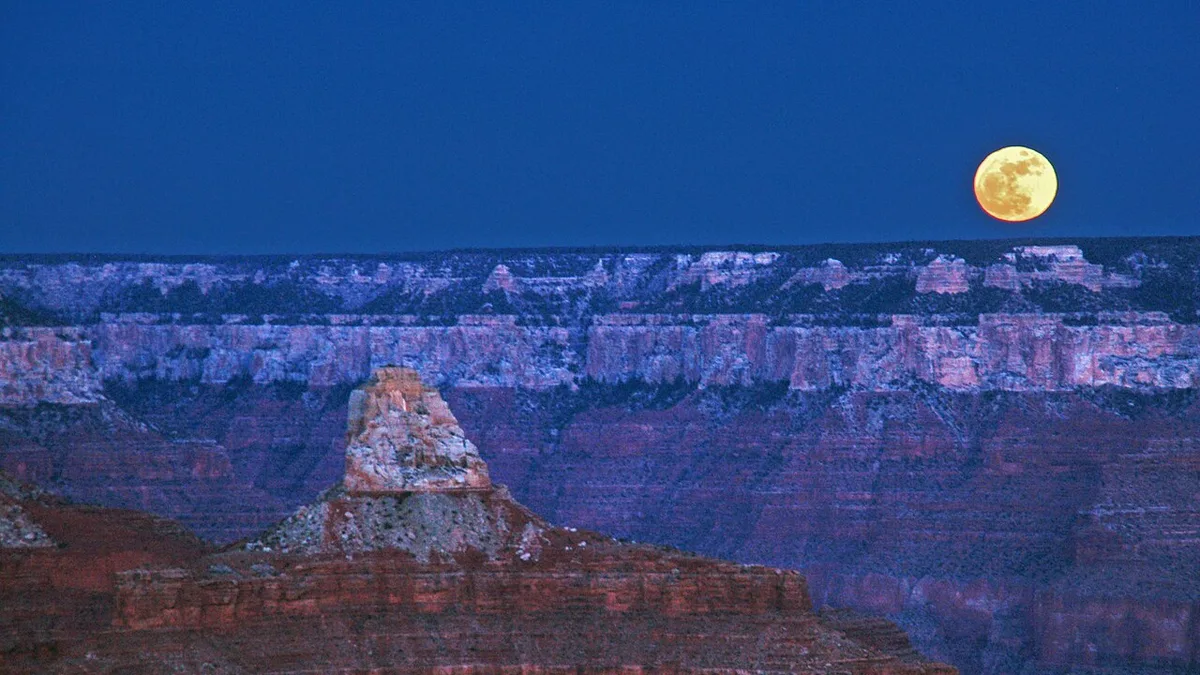
Strawberry Moon Rises Over Serbia on June Night
June's full moon, traditionally called the Strawberry Moon, peaks on the night of June 29 into June 30 and will be visible to the naked eye across Serbia, no telescope needed.

- June's full moon, known as the Strawberry Moon, peaks on the night of June 29 into June 30.
- For Belgrade, the exact moment of fullness falls in the early hours of June 30 local time.
- The sight is visible to the naked eye across Serbia, with no telescope or binoculars required.
- The Moon will appear full for three consecutive nights, giving several chances to watch.
June’s full moon, traditionally called the Strawberry Moon, peaks on the night of June 29 into June 30 and will be visible to the naked eye across Serbia. For Belgrade, the precise moment of fullness falls in the early hours of June 30 local time, and the view requires neither a telescope nor binoculars. After several unsettled, rainy days midweek, clearer skies open a real chance to observe it.
The name Strawberry Moon is a traditional, seasonal label for the June full moon, tied to the time when strawberries ripen across the Northern Hemisphere. Despite the name, the Moon is not actually pink. Any warm orange or reddish tint that observers sometimes notice comes from the Moon sitting low over the horizon and its light scattering through a thicker layer of atmosphere, not from anything about the full phase itself.
This year’s June full moon is the first after the summer solstice on June 21. Because of the geometry of the Sun and Moon during this period, the full moon stays unusually low over the horizon in the Northern Hemisphere. That low position is more than an astronomical curiosity: a moon near the horizon looks larger and warmer in color, which makes the moment of moonrise the most rewarding for viewing and photography, especially with foreground objects such as trees, rooftops, or hills.
When and how to watch the Strawberry Moon over Serbia?
No equipment is needed. The strongest impression comes at moonrise, when the Moon is still low over the eastern horizon, so it is worth finding a spot with an open view to the east, away from harsh street lighting. Although the exact full moment arrives in the early hours of June 30, the Moon will look almost completely lit on the nights around that date. In practice, that gives observers three consecutive evenings, roughly June 28, 29, and 30, to catch the sight, which lowers the risk of missing it because of cloud cover on a single night.
Clear skies following the unsettled part of the week improve the odds of good visibility, though the final condition depends on local cloud cover at the given moment. For photography, keep in mind that the Moon gains altitude quickly, so the warmest, largest-looking frame comes in the first half hour to hour after it rises.
Why does this particular full moon stand out?
From an astronomical standpoint, a full moon is a geometric moment, the point when the Sun and Moon sit on opposite sides of Earth so the Moon’s facing side is fully lit. This happens every month and is not, by itself, a rare event. What makes this June full moon interesting is the combination of its traditional name, the low horizon position typical of the period around the solstice, and how easily it can be seen with the naked eye.
It is worth being precise about what this event is not. The Strawberry Moon is not an eclipse, it is not a supermoon by definition, and it does not guarantee a red color. It is a regular lunar phase that, this time, is conveniently placed in time and appearance for observers in Serbia. A clear sky at the right moment remains the only real condition that cannot be guaranteed in advance.
Will you head outside this year to catch the Strawberry Moon rising over your own horizon?