Voyager 2 Wins Another Year of Science After Power Fix
NASA says a power saving maneuver on Voyager 2 succeeded, keeping the magnetometer, the plasma wave subsystem and the cosmic ray subsystem running at least a year longer than planned.

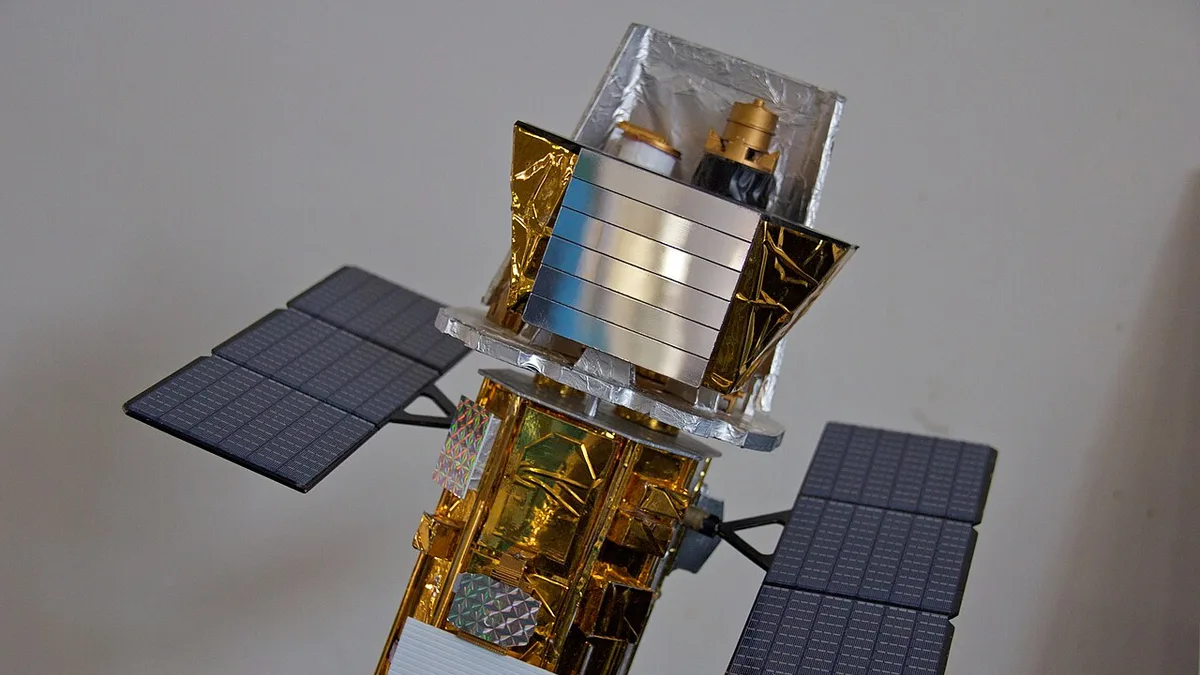
Engineers at NASA’s Jet Propulsion Laboratory (JPL) carried out a maneuver on the Voyager 2 probe that freed up extra electrical power, so all three science instruments still running on the spacecraft will stay on at least a year longer than planned. NASA announced the result on August 4, 2026, on the mission’s official blog. Until now, the move had only been discussed as a plan.
The team named the maneuver the “Big Bang.” The procedure meant switching off several power hungry devices at once and replacing them with lower power alternatives, on the condition that the spacecraft stayed warm enough to keep working at all. The savings didn’t come from cutting science, but from shifting power away from parts of the spacecraft that have nothing to do with the science instruments.
Why Voyager Runs Out of Power on a Schedule
Both Voyager spacecraft are powered by radioisotope thermoelectric generators, devices that convert heat from decaying plutonium into electricity. Each craft carries about 13.5 kilograms of plutonium 238, and as that fuel decays, output power drops by roughly 4 watts a year. Almost half a century after launch, Voyager 2 lifted off on August 20, 1977, the power margin has shrunk to a thin cushion, and the team has spent years shutting down anything that isn’t essential.
That shutdown schedule has its own history. Each spacecraft carried 10 science instruments, and most were switched off once their planetary flybys ended and there was no longer a need for them. Since 2024, instruments that were still doing useful science have been shut down purely for lack of power: on Voyager 2, the plasma spectrometer went first in September 2024, followed by the low energy charged particle subsystem in March 2025. Following that same pattern, without this power saving maneuver another instrument on Voyager 2 would have had to go dark before the end of 2026.
Why a Fix Like This Can’t Be Corrected Midflight
A signal takes about 19 and a half hours to reach Voyager 2 in one direction. A command sent from Earth arrives after nearly a full day, and confirmation that something went wrong takes just as long to come back. That’s why an operation like this has to be planned in advance down to the last detail, with no way to fix anything in real time once it’s underway.
Voyager 2 is now running its magnetometer, its plasma wave subsystem and its cosmic ray subsystem. The magnetometer measures the strength of the interstellar magnetic field and how it interacts with the Sun’s magnetic field. The plasma wave subsystem measures the density of interstellar plasma. The cosmic ray subsystem tracks the composition, energy and distribution of cosmic rays outside the heliosphere. None of that data can be gathered anywhere else, since the two Voyagers are the only spacecraft that have ever operated beyond that solar shield.
Voyager 1 Is Next
The team plans to apply the same procedure to Voyager 1 in the coming months. That spacecraft is farther from Earth, and this year it will cross a milestone that’s easy to picture: NASA says that on November 18, 2026, Voyager 1 will be one light day from Earth, about 25.9 billion kilometers (16.1 billion miles) away. It will be the first human made object ever to reach that distance.
It’s worth separating what this maneuver achieved from what it didn’t. It did not generate new power, it only redistributed the power the spacecraft already had, and the underlying loss of about 4 watts a year is untouched. NASA framed the extension as at least a year, a floor rather than an expiration date for the mission. Engineers had already estimated that the power saving program could keep both spacecraft operating into the 2030s, though with only one instrument running on each, and that estimate hasn’t changed with this announcement. In a mission where both probes have been flying for almost half a century, an unforeseen failure remains a more likely cause of the end than power running out.