NASA Picks PRIMA Telescope for 2033 Launch
NASA selected the infrared telescope PRIMA on Wednesday as the first mission in its new Probe Explorers class. The project, estimated at $1.2 billion, is set to launch in 2033 and run five years.

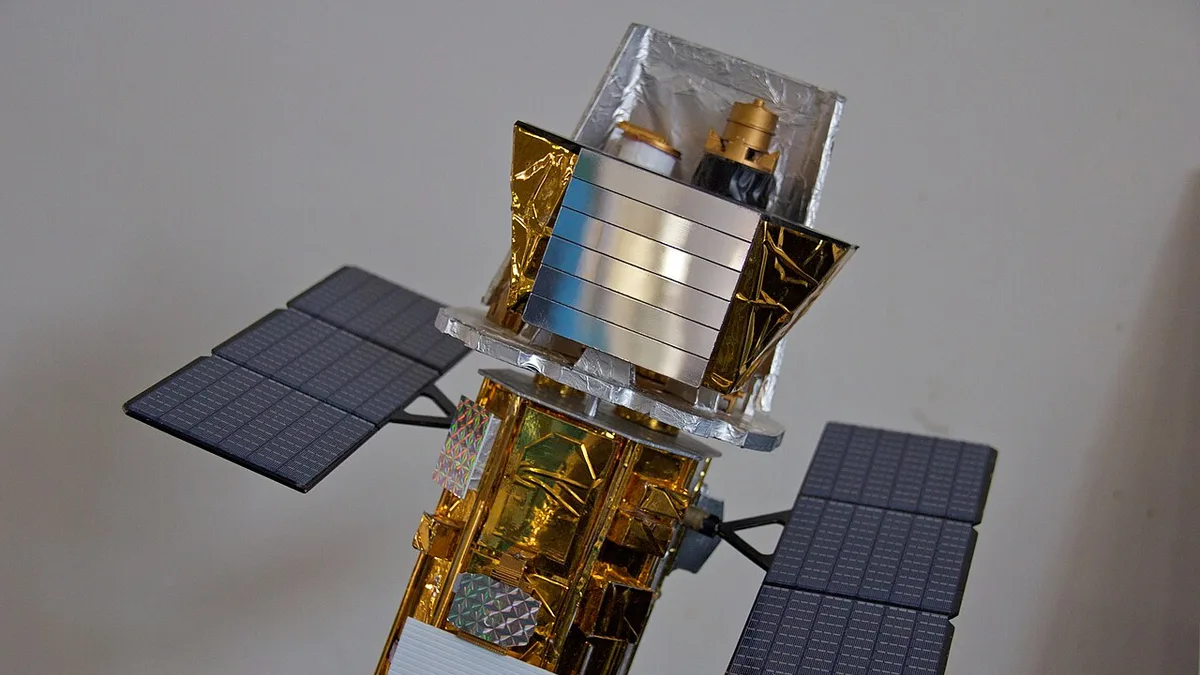
NASA announced on Wednesday, September 23, 2026, in release RELEASE 26-076, that it has selected the infrared telescope PRIMA (PRobe far-Infrared Mission for Astrophysics) as the first mission in its new Probe Explorers class, part of the agency’s long-running Explorers program. The mission now moves into Phase B development, where the preliminary design and technology are worked out, with the goal of an observatory that bridges the gap between existing infrared telescopes and ground-based radio telescopes.
The new Probe Explorers class was recommended back in 2020 by the Decadal Survey of the National Academies of Sciences, Engineering, and Medicine, the document that sets US astronomy priorities every ten years. NASA chose PRIMA after weighing several competing concepts, judging them on scientific merit in line with that survey’s recommendations, on whether development was feasible within the given schedule and budget, and on how well the technology could serve larger missions down the line.
Nicky Fox, associate administrator for NASA’s Science Mission Directorate at agency headquarters in Washington, described what the selection means:
PRIMA is humanity’s next window into the deep universe. It will reveal what has until now stayed hidden across cosmic time, helping us better understand how planets, stars and black holes form, and even how water made its way to Earth.
Before the mission can advance to Phase C, when construction actually begins, it has to clear a review of its technical, programmatic and cost readiness. That is also where the sources diverge on price: NASA’s release puts a $1.2 billion cap on the project, not counting launch and other costs outside the project itself, while the California Institute of Technology (Caltech), one of the mission’s partners, describes PRIMA in its own release simply as a $1 billion observatory. Launch is penciled in for 2033, with the mission expected to run for five years.
The telescope’s mirror measures 1.8 meters across, or 5.9 feet as NASA’s release also puts it, and will be cooled to several hundred degrees below zero. PRIMA carries two instruments: the PRIMAger camera and polarimeter, built for mapping large swaths of sky, and the FIRESS high resolution spectrometer. Together they will observe wavelengths between 24 and 235 micrometers, a range that sits between the James Webb Space Telescope and ground-based radio telescopes and has not been systematically covered before.
Sean Domagal-Goldman, director of NASA’s Astrophysics Division, added that no single mission can do it all:
No single mission can explore all the mysteries of the universe on its own. But by extending our fleet’s reach into the infrared with PRIMA, we’re gaining an extraordinarily comprehensive view of the cosmos.
The technology behind the telescope rests on what are known as KID detectors, superconducting sensors invented in 1999 by Jonas Zmuidzinas of Caltech and Rick LeDuc of NASA’s Jet Propulsion Laboratory (JPL). The first test of the detectors took place in 2007 at an observatory atop Maunakea in Hawaii. Zmuidzinas, now a physics professor at Caltech, described that breakthrough in his institute’s own release:
PRIMA represents something that rarely happens in astronomy: in this less explored band of wavelengths, the far infrared, we have the chance to boost sensitivity by a factor of about a thousand. That’s genuinely rare.
The mission is run by NASA’s Jet Propulsion Laboratory in Southern California, with the Goddard and Marshall centers also taking part. International partners include the French space agency CNES, the Italian Space Agency (ASI), the German Aerospace Center (DLR), the Canadian Space Agency (CSA), the Korea Astronomy and Space Science Institute (KASI), the Japan Aerospace Exploration Agency (JAXA) and the UK Space Agency. About 75 percent of observing time will be open to any scientist, and the mission team has already received close to 200 proposals from more than 400 astronomers around the world. The research goals span the formation of exoplanets, the growth of galaxies and black holes across cosmic history, the buildup of dust and heavy elements in the universe, and the origin of water on Earth.
Entering Phase B is not a final confirmation of the mission. PRIMA still has to pass a review before it can move into Phase C, and NASA and Caltech describe the project’s cost differently in their own releases, one citing an upper limit of $1.2 billion without launch costs, the other describing a $1 billion observatory, so the final price tag has not been settled. The 2033 launch date is the current development target, not a guaranteed one.