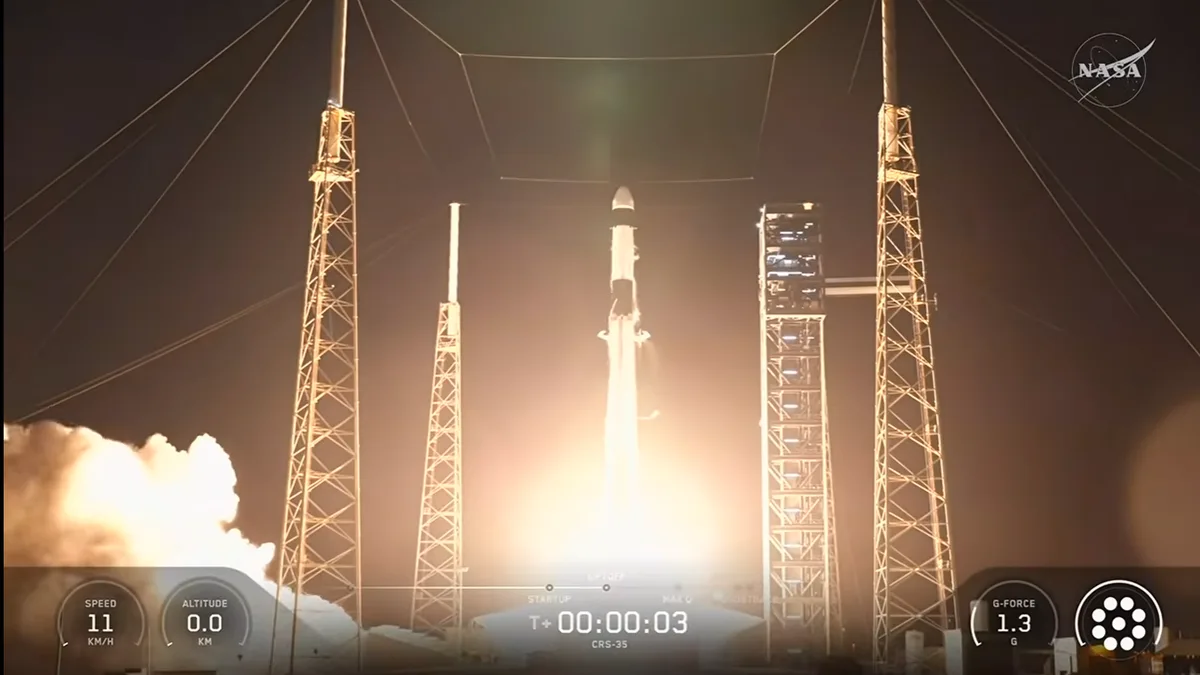
Crew-13 Launch to ISS Set for Oct. 1 at 11:10 a.m. EDT
A Falcon 9 will carry a Dragon with Jessica Watkins, Luke Delaney, Joshua Kutryk and Sergey Teteryatnikov, with docking at the station planned for about 2 a.m. Serbian time.

The Crew-13 mission is set to launch to the International Space Station (ISS) on Thursday, October 1, no earlier than 11:10 a.m. Eastern Daylight Time, which is 5:10 p.m. in Serbia. NASA said a SpaceX Falcon 9 rocket will lift the Crew Dragon spacecraft from Space Launch Complex 40 at Cape Canaveral Space Force Station in Florida.
Who is flying, and in what role?
Crew-13 is the 13th operational flight of the Commercial Crew program, under which NASA contracts with private companies to carry astronauts, and the 21st Crew Dragon flight with a crew in orbit. NASA announced the lineup on April 23, 2026:
- Jessica Watkins, NASA, spacecraft commander, geologist. She is the only crew member who has flown before, on Crew-4.
- Luke Delaney, NASA, pilot, former Navy pilot, first flight.
- Joshua Kutryk, Canadian Space Agency (CSA), mission specialist, fighter pilot, first flight. According to Wikipedia, he is the first Canadian to fly to orbit under the Commercial Crew program.
- Sergey Teteryatnikov, Roscosmos, mission specialist, submariner, first flight.
The crew has been in quarantine at Johnson Space Center in Houston, and NASA’s plan called for them to head to Kennedy Space Center in Florida on Saturday, September 26.
How long does the trip to the station take?
Less than nine hours. If the launch goes ahead on October 1, Dragon should dock at the forward port of the Harmony module at about 8 p.m. Eastern time, or about 2 a.m. on October 2 in Serbia. After liftoff, the Falcon 9 puts the spacecraft into orbit, and the capsule then adjusts its path to match the station’s before docking.
Once aboard, the four crew members will join Expedition 75. According to Wikipedia, the mission lasts about 180 days, with a return planned for March 2027.
What could delay the launch?
The weather. The U.S. Space Force’s Weather Squadron 45 puts the chance of favorable conditions at 60 percent, and the main concerns are the cumulus cloud rule and flight through precipitation. That is why NASA speaks of a “no earlier than” time rather than a firm date.
This is not the first target. The flight was scheduled for September 12 but was postponed when a leak was found in the oxidizer tank of the spacecraft, named Grace, during preparations. Delaney said at the time that the significance of that number “was not lost on” the crew, and that they draw on the legacy of the Apollo 13 mission. The crew has been in final quarantine since September 17, and at the flight readiness review on September 25, NASA, SpaceX and the international partners gave the green light to continue preparations.
What does this mean for the station?
Crew-13 arrives at a moment when the other American crew vehicle, Boeing’s Starliner, is discussed only in the longer term: uncrewed no earlier than December, with a crew in 2028, as we reported earlier. For now those are plans, not confirmed dates. The same goes for every time in this article: a 2 a.m. docking counts only if the launch goes ahead on October 1.