Crew-13 reaches ISS in 7 hours 55 minutes, a US record
Crew-13 docked at the Harmony module at 1:05 a.m. Belgrade time, 7 hours and 55 minutes after launch from Cape Canaveral. NASA calls it the fastest American arrival at the station.

A Crew Dragon capsule carrying four astronauts docked with the International Space Station at 1:05 a.m. on October 2 Belgrade time, which was 7:05 p.m. Eastern. Liftoff to docking took 7 hours and 55 minutes, and NASA lists it as the fastest trip from launch to docking by any American spacecraft in the station’s history.
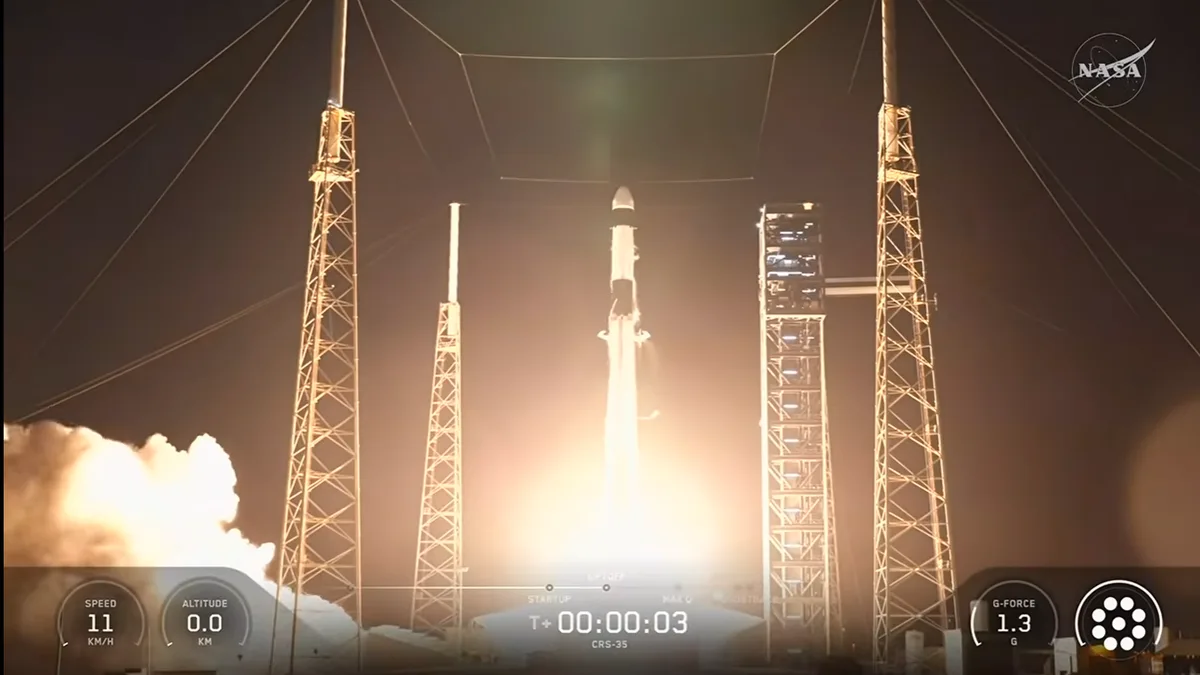
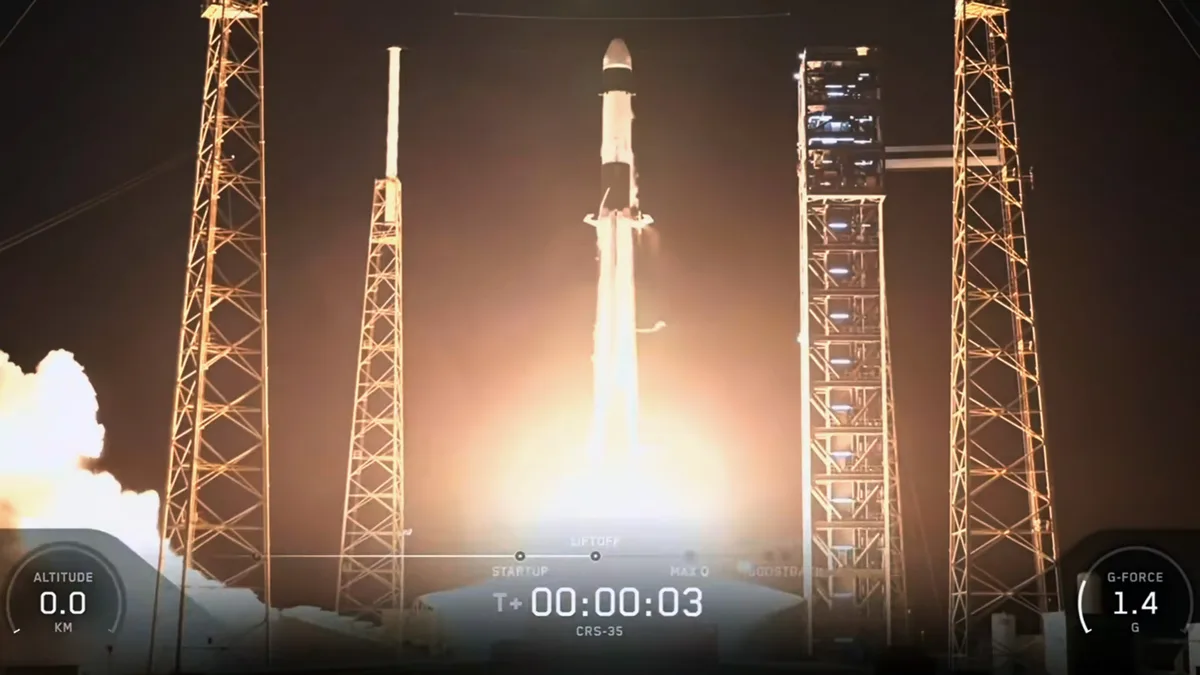
Falcon 9 lifted off on October 1 at 11:10 a.m. Eastern, 5:10 p.m. in Serbia, as we reported ahead of the launch. It flew from Cape Canaveral Space Force Station in Florida. The capsule is named Grace, carries the designation C-213, and is making its second trip to the station. The rocket’s first stage, B1101, flew for the third time and landed at Landing Zone 40, next to the launch pad.
Docking took place at the forward port of the Harmony module. The crew then moved on to the standard checks for leaks and pressure, and the hatch between the capsule and the station was scheduled to open at about 8:45 p.m. Eastern, around 2:45 a.m. in Serbia.
Why did the flight to the station take under eight hours?
NASA gives the exact time, 7 hours and 55 minutes, while AP rounds it to about eight hours. AP explains that a favorable position of the station at the moment of liftoff allowed the quick transfer. The same source rates the flight as the fastest not only for SpaceX but for any American entity, NASA included.
The launch itself came late. The original date, September 12, was scrubbed because of an oxidizer leak in the capsule’s propulsion system, and the launch slipped by about three weeks. On launch day, thick clouds threatened to stop the countdown until late morning, but the sky opened just long enough.
Who is on the crew?
The mission commander is Jessica Watkins (NASA), a geologist who worked on the Curiosity rover ten years ago. This is her second flight to the station after a long stay in 2022, and she became the first Black woman to lead a crew into orbit. The pilot is Luke Delaney (NASA), a retired Marine. With them are Joshua Kutryk, a colonel in the Royal Canadian Air Force who flies for the Canadian Space Agency, and Sergey Teteryatnikov of Roscosmos, a former submariner. All three are on their first flight.
The crew joins Expedition 75 and stays about six months, until March 2027, when it will replace the four astronauts who have been aboard since February. This is the 13th crew SpaceX has flown for NASA, and the Crew-13 name on the mission patch is a nod to Apollo 13. After reaching orbit, Watkins said:
“Thank you for an incredible ride.”
From orbit she added that the crew brought a small crocheted golden dragon named Lucky, with a four-leaf clover around its neck. “We thought it wouldn’t hurt to bring a little luck of our own, just in case, but clearly we don’t need it,” Watkins said, adding that they are “the four luckiest people on planet Earth or off it.”
What does a third child during the mission mean?
Kutryk’s wife, Heather, is expecting their third child at the end of November, while he is in orbit. According to AP, he will be the fourth person to become a father while circling Earth. The Canadian Space Agency has pledged support for the whole family, and NASA’s International Space Station program manager, Dana Weigel, said before the launch:
“A lot of life-changing things can happen in six months.”
Weigel added that the agency will do everything it can to keep Kutryk connected with his family. No specific arrangement for contact from orbit has been announced. Precedents exist: in 2004 NASA set up a radio link between astronaut Mike Fincke on the station and the maternity ward where his wife was giving birth to their daughter, and in 2009 Randy Bresnik called his wife in the hospital from orbit. Austrian Franz Viehbock learned of his daughter’s birth only a day later in 1991, because she was born a few hours after his liftoff for the Mir station.