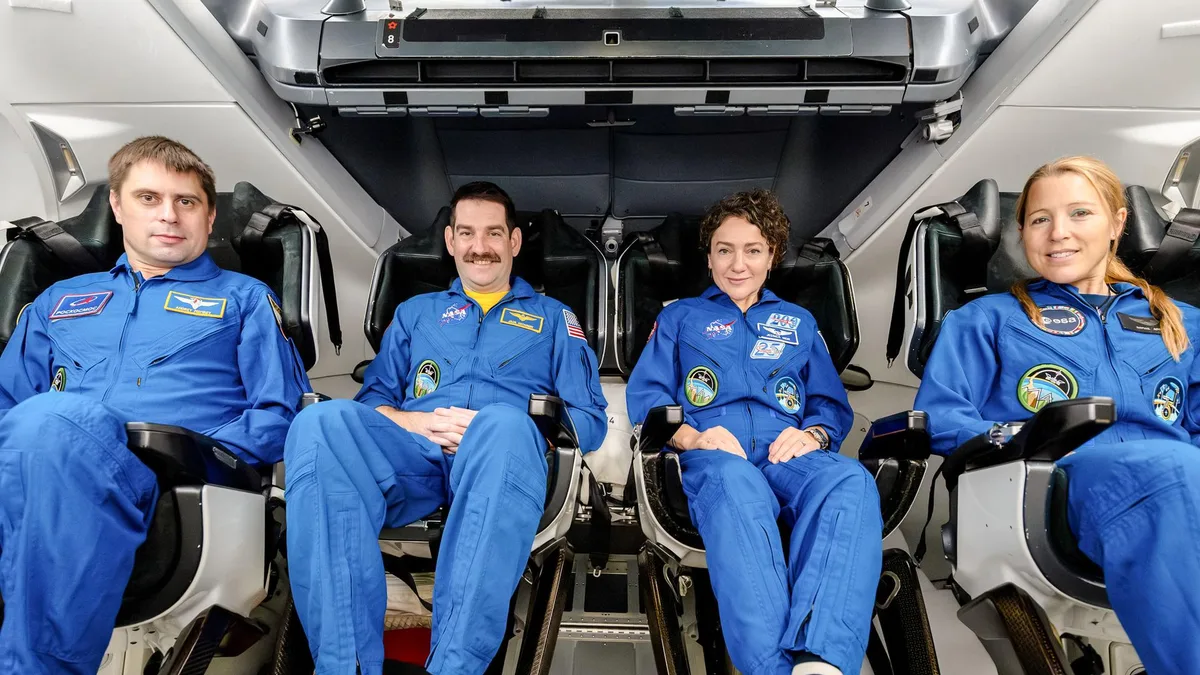
Crew-12 splashes down off Los Angeles after 237 days
The Crew Dragon capsule landed in the Pacific on Thursday at 5:34 p.m. Serbian time. Sophie Adenot is the first French woman to have done a spacewalk from the station.
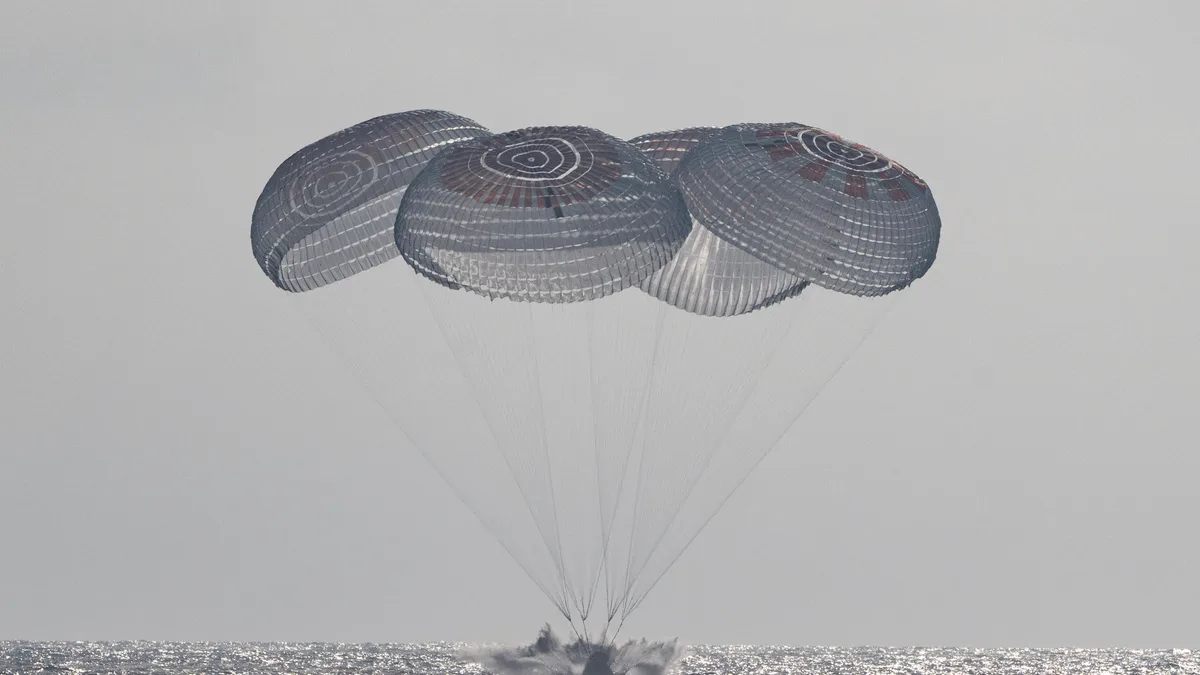
The SpaceX Crew Dragon Freedom capsule splashed down in the Pacific Ocean off the coast of Los Angeles on Thursday, October 8, 2026, at 8:34 a.m. Pacific daylight time, which was 5:34 p.m. in Serbia. On board were the four members of Crew-12, returning from the International Space Station. As we reported earlier, the capsule had undocked from the station and a Thursday landing was expected.
The crew consisted of commander Jessica Meir and pilot Jack Hathaway of the American space agency NASA, Sophie Adenot of the European Space Agency (ESA), and Russian cosmonaut Andrey Fedyaev of Roscosmos. According to NASA, they spent 237 days in orbit, traveled more than 100 million miles (about 161 million kilometers) and circled the Earth more than 3,792 times.
Teams on SpaceX recovery ships pulled the capsule and the crew out of the water shortly after splashdown. After standard medical checks, the astronauts head to shore and from there to the Johnson Space Center in Houston.
“Jessica, Jack, Sophie, and Andrey spent 237 days living and working in orbit, traveled more than 100 million miles, advanced important science, and returned home safely thanks to the exceptional knowledge and expertise of thousands of people at NASA, SpaceX, and our international partners.”
That was the statement NASA released on October 8 from agency administrator Jared Isaacman (translated from Serbian, so the wording may differ slightly from the English original). He added that the capability, experience and trust gained from flights like this will make it possible to go further, and he thanked the crew and their families.
What did the return through the atmosphere look like?
The descent began about 45 minutes before splashdown, at a speed of 17,500 miles per hour (about 28,000 kilometers per hour). The capsule fired its engines to leave orbit, and during entry the heat shield withstood temperatures of up to 3,500 degrees Fahrenheit (about 1,930 degrees Celsius). Four parachutes slowed it to 16 miles per hour (about 26 kilometers per hour) just before it hit the water.
What did the crew do for 237 days?
According to NASA, Crew-12 spent hundreds of hours on scientific research. The projects included:
- a study of stem cell production for cell-based therapies
- a demonstration of making intravenous solutions on demand, for future long missions
- research into how bacteria that cause pneumonia can lead to lasting heart damage
- nutrition research
- a study of how body characteristics affect blood flow in weightlessness
Part of the work was done outside the station. Meir made four spacewalks totaling a little over 27 hours, bringing her career total to seven. That makes her third among women at NASA by number of spacewalks, behind Peggy Whitson and Sunita Williams. Adenot made three spacewalks and became the first French woman to leave the station. Meir and Fedyaev were on their second spaceflight, Hathaway and Adenot on their first.
Crew-12 was SpaceX’s 20th crewed flight to orbit. It launched on February 13 on a Falcon 9 rocket from Cape Canaveral and docked with the station a day later. It was replaced by the Crew-13 team, which arrived at the station a week earlier.
Before departure, Meir spoke at a news conference from the station about what she misses most, apart from her three-and-a-half-year-old daughter:
“I can’t wait to see nature again, to feel a breeze on my face, to hear the wind rustling through the leaves.”
The quote was reported by the American public radio network NPR (translated from Serbian, so the wording may differ slightly from the English original). Dana Weigel, manager of NASA’s low Earth orbit program at the Johnson Space Center, said in a statement that the agency is “overjoyed to welcome home” Meir, Hathaway, Adenot and Fedyaev.
Why does one source say 235 days and NASA says 237?
NASA counts 237 days from launch to landing. The Serbian portal B92, citing the French newspaper Le Figaro, reports that Adenot spent 235 days on the station and that this is the longest continuous stay in orbit by a European astronaut. The two figures do not cover the same period: NASA counts the whole mission, while the French paper counts days aboard the station, which received the capsule a day after launch. According to the same source, after splashdown Adenot will travel to shore by helicopter and then fly to Cologne, where a rehabilitation program of several weeks awaits her. For that reason she will not attend the crew news conference.
The news conference with Meir, Hathaway and Fedyaev is scheduled for Thursday, October 15, at 3:30 p.m. Eastern time (9:30 p.m. in Serbia) at the Johnson Space Center in Houston.
What the statement does not say
The NASA statement lists the topics of the experiments but not their results, so it cannot tell us what the research showed. The listed projects are described as preparation for future missions and for medical use, not as confirmed findings. The statement also gives no indication of whether the results have already been published in peer-reviewed journals.