M6.7 Solar Flare Erupts, NOAA Warns of G2 Storm Tonight
Region 4549 fired off an M6.7 flare at 5:48 p.m. Serbian time, while the plasma cloud launched on October 6 has not arrived yet. The strongest part of the G2 storm is expected from 8 to 11 p.m.
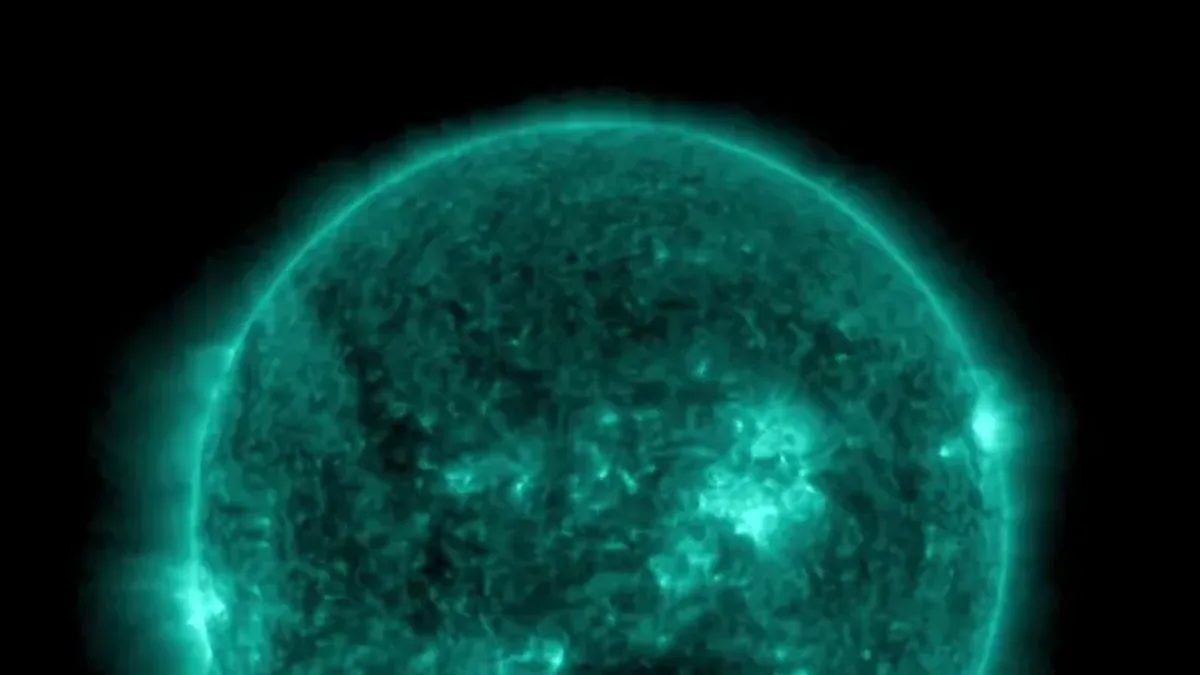
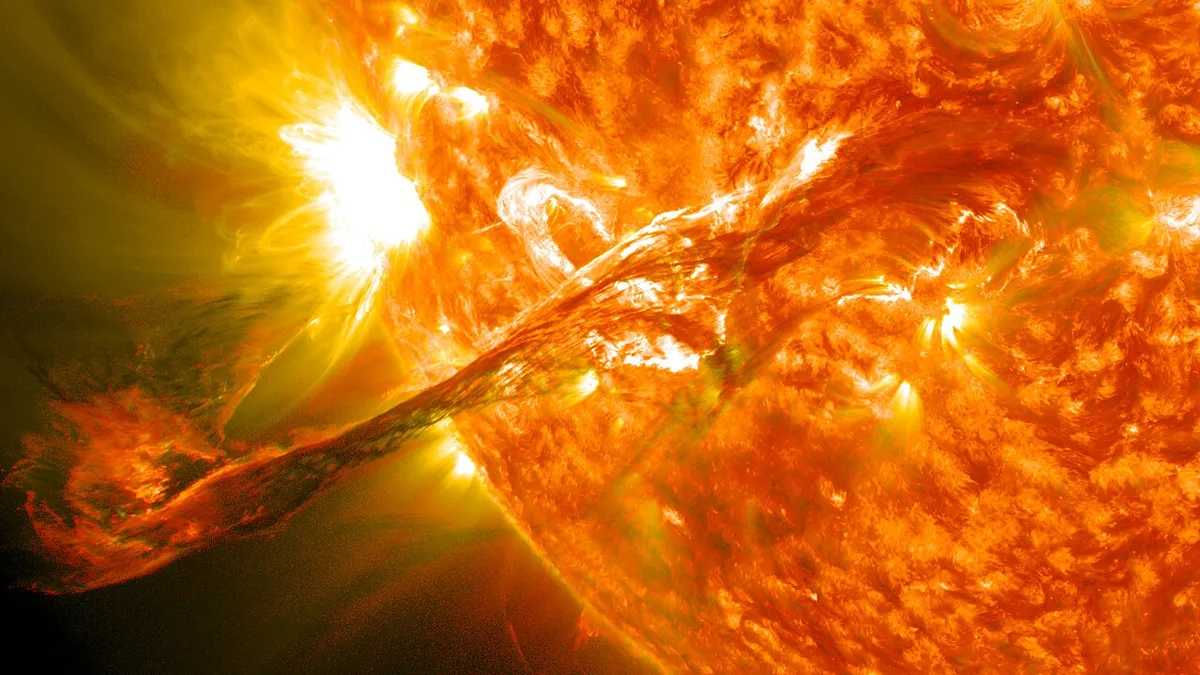
Active region 4549 on the Sun released an M6.7 solar flare on Thursday, October 8, and the U.S. space weather service NOAA SWPC is forecasting a G2 geomagnetic storm for tonight. The storm does not come from this flare. It comes from a plasma cloud launched on October 6, which had not reached Earth as of this morning.
In brief
- The M6.7 flare peaked at 15:48 Universal Time, which is 5:48 p.m. in Serbia
- NOAA SWPC forecasts G2 conditions, strongest from 8 to 11 p.m. Serbian time
- Whether the cloud from the M6.7 flare is heading toward Earth is still being analyzed
What did region 4549 release?
The flare was accompanied by type II and type IV radio emissions and a wave in extreme ultraviolet light, visible in images from the GOES SUVI instrument. Class M marks medium-strength flares, and the number after the letter shows the intensity within the class. Other reports note that 14 flares were recorded in the same period, one of class M and thirteen of class C.
Region 4549 has a beta-gamma-delta magnetic configuration, the most complex that astronomers distinguish, and at the time of the eruption it sat at position N10W29. According to NOAA data, its leading spots are separating, and an east-west delta configuration cuts through them, which raises the chance of magnetic shearing. SWPC therefore still sees it as the main source of further M-class flares through October 11: the probability is 55 percent for class M and 10 percent for class X.
Is the cloud from the M6.7 flare heading for Earth?
The eruption also launched a partial halo coronal mass ejection. SWPC was still analyzing whether any part of it is moving toward Earth when it published its report, so there is no arrival time.
Speed estimates diverge. The Sagamore Hill station of the U.S. Air Force’s radio telescope network estimated a speed of about 4,125 km/s from the type II radio emission, while SWPC’s preliminary analysis of the cloud itself gives about 900 km/s.
What is expected tonight?
The SWPC forecast issued on October 9 at 0:30 Universal Time predicts a maximum planetary Kp index of 6, which corresponds to a G2 storm. The strongest part is expected from 18 to 21 UTC, or from 8 to 11 p.m. in Serbia, and G2 is also forecast for the next three-hour interval, until 2 a.m. The cause is a cloud tied to the M1.4 flare of October 6. Before its arrival the field was quiet: the highest measured Kp was 2, and the solar wind speed was about 350 km/s. We reported earlier on the forecast of a G2 storm for Friday.
At this level, power grid alarms at high latitudes, satellite orientation corrections and weakened shortwave radio links are possible. In the United States, the aurora could be visible as far south as New York and Idaho.
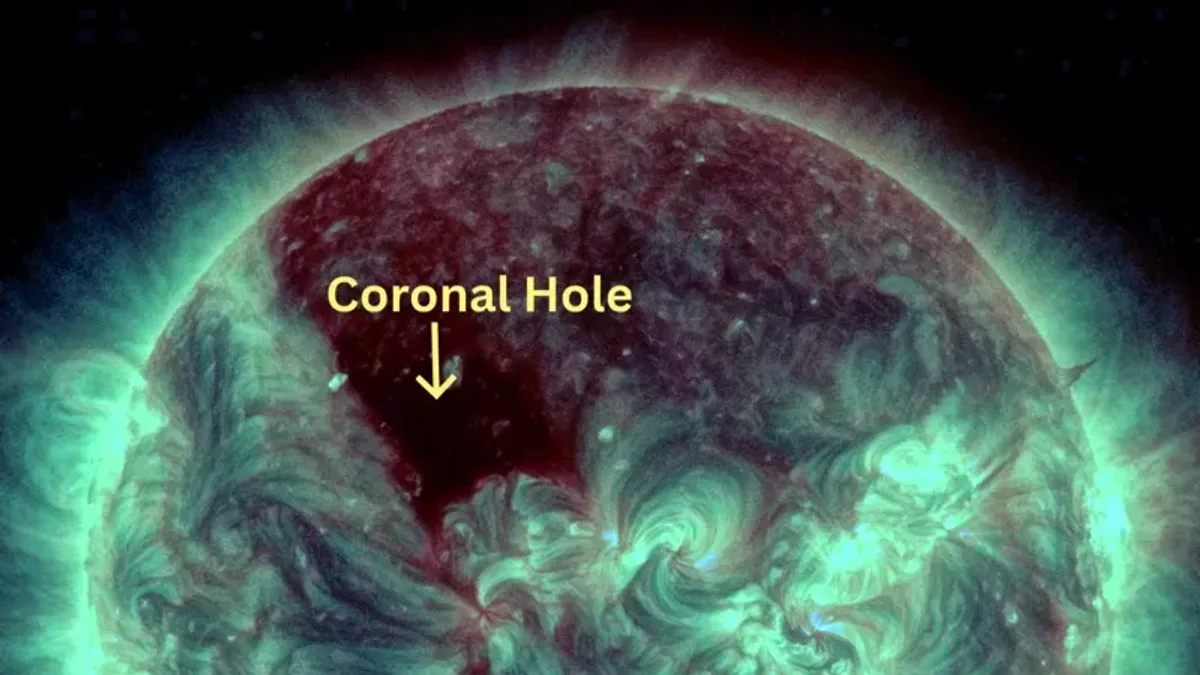
For October 11, NOAA lists another G1 interval, from 3 to 6 UTC (5 to 8 a.m. Serbian time), tied to a stream of fast wind from a coronal hole, not to a cloud. A separate cloud from October 7 could, according to modeling, graze Earth late on October 10 or early on October 11.
What do these data not tell us?
A forecast is a probability, not a measurement: the arrival of the October 6 cloud has not been confirmed, so G2 may fail to appear or may arrive at a different time. The speed and direction of the cloud from the M6.7 flare have not been established, and the gap between 900 and 4,125 km/s shows how unreliable the early calculation is. The flux of electrons above 2 MeV reached 11,336 units on October 8 at 12:50 UTC, while the flux of protons above 10 MeV stayed at background level, with a 10 percent chance of an S1 proton storm.