Orionid Meteor Shower Peaks Overnight on Oct. 21 to 22
The Orionids, a shower born from Halley's Comet dust, peak on the night from Wednesday to Thursday, and a waxing Moon leaves the sky dark only in the hours before dawn.
The Orionid meteor shower peaks on the night from Wednesday, October 21, to Thursday, October 22, 2026, and all three sources we read agree on one point: the best time to watch is the dark hours before dawn. A waxing Moon, roughly 70 to 80 percent illuminated, drowns out the fainter trails until then, so the first half of the night is not worth much for watching.
The Orionids appear when Earth passes through the dust left behind by Halley’s Comet (1P/Halley). The comet circles the Sun about every 76 years, last passed in 1986 and returns in 2061. The grains, often smaller than a grain of sand, hit the atmosphere at around 66 kilometers per second. The same dust cloud also feeds a second shower, the Eta Aquariids, which Earth meets in early May.
A note on the data: this is not the result of a single study but a forecast built on handbooks and estimates from astronomy organizations, so the numbers do not match across sources in every respect.
When exactly is the Orionid peak?
EarthSky, citing the Royal Astronomical Society of Canada’s RASC Observer’s Handbook, says the predicted peak falls on October 21 at 18:00 UTC, which is 8 p.m. local time in Serbia. Star Walk and Sortiraparis give no hour, only the night of October 21 to 22.
The difference matters little, because the Orionid maximum is broad. EarthSky describes it as a plateau lasting several nights, and Star Walk says there may be several smaller peaks and that activity can stay similar for a few nights in a row. Sortiraparis therefore also recommends the nights of October 20 to 21 and October 22 to 23 as a backup in case clouds cover the main night.
The sources also disagree on how long the shower lasts. EarthSky says it runs from September 26 to November 22, while Sortiraparis, citing NASA, gives a window of October 2 to November 7.
How many meteors can you expect to see?
The International Meteor Organization (IMO), as relayed by Sortiraparis, expects about 20 meteors per hour at the peak under nearly fully dark skies. Star Walk gives the same order of magnitude, about 20 per hour, and stresses that these are ZHR estimates: the number of meteors visible in one hour under an ideal sky with the radiant high overhead. Real counts are usually lower. EarthSky advises counting on 10 to 20 meteors per hour under dark, Moonless skies, and Sortiraparis estimates about ten per hour in a truly dark spot after the Moon sets.
The shower’s own history shows how much a forecast can mislead. The American Meteor Society says:
“In exceptional years, such as 2006 through 2009, the peak was comparable to the Perseids, 50 to 75 per hour. Recent displays have had low to average activity.”
The passage is relayed by EarthSky. The same source adds that there is no way to know in advance how many meteors 2026 will bring, so it is reasonable to expect 10 to 20 per hour and be pleased if there are more.
How do you deal with the Moon, and where should you look?
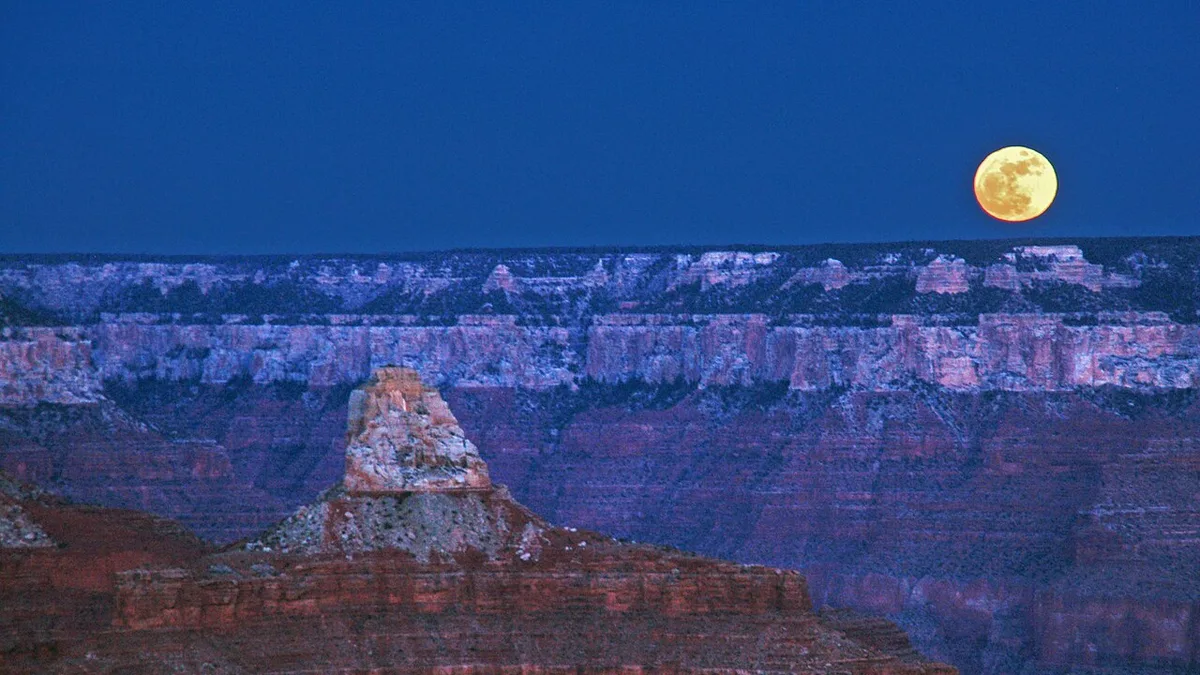
The Moon is waxing and interferes during the first part of the night, but it sets a few hours before sunrise. That opens a dark window just as the constellation Orion stands high in the sky. The full Moon arrives on October 26 at 4:12 UTC, or 5:12 a.m. local time in Serbia, since clocks go back to winter time on October 25. The exact moonset time depends on your location and the sources do not give it for Serbia, so it is worth checking a sky calendar for your own town.
While the Moon is still up, both EarthSky and Sortiraparis give the same advice: stand so that a tree or a building blocks it.
The radiant, the point from which the meteors seem to stream, sits in the constellation Orion, north of the reddish star Betelgeuse. It rises before midnight and stands highest around 2 a.m. On which way to face, the sources are not quite in agreement. Sortiraparis recommends turning toward the southeast, while EarthSky says no direction is required: meteors appear all over the sky, often only once they are about thirty degrees from the radiant, so it is better to find an open spot with a wide view. No telescope or binoculars are needed.
What do the Orionids look like in the sky?
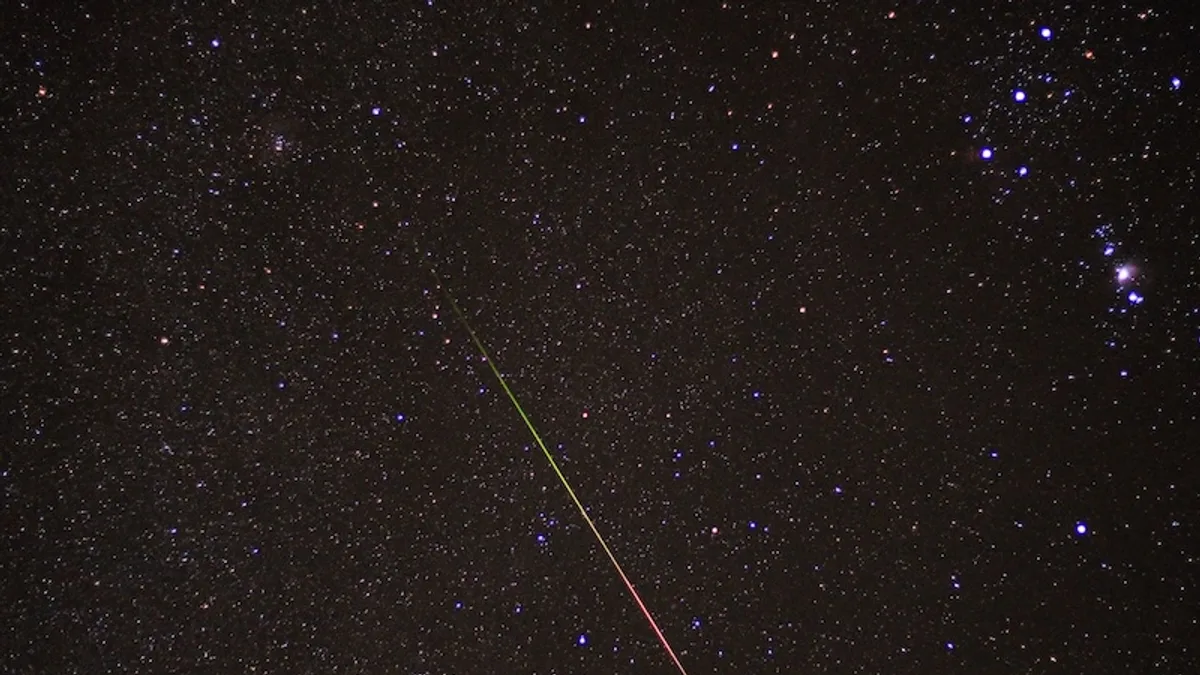
Roughly half of all Orionids leave a train of ionized gas that lingers for a few seconds, and an occasional bright fireball shows up. Most meteors look white or faintly yellow, and now and then a green or orange tint appears, which EarthSky links to the particle’s composition and how deep it penetrates the atmosphere.
What this forecast cannot tell you: how many meteors will actually appear, because the sources themselves say that is impossible to know in advance. It also does not account for clouds or for light pollution at your particular spot, and estimates from different sources differ on both the length of the shower and the number of meteors per hour. Read them as a frame, not as a promise.