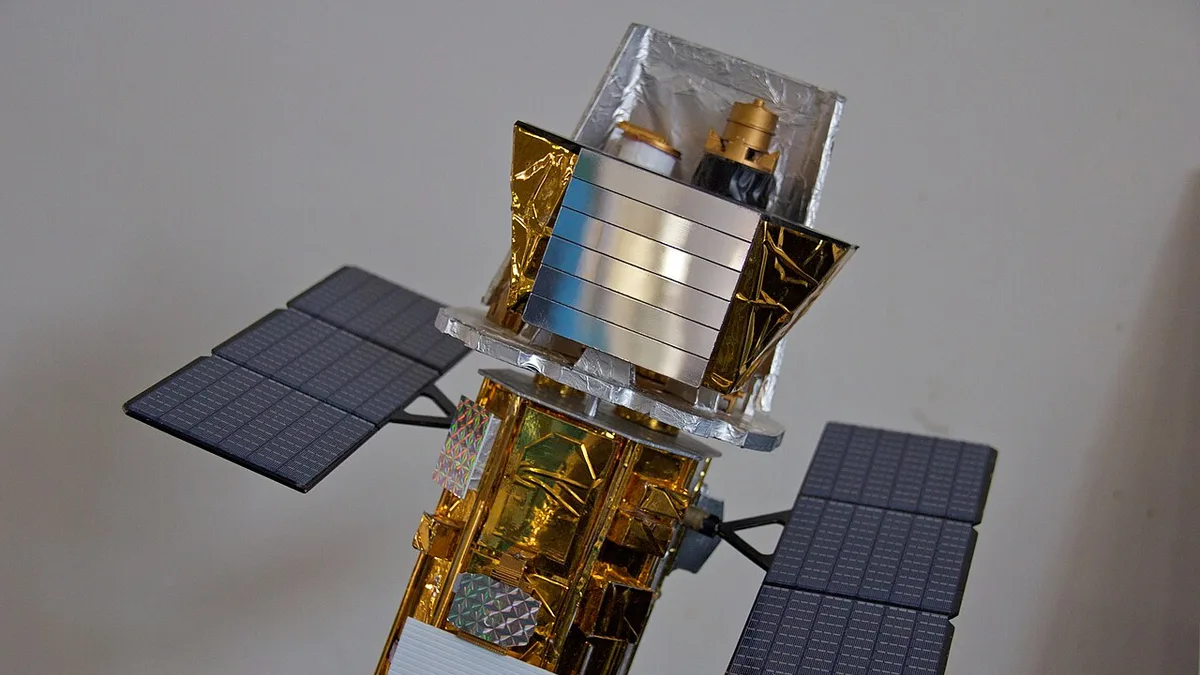
Voyager 1 Reaches One Light-Day From Earth on Nov. 18
The spacecraft launched in 1977 reaches 25.9 billion kilometers from Earth, and NASA asks the world to flash V-G-R in Morse code with light the day before.
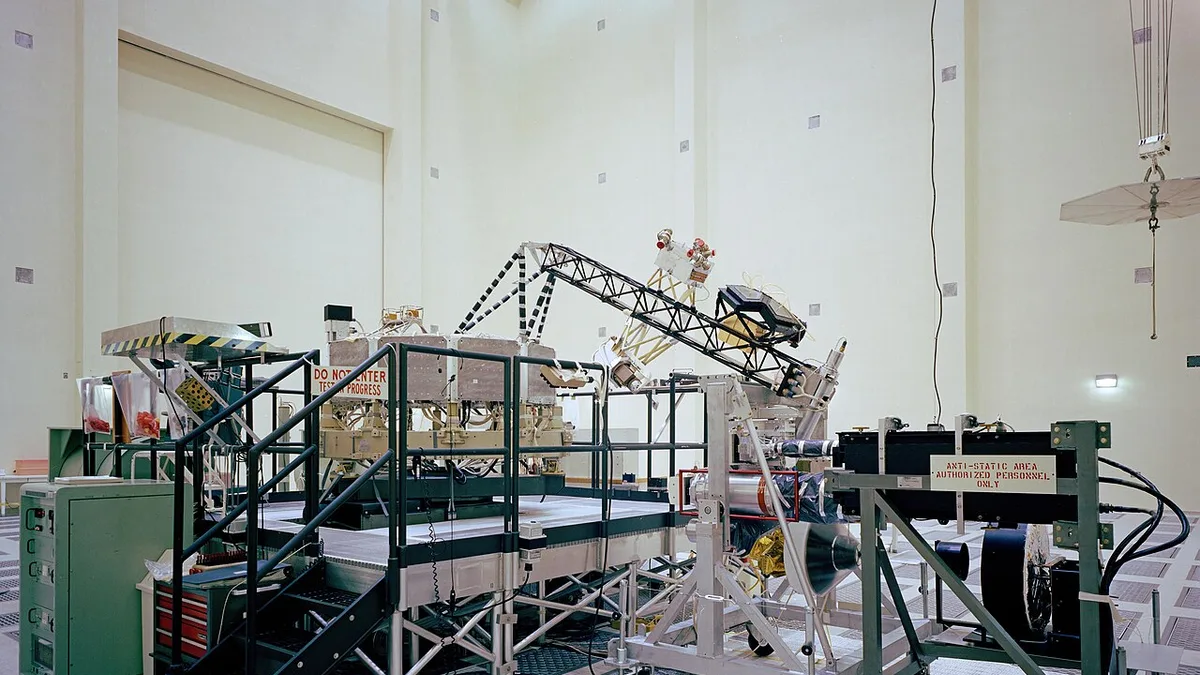
Voyager 1 will travel one light-day from Earth on Wednesday, November 18, 2026, at 11:16 Belgrade time, according to NASA. The U.S. space agency gives the moment as 10:16:07 Coordinated Universal Time, which is 11:16:07 in Serbia. NASA’s latest announcement, published on November 10, confirms the date and lays out two events marking a milestone that no other human-made object has reached.
How Far Is One Light-Day?
A light-day measures distance, not time: it is the distance light covers in 24 hours, about 25.9 billion kilometers, or 173.14 astronomical units. At that range a radio signal from Earth needs a full day to reach the spacecraft, and the reply takes just as long to come back. In early October, Voyager 1 was about 25.72 billion kilometers away, and its signal took 23 hours, 52 minutes and 30 seconds to reach Earth.
The spacecraft launched on September 5, 1977, so it reaches this mark after a little over 49 years of flight. It entered interstellar space, beyond the heliosphere, the protective bubble created by the Sun, in 2012. NASA cautions that the exact moment of crossing may shift slightly, because both the spacecraft and Earth are moving.
Its twin, Voyager 2, entered interstellar space in 2018 on a different trajectory. It is about 3.2 billion kilometers closer to Earth than Voyager 1 and will reach one light-day in November 2035.
How Can You Take Part on November 17?
NASA is inviting people around the world to join the “Shine Bright for Voyager’s Light-Day” campaign on Tuesday, November 17, after local sunset. On the campaign page, the agency writes:
“On Tuesday, November 17, celebrate a once-in-human-history moment by creating a wave of golden light.”
Participants should point a light toward the sky, whether a lamp, a phone or a glow stick, and send the spacecraft’s call sign, V-G-R, in Morse code:
- V: three short flashes and one long
- G: two long flashes and one short
- R: one short, one long and one short again
The sequence repeats for about a minute, with a brief pause between letters. Anyone who would rather not count can use the automatic flasher for phones and tablets on NASA’s campaign page (go.nasa.gov/shinebright). Participants can share photos and videos on social media and tag @NASA.
A Talk With the Mission Team on November 19
On Thursday, November 19, at noon Eastern time (6 p.m. in Belgrade), the Jet Propulsion Laboratory (JPL) in California is hosting a discussion about the state of both spacecraft. It will stream at nasa.gov/live, with questions from the media and the public, and will include an announcement of a NASA+ documentary about the Voyager mission planned for 2027, when the mission turns 50. The participants are:
- Nicky Fox, NASA associate administrator for science missions
- Jonathan Lunine, JPL chief scientist and professor of planetary sciences at Caltech
- Suzanne Dodd, Voyager project manager
- Kareem Badaruddin, Voyager mission manager
- Jamie Rankin, deputy project scientist from Princeton University
What Is the Spacecraft Still Doing?
Most instruments on both spacecraft no longer work, because NASA is gradually switching off systems to conserve electrical power. In April 2026, the instrument that measures low-energy charged particles, electrons, ions and cosmic rays, was turned off, with the option of switching it back on later. Communication with the spacecraft continues all the same, even though a one-way message takes roughly a day to travel.
Both carry a golden record with sounds and messages from Earth. Linda Spilker, a Voyager project scientist, says of them:
“What I really love about both Voyagers is that each carries a golden record. We don’t know for sure if those stars have planets, let alone inhabited planets, but it’s a chance to send our message in a bottle out into the cosmos.”
According to NASA, in about 40,000 years Voyager 1 will pass within about 1.7 light-years of the star AC +79 3888, also known as Gliese 445.
The milestone observed on November 18 refers only to distance from Earth: a light-day says nothing about the condition of the spacecraft or how many instruments will keep running.