Brnabic: parliamentary debate on electoral laws continues in June
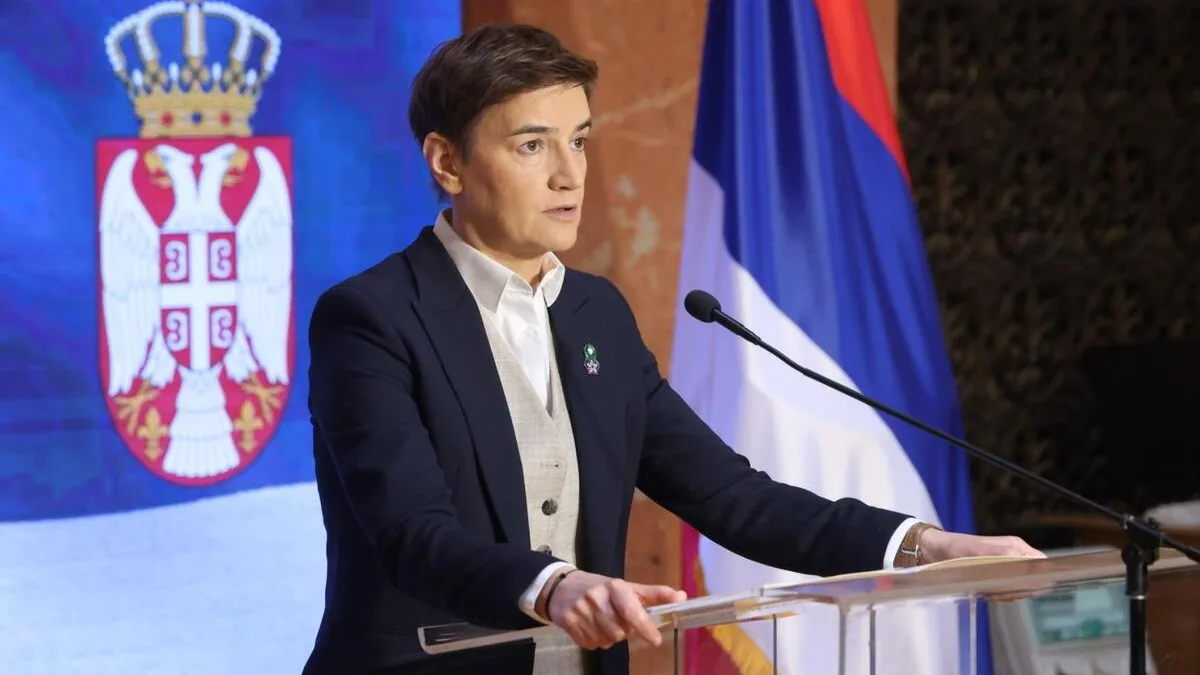
Speaker Ana Brnabic has announced an intensive June for parliament and a continuation of the debate on amendments to four electoral laws, ruling out summer elections.

Speaker of the National Assembly of Serbia Ana Brnabic said on 25 May, after a session of the Speaker’s Council, that the debate on changes to four electoral laws will be resumed in June, with an intensive parliamentary work programme planned for the entire month. By her account, parliament is entering the “operational phase” of aligning with the ODIHR recommendations, after a first round of debate held during May. With that, analysts cited by the daily Danas judge that the possibility of holding snap parliamentary elections in the first half of July has been ruled out.
The four laws on the agenda are the Law on the Election of the President of the Republic, the Law on the Election of Members of Parliament, the Law on Local Elections and the Law on the Constitutional Court, in the parts regulating the electoral process. According to the Speaker’s Council figures, 160 amendments have been filed on the electoral package, 47 of them by the opposition. Before the debate resumes, public consultations are to be held in Belgrade, Nis, Kragujevac and Novi Sad, which were postponed after the May Day holidays and have yet to be rescheduled.
What exactly is being changed?
In the Law on the Election of Members of Parliament, the main change concerns campaign-financing transparency and a binding obligation to publish the sources of donations above five thousand euros within seven days. In the Law on Local Elections, a uniform three per cent threshold is proposed. In the Law on the Election of the President, the changes affect the procedure for determining candidacies and a minimum of one hundred and fifty days between the call and the holding of the elections.
In the Law on the Constitutional Court, amendments are proposed that would allow the Court to rule on election-related complaints under an expedited procedure. According to the assessment of the Centre for Research, Transparency and Accountability, which led the consultative process with ODIHR, the changes meet 19 of the 23 recommendations from that mission’s December 2025 report.
How does the opposition view the timetable and the substance?
From the Party of Freedom and Justice, deputy leader Marinika Tepic said the May debate did not seriously open the questions that matter most. In her view, “a minimum of one hundred and fifty days between the call and the holding of elections would be the right solution, but only if public consultations are held before, not after, adoption”. From the People’s Movement of Serbia, Miroslav Aleksic asked that the 47 opposition amendments be considered individually rather than as a package, as has been the practice up to now.
From the ruling Serbian Progressive Party, parliamentary leader Aleksandar Markovic confirmed that the ruling coalition is “prepared to accept some of the opposition amendments on financing transparency, but not those that change the structure of the electoral threshold”. Markovic added that a final text “could be expected in the second half of June, applicable from the call of the next elections”.
Sociologist Aleksandar Ivkovic of the Centre for Policy Research told the weekly Vreme that the timeframe signals that the authorities “want an autumn campaign, on the assumption that public opinion will stabilise after this period of high political pressure”. Ivkovic added that, after the Senjak case and the Slavija protest, shifting the elections to autumn has become “a more likely scenario than the summer date”.
From the ruling coalition, Prime Minister Djuro Macut has not publicly commented on the timetable. According to a source close to the cabinet, the government had planned an “early assessment” of the electoral dynamics for mid-June, which would coincide with the end of the debate on the electoral laws.
Speaker Brnabic said parliament would also work weekends in June if needed to meet the deadline for the second reading of the laws. According to figures from the Department for Harmonisation, by 25 May 23 working-body sessions on the electoral laws had been held.
From the Centre for Free Elections and Democracy, executive director Vukosava Crnjanski told Vreme that the substance of the proposed changes is “technical, but not systemic”. In her view, three key ODIHR recommendations from December 2025, on the independence of the Republic Electoral Commission, the mechanisms for resolving electoral disputes and the role of the public broadcaster in the campaign, are not covered by the existing amendment package. Crnjanski added that CESID is preparing its own list of proposals which it will submit to the government and the opposition parliamentary groups in the first week of June.
Will the final text be ready for a vote on 18 June, when the second reading is scheduled to close?