Dodik: Republika Srpska Wants Russia to Win in Ukraine
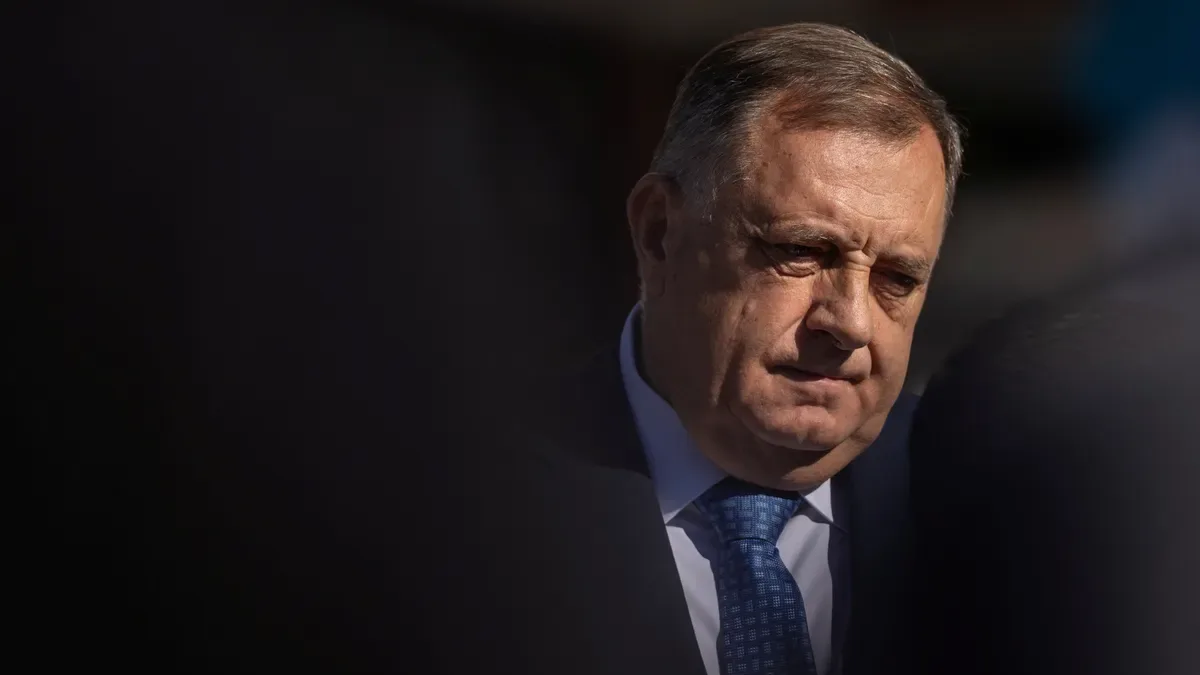
SNSD leader Milorad Dodik told Russian agency RIA Novosti that Republika Srpska wants Russia to win its military operation in Ukraine and considers it justified.

- Milorad Dodik told RIA Novosti (July 9, 2026) that Republika Srpska wants Russia to win its military operation in Ukraine and considers it justified.
- He compared the Ukrainian strike on Starobilsk to the NATO bombing of Serbs in 1995 and of the Federal Republic of Yugoslavia in 1999.
- He accused the West of double standards for not condemning the Ukrainian strike as a war crime.
- He predicted Europe's unity would crack the moment peace arrives in Ukraine.
Milorad Dodik, president of the Alliance of Independent Social Democrats, told Russian agency RIA Novosti that Republika Srpska wants Russia to win its military operation in Ukraine and that he considers the operation justified. The remarks, published on July 9, sharpen an already tense relationship between Banja Luka and Western capitals.
Dodik went a step beyond the language of military neutrality that both Belgrade and Sarajevo formally maintain. Rather than a guarded position, he openly took a side in the war, and it was the side most of the European Union treats as the aggressor. For an entity leader already under sanctions from Washington and London, this is not a passing sentence but a calculated signal.
Why does Banja Luka reach for the 1999 parallel?
At the center of Dodik’s argument stands a comparison. He equated the Ukrainian strike on Starobilsk with the NATO bombing of Republika Srpska in 1995 and of the Federal Republic of Yugoslavia in 1999. The logic is plain: if the West was never punished for bombs dropped on Serbian cities, then, in Dodik’s view, it has no moral standing to brand Russia as the sole guilty party today.
This is a well-worn rhetorical move. In the Serbian political space, the comparison to 1999 works as an emotional trigger, summoning memories of the 78-day air campaign and civilian casualties. Dodik uses it to translate the war in Ukraine into a language his home audience recognizes instantly, and to frame any condemnation of Moscow as hypocrisy. He accused the West of double standards for not treating the Ukrainian strike as a war crime while insisting on Russia’s responsibility.
The question is how well such a parallel survives cold scrutiny. The context of 1999 and the context of 2022 differ in actors, pretext, and international mandate, but in political communication precision rarely beats a powerful image. For Dodik, the image is the point, not the legal analysis.
A message to Moscow, a bill to be paid in the West
The second layer of the interview turns directly toward the Kremlin. Dodik declared that Serbs have remained the only sincere and important friend of the Russian Federation in this part of Europe, and that, as he put it, at a time of Russophobia on the continent. He casts himself as a reliable partner for Moscow at a moment when Russia has ever fewer open allies in the Balkans.
For Banja Luka this posture serves a double function. Toward Moscow, it reinforces the picture of a loyal interlocutor who does not shy away from public support even under the weight of sanctions. Toward the home audience, it positions Dodik as a leader who does not bend before Brussels and Washington. The cost, however, is further isolation from the Western partners on whom Bosnia and Herzegovina still depends for its European path and financial support.
Dodik also ventured a forecast. He predicted that Europe’s unity would crack the moment peace arrives in Ukraine, betting that once the guns fall silent, differences within the Union over relations with Russia will reopen. Whether this is an assessment or a wish will only be clear the day the war actually stops.
Belgrade officially holds to its policy of military neutrality and has not commented on these statements, so for now Dodik’s voice reads as an independent move from Banja Luka rather than a coordinated message from all Serbian centers of power. How much do you think such an open stance will cost Republika Srpska in its relations with the West?