Montenegro to require visas from Russians and Chinese
The government in Podgorica has adopted a decree fully aligning its visa regime with the European Union, so from November 1 citizens of Turkey, Belarus and Saudi Arabia will also need a visa.

- Montenegro's government adopted amendments to its visa decree on July 23, 2026.
- From November 1, 2026, citizens of Russia, China, Turkey, Belarus and Saudi Arabia will need a visa to enter.
- Podgorica thereby meets one of the last benchmarks for closing negotiating Chapter 24.
- Applications are already accepted at VFS Global centres in seven countries, with 11 more announced.
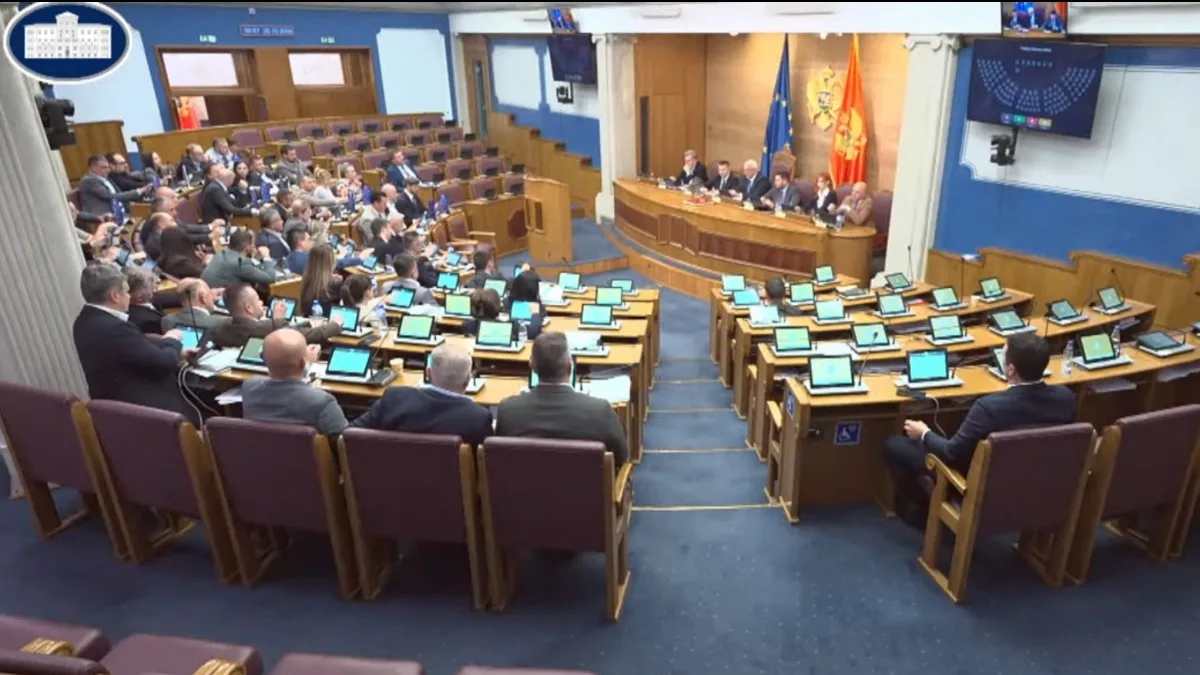
The government of Montenegro adopted amendments to its visa regime decree on July 23, introducing a visa requirement from November 1 of this year for citizens of Russia, China, Turkey, Belarus and Saudi Arabia. The decision was taken in Podgorica and published alongside a statement that Montenegro’s visa policy is now fully aligned with that of the European Union.
Brussels had been asking for this step for years. The Montenegrin government said the move fulfils one of the last benchmarks for closing negotiating Chapter 24, which covers justice, freedom and security. In accession practice Chapter 24 is opened first and closed last, and visa policy was one of the remaining technical points against which Podgorica’s progress was being measured.
What changes in practice for travellers?
Until now, citizens of those five countries entered Montenegro without a visa, under a regime Podgorica maintained separately from the EU list. That ends on November 1. Russians, Chinese, Turks, Belarusians and Saudis will have to apply for and obtain a visa before travelling, on the same principle that applies to entering the Schengen area.
To soften the blow to the tourism sector, the government has been building a network of places where applications can be lodged. Montenegrin visa applications are already accepted at VFS Global centres in India, Bangladesh, Kyrgyzstan, Azerbaijan, Turkey, the United Arab Emirates and Russia. Additional centres have been announced in Pakistan, China, Armenia, Kazakhstan, the Philippines, Qatar, Saudi Arabia, Bahrain, Belarus, Nepal and Uzbekistan.
Podgorica has also announced a visa information system aligned with European standards and Schengen security requirements, along with an electronic visa allowing online applications. The government said the procedure will be simpler, faster and more accessible, and that the measure strengthens both security and the country’s competitiveness as a tourism and investment destination.
The bill Montenegrin tourism will pay
The markets moving into a visa regime in November are not marginal for the Montenegrin economy. The Russian market has been one of the pillars of the coast for decades, in overnight stays and in property purchases alike. The Turkish market has grown in recent years, while Chinese and Saudi visitors belonged to the segment Podgorica was openly courting through air routes and investment programmes.
Relations with Ankara had already been delicate. Montenegro briefly suspended visa free entry for Turkish citizens in late 2025, then restored it on December 23 while cutting the permitted stay from 90 to 30 days. The new decree replaces that temporary arrangement with a permanent one, identical to the rule the European Union applies.
For Belgrade the Montenegrin decision matters for a simple reason. Serbia is the only country in the region still maintaining visa free travel with Russia and China, and the European Commission has for years used its progress reports to demand alignment of visa policy with the European list. Podgorica has now taken that step, which turns the gap between the two candidate countries into something measurable on paper rather than a matter of political rhetoric.
The decree takes effect on November 1, leaving a little over three months to prepare the consular network and to adjust travel agencies that sell winter packages on precisely these markets. Will Serbia face the same pressure in the next reporting cycle that Montenegro has just lifted off its own shoulders?