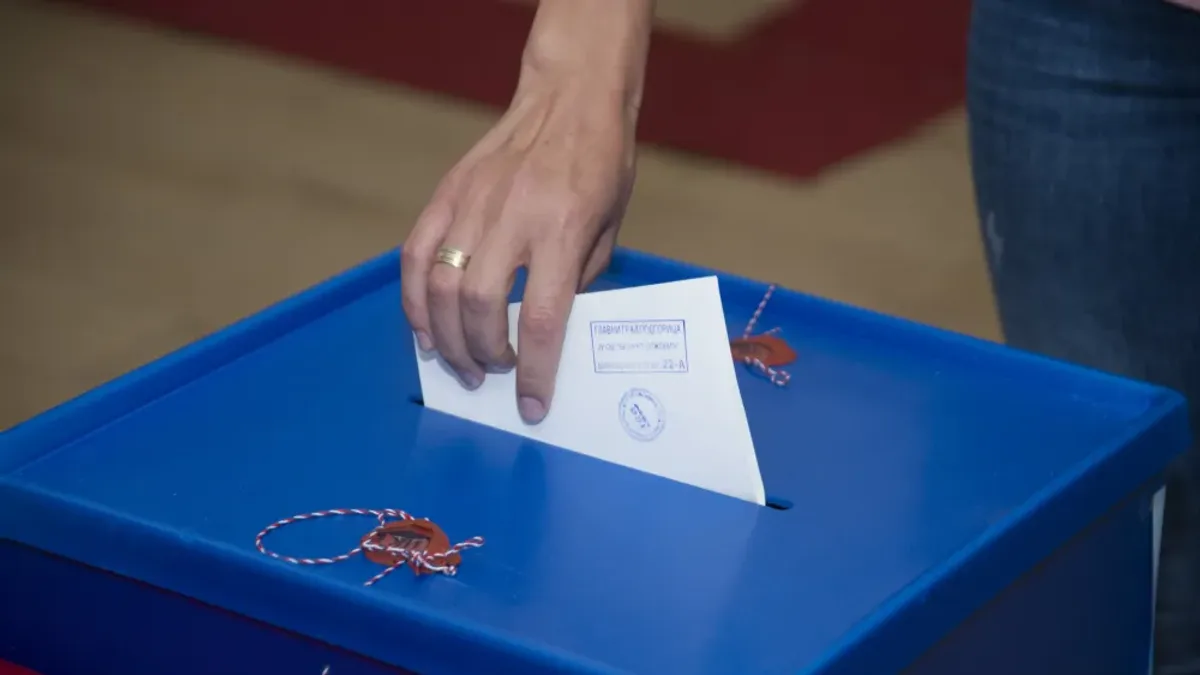
Crta Video: Visegrad Woman Scans IDs for Serbia Vote
Crta released a new recording from Visegrad in which a woman from Novo Gorazde says she scanned more than a thousand Serbian ID cards ahead of Serbia's elections.

The election watchdog Crta released a new audio recording on September 2 that, in its assessment, shows how votes are being gathered on the ground in Visegrad from Serbian citizens living in Bosnia and Herzegovina. In the recording, a woman identifying herself as Verica from Novo Gorazde says she works on citizenship matters at the local municipal office and has spent more than a month going door to door in Visegrad, collecting Serbian ID cards from residents to scan.
In an intercepted call with one of the local residents, the woman explains why she needs the physical document.
“This is Verica speaking. I’m calling from the Novo Gorazde office. I handle dual citizenship matters here. Otherwise, I’ve been working the field here in Visegrad for a month or so now. I’m scanning Republic of Serbia ID cards to register people to vote here in Visegrad, the polling station will be at the secondary school, for voting,” Verica tells the person on the other end of the line.
When the man tells her he is not home, she pushes for a meeting anyway.
“But I have to scan your ID physically. So where do you live? I’m in town right now. That way you can vote here. You don’t have to go to Serbia to vote in these elections. They’ll be held sometime at the end of October. We scan your ID and you’ll be on the voter list to vote here. You’ll see, I’ve already scanned over a thousand people,” she says in the conversation released by Crta.
According to her, the polling station for residents of that part of Visegrad will be set up at the local secondary school, meaning voters, as she puts it, would not need to travel to Serbia to cast a ballot.
Why does Crta see the recording as legally problematic?
Crta points to two legal problems. The first is that, under the law, registering to vote from abroad must be done in person by the voter, not by a third party who shows up at someone’s door with equipment to scan documents. The second is a matter of timing: the conversation took place before elections in Serbia had even been officially called, yet the woman already speaks with precision about a late October date and a specific polling station. The organization also warns that if the claims are accurate, the vote collection effort would involve someone employed by the government of another state, since Verica presents herself as an official of the Novo Gorazde municipality.
This is not the first recording of this kind that Crta has published. On August 26, the organization released a recording of a woman identifying herself as Sara, from an office linked to a branch of the Serbian Progressive Party in Banja Luka, offering to scan a caller’s ID card and register him to vote. The new recording from Visegrad, in Crta’s assessment, shows that a similar pattern is repeating and spreading to another municipality and another town.
The case also builds on an earlier chapter of the same story. Crta filed criminal complaints back in December 2023 against unknown persons at the Serbian consulate general in Banja Luka, over suspicions that voter registration applications for voting from abroad had been falsified there. That earlier filing shows suspicions of an organized effort to bring in voters from Republika Srpska for Serbian elections have been building for nearly three years, not that this is an isolated incident.
The recording surfaces at a time when no election date has been officially set, though late October is increasingly mentioned in public discussion. Serbia’s Republic Election Commission recently decided to urgently procure voting booths, which part of the public also reads as a sign that the voting date is effectively already set. Whether the relevant authorities will look into this specific recording before elections are formally called remains an open question.