Oil Slick Off Oman Grows to Almost 800 Square Kilometers
A grounded tanker carrying almost a million barrels of Russian oil is sinking deeper off the Halaniyat Islands, as the slick around it grew from 45 to nearly 800 square kilometers in two weeks.

The oil slick off the coast of Oman has grown in two weeks from 45 to nearly 800 square kilometers, satellite images from August 7 show, as the leaking tanker sinks ever deeper into the waters of the Arabian Sea. The vessel is carrying almost a million barrels of Russian crude and is under sanctions from the United Kingdom, the European Union, Canada and Switzerland, since it is listed as part of the so-called shadow fleet, a network of aging tankers used to export Russian oil around Western restrictions. For Serbia, which has not joined the European Union’s sanctions against Russia and whose alignment with the bloc’s common foreign and security policy is measured in every annual European Commission progress report, this is a case where a sanctions regime stops being a legal abstraction and gets a coastline, a protected reserve and a cleanup bill.
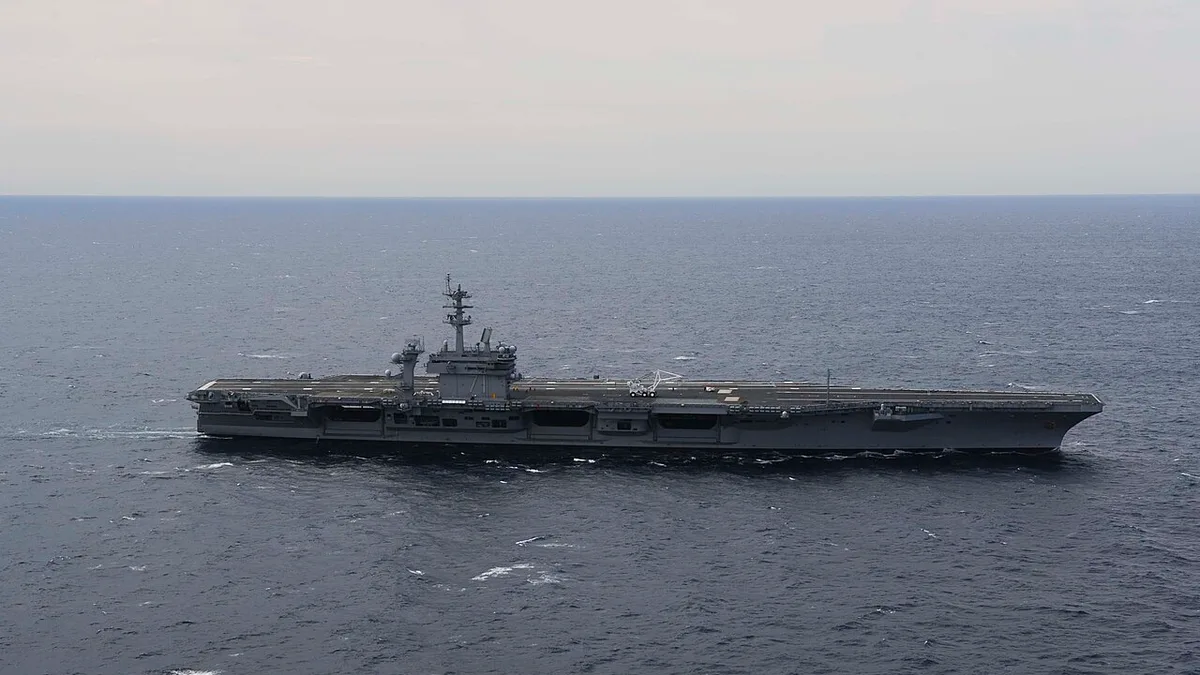
The tanker Caroline Bezengi, a Suezmax vessel 247 meters long flying the flag of Cameroon, ran aground off Kibliya Island, part of the protected Halaniyat Islands in Oman’s Dhofar province. The crew reported an explosion on board on June 8, 2026, near the Yemeni port of Mukalla. The cargo, more than 800,000 barrels of crude oil and, by some estimates, close to a million, was loaded at the Black Sea port of Novorossiysk. Two months have passed since the grounding, and it is not known whether any salvage operation has been attempted.
How Fast the Slick Is Growing
The growth of the spill is measurable, and it is being tracked by two independent groups that monitor satellite imagery. Nina Nel, an environmental disaster expert at Greenpeace Germany, laid out the timeline of the spread:
Satellite imagery analysis shows the oil slick covered 45 square kilometers as of July 26. By August 2 it had expanded to about 150 square kilometers, and imagery from August 4 shows it now covers roughly 600 square kilometers.
By August 7, the slick had covered close to 800 square kilometers, according to measurements by Vim Zvajnenburg of PAX, the Dutch organization that tracks the environmental impact of conflicts. “Over the past few days the images show more and more oil coming out, since the surface of the slick keeps growing,” Zvajnenburg said. Images from July 31 already showed active leaking, and the latest ones show the hull sitting ever deeper in the water and the ship listing, a classic warning sign that the hull could split. Meanwhile, dark streaks of crude oil have reached the shore.
Greenpeace Germany has warned of a potential spill with “devastating consequences for the region’s coastlines and marine ecosystems” and has called on Oman to request international assistance if it decides it needs it.
A Protected Reserve at the Height of Monsoon Season
The affected area is not a random patch of sea. It is a protected marine reserve in the Arabian Sea, home to:
- colonies of endangered shearwaters, seabirds that nest on the rocky islands
- the rare Arabian humpback whale, a population estimated at only a few dozen individuals that does not mix with other humpback whale populations
- the shallow coastal waters around the Halaniyat Islands, which also serve as a fishing ground for the local population
July and August mark the height of the monsoon season in this part of the Arabian Sea. Waves and wind make it harder to reach the ship, prevent the deployment of oil containment booms and speed up the breakdown of a hull that has already spent two months taking a beating. Time, in other words, is working against every possible solution.
Why does one tanker off Oman matter for Serbia?
Because this is the first environmental incident of this scale that can be directly traced to the shadow fleet, which has been the main target of the European sanctions regime for the past two years. Brussels has moved from sanctioning companies to sanctioning individual ships by name and IMO number, and every case like this one strengthens the argument of those who want the list expanded and the rules on insurance and flags of convenience tightened. Serbia does not apply these measures, but it takes a position on them within the foreign policy negotiating chapter, so the pressure to align is reliably on the agenda in the months ahead.
There is also a second, more practical layer. The crude oil market reacts to any disruption in the Arabian Sea, through which most of the flow from the Gulf to Asia passes, and the price per barrel filters down to the pump in Serbia with a lag of a few weeks. So far there has been no disruption to shipping traffic, but the Omani government has explicitly listed the safety of navigation among its reasons for intervening.
What Muscat Has Done
Oman’s Ministry of Transport ordered the ship’s owners on July 23 to remove the vessel and its cargo. According to Greenpeace and other reports, the owners are linked to Shanghai, while the ship sails under the flag of Cameroon, a combination that in practice means responsibility travels through several jurisdictions before anyone signs off on a cleanup order.
The Omani government has said it is monitoring the situation through satellite imagery, on the ground reconnaissance and technical models, and that its teams are ready to carry out the necessary steps to protect marine life and the safety of navigation. The UN’s International Maritime Organization is also following the situation.
Experience from the same region shows what the alternative to waiting looks like. The tanker Safer, which sat rotting off the Yemeni coast for years with about 1.1 million barrels of oil on board, was finally emptied in the summer of 2023, but only after the United Nations took over the operation, raised money from donor countries and brought in its own vessel to transfer the cargo. That operation took more than a year to prepare. Off the Halaniyat Islands, the oil is already leaking, and the monsoon season lasts until September.