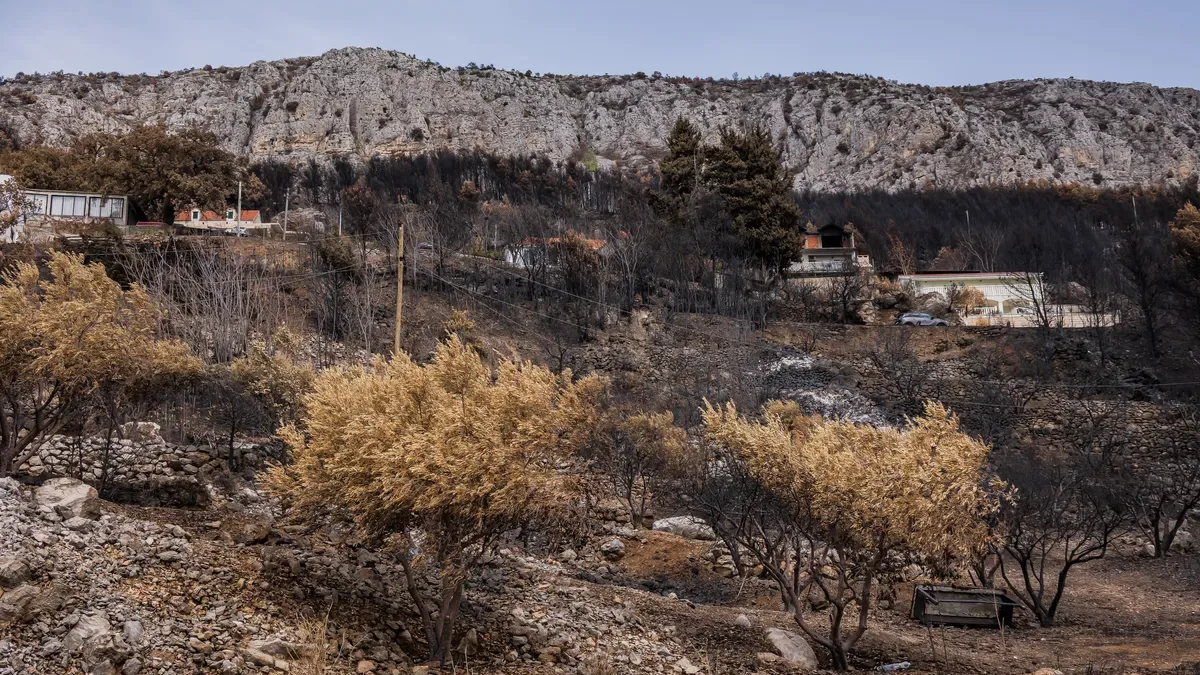
Omis Fire: Mainland Crews and Military on Standby
Croatia's chief fire commander ordered an emergency deployment of mainland units to the Adriatic coast, army involvement was not ruled out, and the Adriatic Highway was closed to traffic.

A wildfire that broke out near Omis on Thursday evening, around 8:21 p.m. in Lokva Rogoznica, pushed Croatia’s fire service into a decision it had not made all season: chief fire commander Slavko Tucakovic ordered an emergency deployment of units from the mainland to the Adriatic coast. For travelers from Serbia this is not a distant story. The Adriatic Highway is closed on the stretch from Stanici, coming from Split, to Medici, coming from Makarska, the exact route used in mid August to reach the Makarska Riviera and points further south, and the Omis bypass has been closed as a precaution in the direction of Makarska.
The deployment order is what sets this night apart from a routine summer intervention. Every available unit between Kastela and Makarska was sent to the fire first, followed by reinforcements from three coastal counties: Zadar, Sibenik-Knin and Dubrovnik-Neretva. When that still was not enough, firefighters were called in from Krapina-Zagorje, Bjelovar-Bilogora and Koprivnica-Krizevci counties, along with the Firefighting Association of the City of Zagreb, all of them hundreds of kilometers from the sea.
“All firefighting units from Kastela to Makarska were deployed to the fire site immediately. We also brought in additional forces from Zadar, Sibenik-Knin and Dubrovnik-Neretva counties, and we have dispatched units from Krapina-Zagorje, Bjelovar-Bilogora and Koprivnica-Krizevci counties,” Tucakovic said.
In a statement issued at 10:31 p.m., the commander confirmed that firefighters from those three mainland counties had been placed on standby, and did not soften his description of the situation: “The situation is very bad.” He also raised the possibility of calling in the Croatian Army, an option he kept on the table through the entire night.
What does an emergency mainland deployment mean?
It means moving personnel and vehicles from counties that have no operational connection to Adriatic wildfires, across the length of the country, overnight. The Croatian Firefighting Association itself used the term “emergency deployment” and said the chief commander had ordered it personally. Before that, according to the same statement, the fire in Lokva Rogoznica had already drawn in units from the three coastal counties.
According to the association’s figures, 110 firefighters with 33 vehicles were on scene at Lokva Rogoznica. Tucakovic singled out the composition of the first outside reinforcements: crews from Pakostane, Sibenik and Metkovic sent 26 people and seven vehicles. The number kept climbing through the night as new teams arrived, making an exact count impossible to give.
Aircraft waited for daylight while the fleet was already stretched thin
Four Canadair water bombers were scheduled to take off at first light. “They will take off at 6:10, they can’t go earlier, and it will certainly be a great help,” Tucakovic said. At 5:36 a.m. officials were still assessing whether the aircraft could fly at all, since the wind had not let up.
The wind was not the only problem. It also mattered where the aircraft had spent the previous day. Above Pucisca on Brac, a fire had been burning since around 2:30 a.m., with 106 firefighters and 31 vehicles on the ground and four Canadair CL-415 aircraft in the air, and the fire had already burned through more than 250 hectares of pine forest. Near Skrljevo in Primorje-Gorski Kotar County, where a fire was reported around 1 a.m., 101 firefighters worked with 30 vehicles and one Air Tractor. Once the Brac fire was brought under control, two Canadairs were redirected to Sipan near Dubrovnik, where 27 firefighters and two boats were already on the scene.
Ante Sanader, head of the Croatian Firefighting Association, warned that wind coming off the mountainside creates turbulence dangerous enough to break aircraft wings, and that a similar situation had occurred during the major Split fire of 2017. He judged the current situation to be worse.
Evacuation and injuries
Residents and tourists were moved to the Ribnjak municipal sports hall in Omis, where the Red Cross was also brought in. Omis mayor Zvonko Mocic said that by around 2 a.m. roughly 1,000 people had passed through the reception center, and he later confirmed around a dozen seriously injured and several dozen more with minor injuries, ranging from burns to fractures sustained while fleeing. Some people were evacuated by boat, with the harbor authority organizing the evacuation by sea. Police also sent two patrol vessels toward Lokva Rogoznica.
“The fire can change direction at any moment, and a large amount of embers are flying through the air. We are asking residents not to approach the fire site, to close their windows, put wet cloths over their mouths and leave the affected area as soon as possible,” Tucakovic warned.
The same area burned last year too, though from the opposite side: that fire moved from Pisak through Marusic toward Mimice, while this one started in Lokva Rogoznica, on the far side of Mimice.
By 6 a.m. the city of Split and the county had agreed to start clearing burned out cars from the highway and hauling them to the Vrisovci disposal site. Damage assessments on homes and vehicles will only begin once the fire is pushed back from Omis. Tucakovic summed up the night still ahead for his firefighters in five words: “This will be a tough night with a lot of fighting.”