US Destroys Three Iranian Tankers After Missile Attack
CENTCOM said US forces disabled two Iranian tankers and destroyed a third after Iran fired missiles at a US aircraft carrier and destroyer in the Persian Gulf.

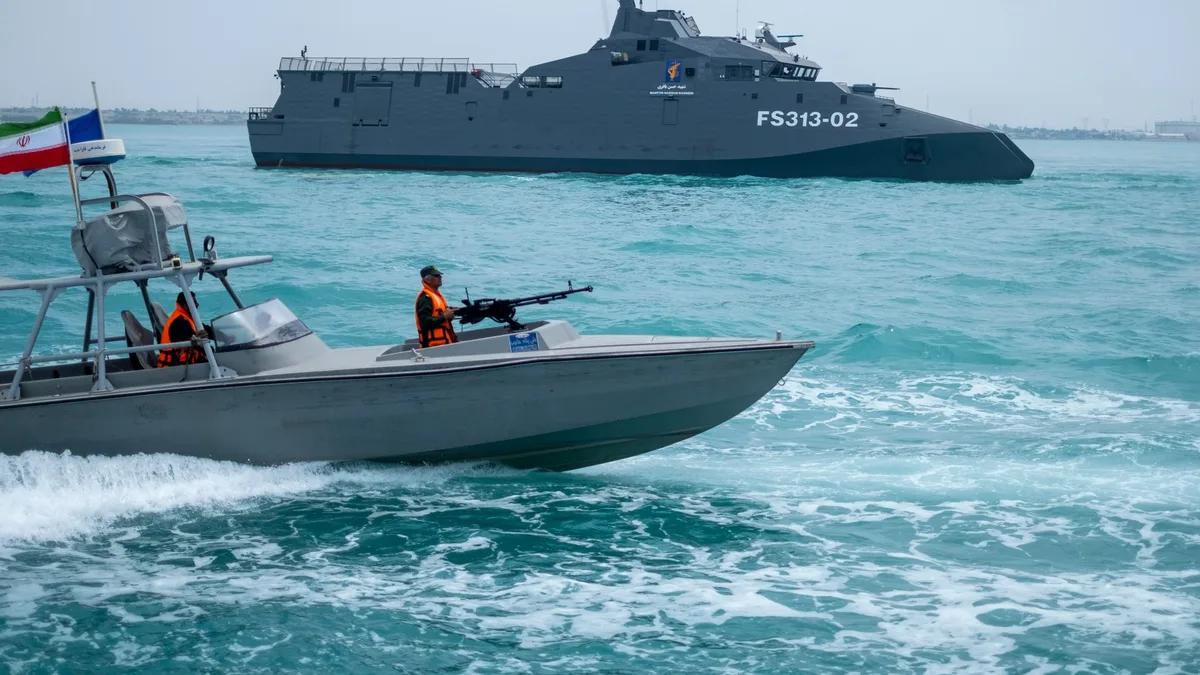
The standoff over the Persian Gulf has entered a new phase that hits crude oil prices on world markets directly, and with them Serbia, which imports much of its energy at prices set on those very exchanges. US Central Command, better known as CENTCOM, said on Saturday, September 5, that its forces struck three Iranian crude oil tankers after Iran fired ballistic missiles earlier that day at two American warships.
According to the CENTCOM statement, the Islamic Revolutionary Guard Corps (IRGC) fired missiles at a US aircraft carrier and a guided missile destroyer sailing in regional waters. Both ships evaded the missiles, no American service member was hurt, and Washington responded by striking Iran’s tanker fleet.
The tanker M/T Downy was hit off the coast of Kharg Island in the northern Persian Gulf and, according to CENTCOM, was permanently disabled. A second ship, M/T Stark 1, was hit near the city of Jask on the Gulf of Oman after it had already loaded crude oil, and it too was permanently disabled. A third ship, M/T Kylo, also known as Noxen, was completely destroyed in the Gulf of Oman. It was not carrying oil at the time of the strike, its crew was ordered to abandon ship, and it was then hit at multiple points.
CENTCOM commander Admiral Brad Cooper presented the strike as direct retaliation rather than routine enforcement of a naval blockade.
“Let our message to the Revolutionary Guard be clear: if you fire on two of our ships, we will impose an even greater economic cost by destroying three of yours. We will not hesitate to defend American forces and, if necessary, to destroy Iran’s limited and exposed oil tanker fleet,” Cooper said in the CENTCOM statement.
The US command added that the three tankers hit belong to a multibillion dollar network that finances the Revolutionary Guard and its allies in the region: “Three Iranian crude oil tankers are part of a multibillion dollar shadow network that finances the Revolutionary Guard and its allies in the region,” the CENTCOM statement said. The description of the fleet as “limited and exposed” suggests Washington believes Tehran cannot defend it effectively, though CENTCOM stopped short of stating outright that the fleet has no defenses at all.
Why Kharg Island Is at the Center of the Conflict
Kharg Island sits about 26 kilometers off the Iranian coast and roughly 480 kilometers northwest of the Strait of Hormuz. Before the war, about 90 percent of Iran’s crude oil exports passed through it, making it the country’s main export hub. That is why we reported days earlier on explosions near the island and Iran’s claim that a tanker had been hit there at the time. Saturday’s strike marks the first time CENTCOM has officially claimed responsibility, named all three ships and the strike locations, and spelled out the logic behind the retaliation: two of our ships for three of yours.
A few days earlier, near Jask, tankers belonging to the National Iranian Tanker Company, the NITC Sinopa and the NITC Hawk, were reportedly also hit while carrying oil. That extends the pattern of strikes from the southern Gulf of Oman all the way to the island that forms the backbone of Iran’s oil exports.
Iran’s Tasnim news agency reported no casualties aboard the tankers that were hit. Iran’s Foreign Ministry, speaking through the state broadcaster IRIB, called Saturday’s strike an unlawful and aggressive act, a violation of the UN Charter and a war crime, adding that it threatens international peace and commercial shipping.
Al Jazeera notes that the war between the United States and Iran has now lasted six months, has killed 18 American soldiers, and that talks to end the conflict have collapsed. How long the exchange of strikes on tankers and warships will continue, and whether it spreads beyond Kharg Island and the Strait of Hormuz, remains a question without an answer for now.