Israel election: neither Netanyahu nor Eisenkot has 61 seats
With 85.6 percent of votes counted, Netanyahu's bloc has 53 seats, Eisenkot's 48, and Arab parties a record 19. The result is not final.
In Israel’s parliamentary election, no bloc has a majority of 61 seats in the 120-member Knesset after 85.6 percent of votes were counted. Prime Minister Benjamin Netanyahu’s bloc has 53 seats, the bloc of former Chief of the General Staff Gadi Eisenkot has 48, and Arab parties together have 19, the most in the country’s history, according to the Times of Israel. The count covers 93 percent of polling stations, and the result is not final because the double envelope ballots have not yet been counted.
Voting took place on Tuesday, October 27. The Central Elections Committee put turnout at 77.7 percent. By 8 p.m., 74.3 percent of voters, more than 5.4 million people, had cast ballots, the highest figure for that time of day since 1988. We covered the voting and turnout up to noon on Tuesday.
How are the parties distributed in the Knesset?
According to the Israeli news site Ynet, seats at this point in the count are distributed as follows:
- Likud (Netanyahu): 26
- Yashar (Eisenkot): 21
- Joint List: 13
- Together, Bejahad (Naftali Bennett): 12
- Democrats: 8
- Yisrael Beytenu, United Torah Judaism, Shas and Otzma Yehudit (Itamar Ben Gvir): 7 each
- Ra’am: 6
- Religious Zionism and Zehut alliance: 6
Near the top of its article, Ynet says Bejahad and the Joint List have 12 seats each, but further down it puts the Joint List at 13. With 13, the total comes to exactly 120 seats and 19 for the Arab parties, so that figure is used here. Reservists (2.6 percent), Nation of Israel (Ofer Winter, 1.6 percent) and Haredi Public (0.2 percent) fell short of the 3.25 percent threshold.
How did the numbers change overnight?
Exit polls published on Tuesday evening gave the opposition a slight edge: Channel 12 projected 52 seats for the opposition and 50 for Netanyahu, while Channel 13 had 53 to 50. When roughly 55 to 60 percent of votes were counted, Netanyahu’s bloc had 56 seats. Al Jazeera then showed 49 seats for Eisenkot’s bloc and 15 for Arab parties, while RTS reported 48 and 16. After that, Netanyahu’s bloc fell to 54, then to 53.
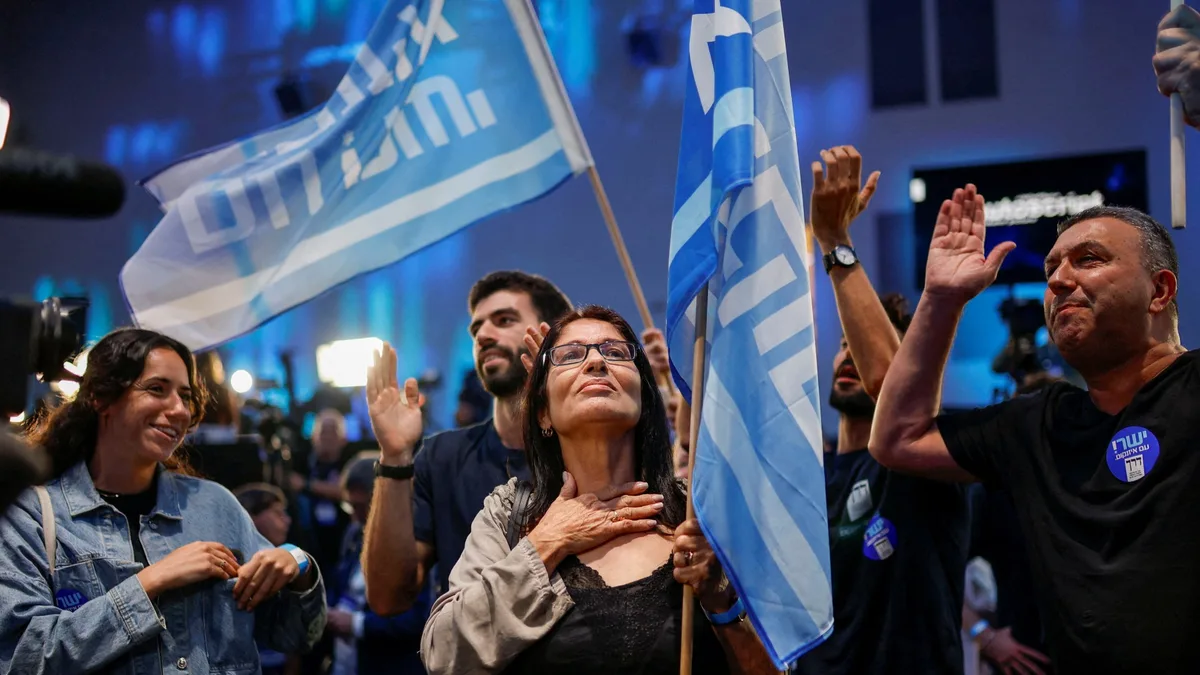
Supporters of the opposition bloc celebrated first, and the prime minister’s supporters later, RTS reporter Jelena Terzic said from Jerusalem. Eisenkot wrote on X: “If these are the final results, it is a victory for the responsible Zionist majority in Israel.” In front of supporters he added: “We have made history. The public chose change.”
Speaking at the International Convention Center in Jerusalem, Netanyahu said: “The Zionist majority must come to its senses and unite. Only that way can we guarantee the future of Israel.” Foreign Minister Gideon Saar called the opposition’s statements premature and said Likud is still the strongest single party.
Opposition leader Yair Lapid said: “Don’t let anyone confuse you: Netanyahu’s bloc has suffered a heavy defeat.” Democrats leader Yair Golan wrote on X: “Netanyahu lost. I know how to count to 120. Sixty-five is more than fifty-five.” Golan was referring to an earlier stage of the count, not to the current snapshot.
What could still change the seat distribution?
The double envelope ballots, cast by soldiers, prisoners, hospital patients, diplomats and people with disabilities. The Times of Israel estimates there are about 600,000 of them, while Elad Nave of the Central Elections Committee’s control center said there are more than 500,000. According to Ynet, counting begins around midnight and should finish on Thursday evening. Nave warned that it is too early to judge how those votes will affect the distribution. Turnout among military personnel was 79.9 percent.
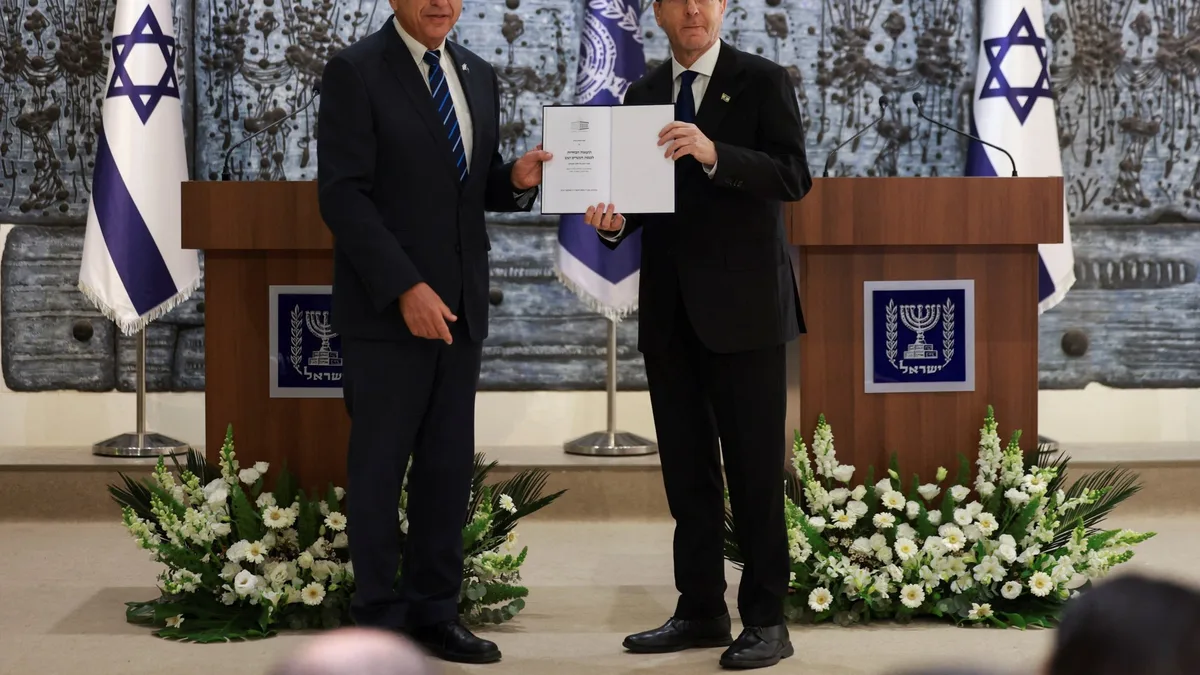
President Isaac Herzog expects the official results next week from Supreme Court Justice Noam Sohlberg, after which he will begin consultations with all parliamentary groups. He designates the candidate to form a government within seven days of the results being published. At a gathering at the presidential residence in Jerusalem, he said:
We must do everything we can, especially after yesterday, to avoid another round of elections.
It was Herzog’s first public statement since the vote.
Who could assemble a majority?
Netanyahu and Eisenkot both reject cooperation with Arab parties. Golan opposes that stance and wants a government backed by Arab citizens. Joint List leader Professor Yousef Jabareen said he is ready to use his faction’s gains to help unseat the government: “We will know how to use our political strength to advance the values we believe in.” The leader of the United Arab List (Ra’am), Mansour Abbas, told reporters: “We will turn the mandate we have received into a new reality in the country.”
If no one assembles a majority, Netanyahu stays at the head of a caretaker government, and new elections are possible. According to Ynet, a caretaker government keeps the same formal powers as a regular one, including approving military action, but is expected to show restraint on decisions with irreversible consequences.
Analyst and editor of the Oko portal Momir Turudic said on RTS’s morning program that the situation could last several months, since by his account the deadlines for forming a government can run up to 42 days from the publication of final results:
Based on the first election results in Israel, it is certain that no bloc will be able to form a majority in the Knesset on its own, which has 120 seats.
Turudic added that the high turnout is a sign of a society in turmoil. Sources close to US President Donald Trump told Ynet that he does not want Ben Gvir, and probably not Bezalel Smotrich either, in Netanyahu’s next government. The shekel weakened as results came in.