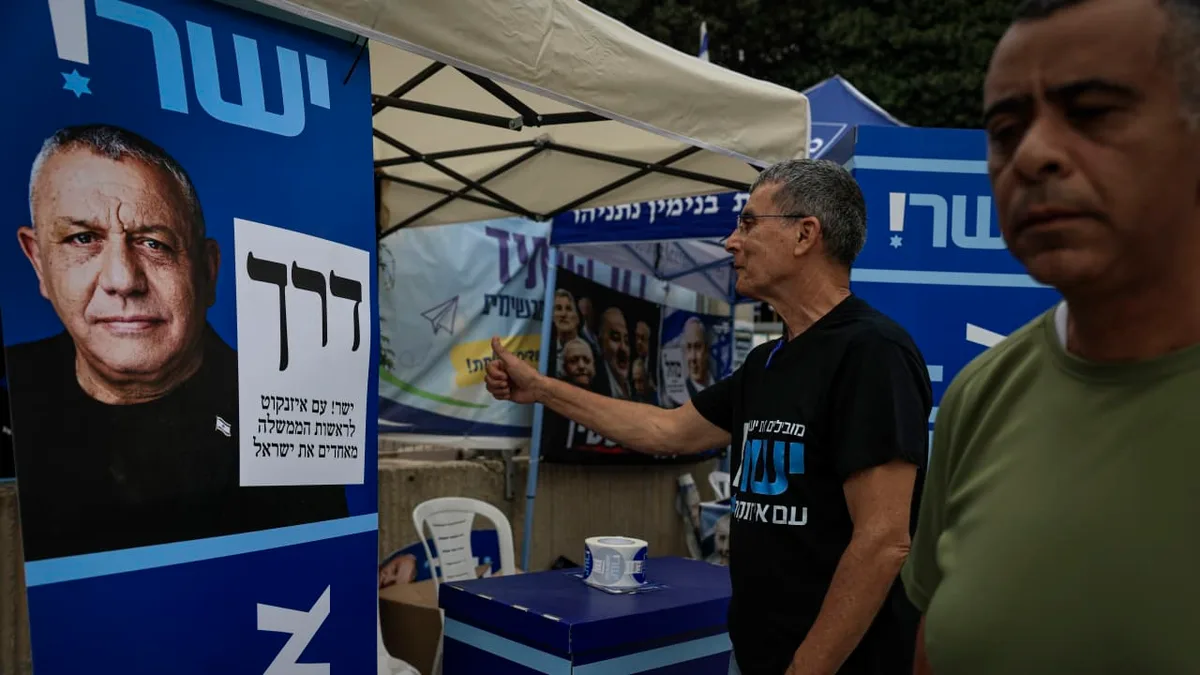
Herzog Talks: Torah Party Makes No Pick, Eisenkot Leads
United Torah Judaism did not recommend Netanyahu for the first time after five elections, Ra'am backs Eisenkot, and Likud goes last. Herzog alone decides who gets the mandate.
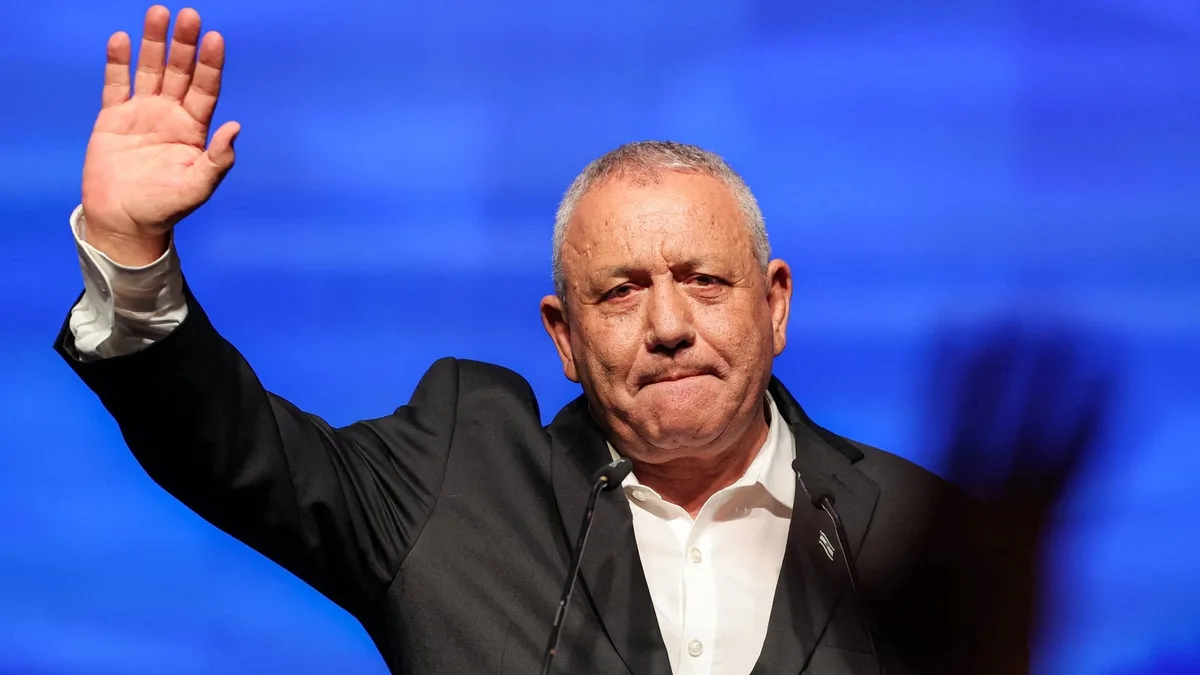
Israeli President Isaac Herzog held the second day of consultations at the President’s Residence in Jerusalem on Thursday on who should be asked to form the next government, and former chief of staff Gadi Eisenkot is emerging as the favorite. The outcome decides who will lead the government of a country with which Serbia maintains diplomatic relations. The biggest shift came in the morning: United Torah Judaism, which recommended Benjamin Netanyahu after the previous five elections, this time recommended no one.
Yesterday we reported that the election results had been certified and that Ra’am had backed Eisenkot. Today other parties joined that move, and Likud is last in line on Thursday evening.
How do the consultations at the President’s Residence work?
Talks began on Wednesday, November 4, with the smallest parties. They follow the October 27 election, in which neither Netanyahu nor Eisenkot secured a majority in the 120-seat Knesset. The Central Elections Committee certified the results on Wednesday morning and handed them to Herzog at noon. The committee found no evidence that the integrity of the election was compromised, while the Shin Bet is still checking suspicions that foreign entities sent money to Arab communities.
Netanyahu’s bloc, together with United Torah Judaism, holds 53 seats and Eisenkot’s holds 48, while the Arab lists rose to 19, their best result ever. On Wednesday, entry to the residence was briefly halted when a security scanner raised an alarm, bomb disposal officers arrived, and a small group of demonstrators protested outside.
On Thursday the Torah bloc was first up, at 8:30 a.m. The Democrats came in the morning, Otzma Yehudit during the day, and Ra’am early in the afternoon. The Joint List, Beyachad and Yashar are scheduled for later.
Who has recommended whom?
So far Netanyahu has been recommended by Religious Zionism with six seats, Shas, also with six, Moshe Feiglin’s Zehut and Otzma Yehudit. Shas had its weakest election result since 1992. According to the Jerusalem Post, Likud is due to recommend Netanyahu this evening.
Eisenkot has been recommended by Avigdor Liberman’s Yisrael Beytenu with seven seats, the Democrats, and Ra’am under Mansour Abbas, who for the first time in his party’s history proposed a Jewish candidate. Yashar and Beyachad have said they will do the same, and the Joint List is expected to follow.
Otzma Yehudit attached a demand to its recommendation: Yitzhak Wasserlauf told Herzog that every party must condemn Hamas before it earns the right to recommend a candidate. Feiglin, while recommending Netanyahu, called for the election to be annulled, and Herzog answered him:
“I know history. You have never fully trusted the state.”
Settlements Minister Orit Strook of Religious Zionism told Herzog that “we have to sit together without boycotts and reach understanding and agreement.” Herzog put a question to her: “How do you tell racism apart from what you are saying?” Yisrael Beytenu lawmaker Oded Forer said at the residence: “The current government is not right-wing in its policies.”
Why did the Torah party recommend no one?
The President’s Office said the party decided not to recommend any member of the Knesset to form a government. It holds seven seats, four of them Degel HaTorah and three Agudat Yisrael. Degel HaTorah acts on the instructions of Rabbi Dov Lando and Rabbi Moshe Hillel Hirsch.
Behind the decision lies the question of exempting religious students from military service. Netanyahu kept the exemption in place but never wrote it into law, while Eisenkot says he is firmly determined to abolish it, at a time when reservists are serving extra rotations because of the wars in Gaza, Lebanon and Iran. Lawmaker Yitzhak Pindrus put it to Herzog this way:
“In whatever government is formed next, our immediate issue is resolving the status of Torah students.”
At the same meeting he added: “We came to talk about issues, not about people.” Herzog responded by voicing regret over the outcome at the High Court of Justice: “I regret that the Tal Law was struck down by the High Court of Justice, and by such a thin majority.”
What does Ra’am’s recommendation mean?
Mansour Abbas said at the residence that his party supports Trump’s peace plan for Gaza and the full disarmament of Hamas. His message for the coalition table was short: “Ra’am in the coalition would make the government only stronger and more aware.”
Eisenkot has so far left open whether he would accept Arab support, and Liberman said in a social media post that a stable government can be formed “without Ra’am or the Joint List.”
How are the recommendations counted, and what comes next?
The figures differ from source to source. The Times of Israel expects Eisenkot to have at least 56 recommendations by the end of the consultations. The figure of 53 cited for Netanyahu refers to his entire bloc, which includes the seven seats of the party that did not recommend him, so the count for Netanyahu is closer to 46 seats. The Jerusalem Post adds 48 opposition seats and 19 Arab seats, a total of 67 if the Joint List, with 11 seats, joins.
Herzog makes the decision himself, but the mandate traditionally goes to the candidate recommended by more parties. The mandate holder has 28 days to form a government, with a possible 14-day extension, for a maximum of 42 days. If he fails, Herzog hands the task to someone else. Yaya Fink and Gabi Lasky of the Democrats, who were not members of the previous Knesset, will be sworn in on November 10.