Likud Says Israel Election Was Stolen, Police Find No Proof
After the October 27 election, Likud accuses Arab parties of theft, while a police source says there is no evidence. Shin Bet is still checking suspected foreign funding.
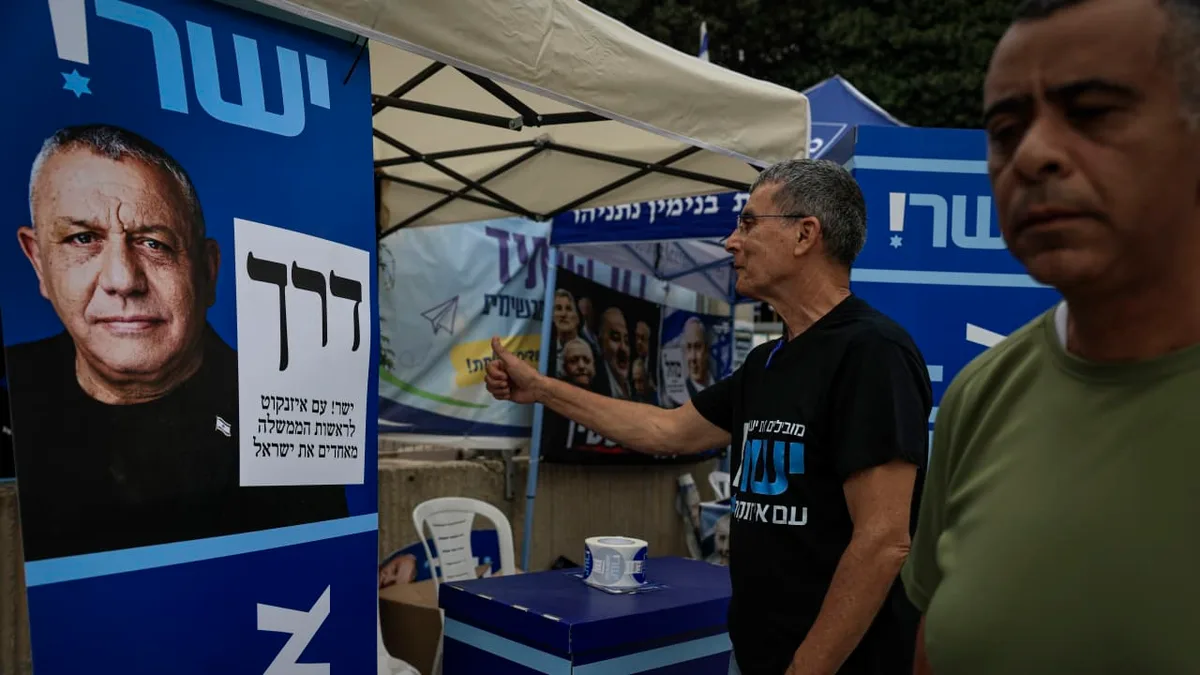
Israeli police have no evidence for Likud’s claim that Arab parties stole the election held on October 27. A police source told Hebrew-language media on Thursday morning that nothing supports the claim, a day after Likud publicly accused the Arab parties of bribery, threats and voting under other people’s identities.
Likud announced on Wednesday that the election had been “stolen” by Arab parties. The police source responded:
“Election day passed with very few irregularities affecting the integrity of the vote. It must be stressed that there is no evidence, either from investigations or from intelligence, to support these claims.”
An official at the Central Elections Committee had already dismissed the fraud claims on Wednesday.
What does Likud claim, and to whom did it submit its complaints?
According to JFeed, Likud handed hundreds of testimonies and supporting documents to the police, Shin Bet and the Central Elections Committee. It alleges bribery, threats, violence, double-identity voting and banned software used to mobilize voters at polling stations in Arab communities. Jerusalem Post reported that the party filed 775 complaints with the committee over the course of election day.
Sagi Kaisler, head of Likud’s election integrity headquarters in the Arab sector, said:
“We demand an urgent investigation of these suspicions, the deployment of independent observers and guarantees that the voting will be proper and transparent.”
Pressure also came from right-wing ministers and lawmakers. On Wednesday morning they wrote to Elections Committee chair Noam Solberg and Shin Bet chief David Zini, asking that every vote for Ra’am be annulled. The initiative was led by Otzma Yehudit MK Yitzhak Kroizer, and the signatories include ministers Amichai Eliyahu and Amichai Chikli, MKs Simcha Rothman and Ohad Tal, and Zehut leader Moshe Feiglin. They also ask that Ra’am representatives not be allowed into the Knesset until the matter is cleared up, and they gave the authorities 24 hours to report on investigative steps.
The signatories also mention that on election day police in the Negev arrested three people from Segev Shalom and Arara, who were found with tens of thousands of shekels in envelopes containing ballots. The accusations against them have not been proven in court. No one has independently confirmed the claim that fuel and gift cards were handed to voters near polling stations. Ra’am, the party of Mansour Abbas, had not responded to the accusations when the report was published.
Why is Shin Bet still checking foreign funding?
Solberg sent Zini a separate order: to look into suspected foreign funding and the bribing of voters. According to i24NEWS, he wants findings within a week because of the legal deadlines for election appeals. In his letter he wrote that he “cannot attest to the nature of the above suspicions.” The committee explicitly states that this check is unrelated to Likud’s claims.
Where do the seats stand while the double envelopes are counted?
The Central Elections Committee’s projection, with 93 percent of polling stations counted, gives Benjamin Netanyahu’s bloc 53 seats, Gadi Eisenkot’s bloc 48 and the Arab parties 19, a record. A Knesset majority is 61 of 120 seats. Likud is the largest party with 26 seats, Yashar has 21, Naftali Bennett’s Beyachad has 12, the Democrats eight and Yisrael Beytenu seven. United Torah Judaism, Shas and Otzma Yehudit have seven each, and Religious Zionism has six. The lists of Ofer Winter and Yoaz Hendel did not pass the 3.25 percent threshold.
Within the Arab bloc, Ra’am rose from seven to eight seats in the recount, while the Joint List fell from 12 to 11.
The count of double envelopes is still to come. These are cast by soldiers, diplomats, prisoners, hospital patients and everyone voting outside their own polling station. i24NEWS reports that the committee estimates “up to 480,000” such envelopes, while Elad Nave of the committee’s control center, according to Ynet, speaks of more than half a million. Counting began around midnight between Wednesday and Thursday and is expected to finish on Thursday evening. Nave warns that it is too early to judge the effect on the seat distribution, and the committee has announced further checks next week.
What is the political scene saying?
President Isaac Herzog urged politicians on Wednesday to enter coalition talks with an open mind:
“We must do everything, especially after yesterday, to avoid another round of elections. I expect everyone who comes here to come with an open mind.”
Yair Golan, leader of the Democrats, said on social media: “Netanyahu lost. I know how to count to 120. Sixty-five is more than fifty-five. That is how Israeli democracy works. Period.” Ahmad Tibi, head of the Joint List’s parliamentary group, told Army Radio that the opposition bloc will be able to form a government if it has the courage, adding: “We are extending a hand and are ready to help.”
Golan wants a government backed by the Arab parties, while other opposition leaders, among them Bennett and Liberman, reject that option. Eisenkot does not want to serve under Netanyahu. While the talks go on, Israel could remain under a caretaker government, and by law Herzog consults the parliamentary groups before assigning the mandate.