Alta Bank: SDSM Demands Governor Slaveski's Resignation
After Alta Banka lost its Belgrade license, North Macedonia's opposition wants the governor held accountable, the Bitola bank says it is liquid, and Montenegro says Alta is not licensed there.
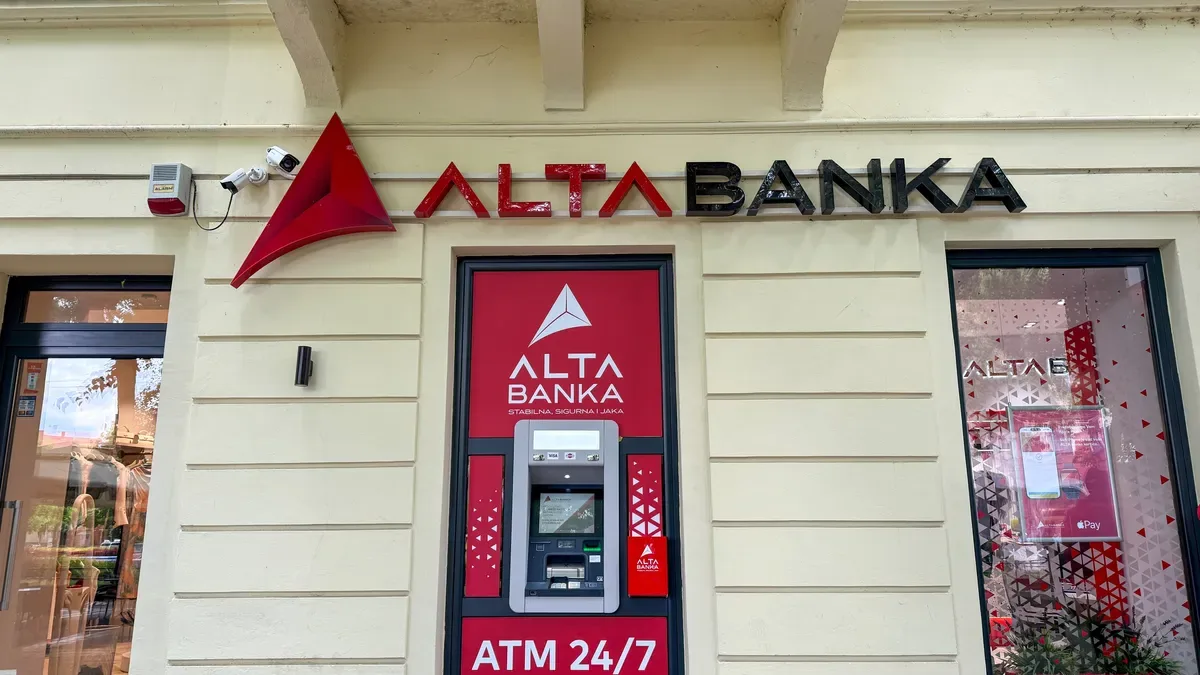
At the end of October the National Bank of Serbia revoked the operating license of Alta Banka a.d. Belgrade, and the fallout has crossed the border. In North Macedonia the opposition SDSM is demanding the resignation of National Bank governor Trajko Slaveski, the subsidiary in Bitola is assuring clients that it is liquid, and the Central Bank of Montenegro says Alta Banka holds no license in that country. The Belgrade bank is the parent and majority owner of Alta Banka AD Bitola, formerly Stopanska Banka Bitola, so what is happening in Skopje follows directly from the decision made in Belgrade. A court is expected to appoint the Deposit Insurance Agency as bankruptcy administrator. We have already reported on the license revocation and on deposit insurance of up to 50,000 euros.
What does the opposition in Skopje want from the governor?
Venko Filipce, president of SDSM, North Macedonia’s largest opposition party, said at a press conference on October 31 that Governor Slaveski should resign and face criminal liability for allowing Alta Banka from Serbia to enter the country. Filipce described the bank as “linked to criminally acquired money,” citing media reports and SDSM’s political contacts in Serbia.
“The governor must face not only his moral responsibility and resign, but also criminal responsibility. That is why we call on the Basic Public Prosecutor’s Office to investigate, so that it knows well what kind of bank it is allowing to enter the country”
Filipce added that SDSM had asked last December, because of the bank’s questionable operations in Serbia, why it had been allowed into North Macedonia. He extended the question to the prime minister:
“The key question is whether (North Macedonia’s prime minister) Hristijan Mickoski and Trajko Slaveski properly assessed the risk of what kind of bank is entering our country, or whether they in fact knew very well what was going on and are part of this mafia network in Serbia”
From the same party, Andrej Zernovski, secretary for international cooperation and a member of the Executive Board, told the press conference about alleged transfers of more than 50 million euros and asked whether Skopje is becoming a way station for money headed to Moscow:
“Believe it or not, according to the latest information coming from neighboring Serbia, a staggering more than 50 million euros is being transferred from the Alta Banka headquarters in Belgrade to Alta Banka Makedonija”
Zernovski relies on information that SDSM has not backed with documents. Prime Minister Mickoski and Governor Slaveski, in his words, should give the public answers.
How does Governor Slaveski respond?
In a written statement on the website of the National Bank of North Macedonia, Slaveski rejected the claims as unverified. A transfer of funds from one country to another, he wrote, does not in itself mean suspicious activity, and what matters is the nature, basis and circumstances of the transactions.
“Regarding the claims about a transfer of funds from Serbia abroad, the National Bank of Serbia has already issued an official statement, and I would not comment on unverified claims concerning the banking system in another country.”
He closed the statement with: “The domestic banking system is stable and resilient.” The claims about money being moved out quickly to Moscow and Skopje were first made publicly by lawyer Ivan Ninic, who spoke about one bank and persons connected to it, and about the period starting October 26. In the claim we read, Ninic does not name Alta. The National Bank of Serbia told N1 television that transfers by financial institutions are carried out through regular payment channels.
What does the bank in Bitola say?
Alta Banka AD Bitola said on Facebook on October 31 that it is an independent legal entity, registered in North Macedonia and under the direct supervision of the country’s central bank, and that events in Serbia do not automatically change its legal status.
“All branches and ATMs are working normally, and clients have unhindered access to their funds.”
The bank also stated that its operations are not subject to the political pressure that marked events in Serbia. The National Bank of Serbia, it is worth recalling, justified the license revocation by saying the Belgrade bank’s financial condition had deteriorated significantly despite controls aimed at raising liquidity.
Why does Podgorica say Alta does not operate in Montenegro?
The Central Bank of Montenegro said on October 31 that the decision from Belgrade poses no risk to the country’s financial stability:
“It is important to stress that Alta Banka does not operate in Montenegro, that is, it holds no license from the CBCG to carry out banking business.”
Podgorica is nonetheless home to a payment institution, Alta Pay Group, which according to the CBCG provides only payment and money transfer services, has no bank status and does not take deposits from citizens. The central bank added that it launched a check on whether that institution still meets the legal requirements well before the latest events and that the procedure is under way, so it cannot disclose details.