EPS profit hits 17.5 billion dinars, investment 38% of plan
Serbia's power utility reported first-half net profit 25% above plan, despite lower electricity and coal output and the departure of 17 engineers.
The first-half 2026 report from Elektroprivreda Srbije (EPS) shows a net profit of 17.5 billion dinars (about 150 million euros, a rough conversion at 117 dinars to the euro). That is 25% above the planned 14 billion, but about a fifth lower than in the same period last year. Profit beat the plan, while electricity output, coal output and investment all fell short of it.
Why is profit above plan while output is below?
Chief executive Dusan Zivkovic writes in the introduction to the report: “In the first half of 2026, Elektroprivreda Srbije joint stock company continues its trend of positive results, with a profit of 17.5 billion dinars, which is better than planned.” He adds right away that “the biggest influence on the better financial result compared with the plan comes from lower operating costs and lower financing expenses.”
Total revenue came to 246 billion dinars (about 2.1 billion euros), 2% more than a year earlier. Total expenses rose 5%, from 213 to 224 billion. Operating revenue increased 7%, to 242 billion, and operating expenses rose by the same percentage, to 211 billion. The report attributes the drop in profit against last year to different movements in exchange rates.
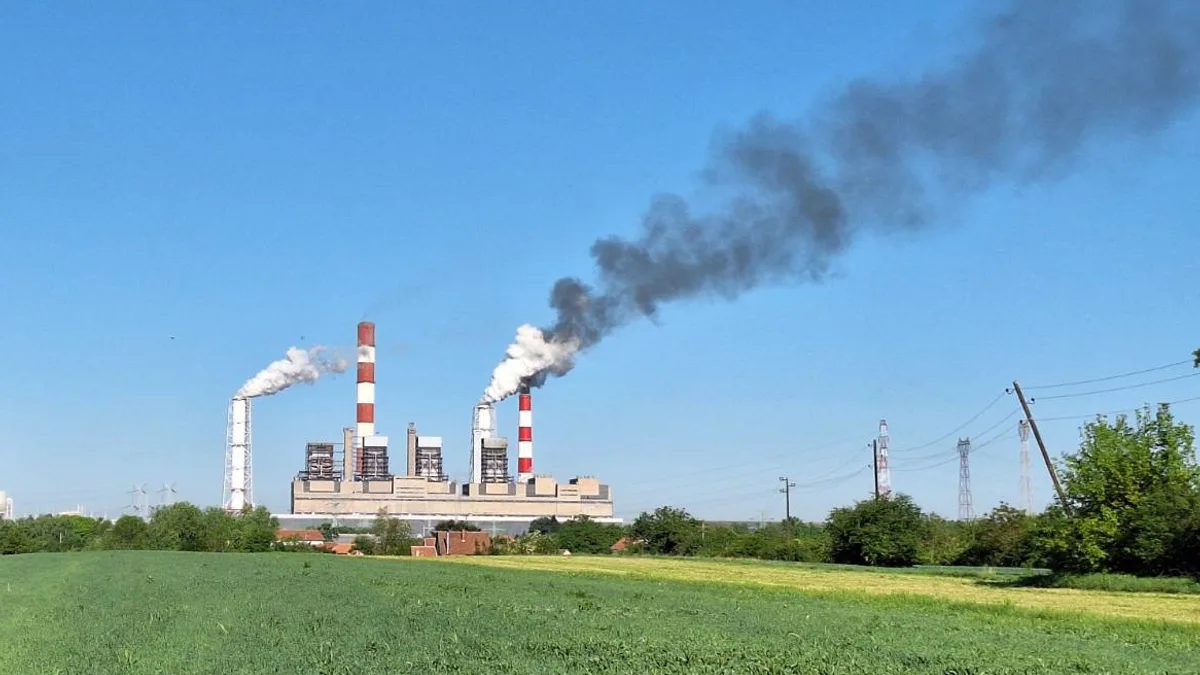
Part of the gap against the plan comes from accounting. Depreciation was 17 billion dinars, 4 billion below plan, mostly because some investments were put into service later than planned, among them the desulfurization system at the Nikola Tesla B thermal power plant (TENT B). A lower expense on that account raises the reported profit.
How far did electricity and coal output fall?
All three production segments came in below plan:
- electricity: 14,825 gigawatt-hours were produced, 7% below plan and 5% less than in the first six months of last year
- coal: output was 14.7 million tons, 3% below plan and 5% less than last year
- overburden: removal of overburden, the preparation for coal extraction, was 9% below plan and 6% below last year’s level
Zivkovic linked the lower output to procurement costs:
“Despite lower or stable electricity price projections, total procurement costs under the latest projection are significantly higher than planned. This cost increase is the result of lower output from thermal power plants, owing to lower output and poorer quality of domestic coal in the period under review.”
Costs of buying electricity and access to the grid rose 21%, to 106 billion dinars (about 905 million euros). About 90 million euros was spent on imported coal, 10% less than planned. Imports did not fall because there was less need: in periods when it was cheaper, EPS bought electricity instead of coal to generate it. Discounts for households that paid their bills on time came to about three billion dinars.
What happened to investment?
The plan for the first half called for investment of 40.3 billion dinars (about 344 million euros), and 15.2 billion was carried out, or 38%. Of that, 14.8 billion came from the company’s own funds, against 18.8 billion planned. Loans and donations barely materialized: of a planned 21.5 billion, 400 million dinars arrived, or 2%.
Two outlets that reported on the document read the 38% figure differently. Biznis.rs presents it as total investment delivered, while Vreme attributes it to spending from own funds. The numbers Biznis.rs cites, 14.8 billion from own funds plus 0.4 billion from loans and donations against a 40.3 billion plan, give exactly 38% for the total.
Who is leaving the company?
At the end of June EPS had 18,724 employees, 1,196 fewer than planned. Staff costs were 8% below the plan, which stood at almost 32 billion dinars. Even so, those costs are 7% higher than in the same period last year, when the company had more employees.
According to the report, 31 employees left in the first six months through mutual agreement or notice of termination. Of them, 21 are university-educated: 17 engineers, two economists and two lawyers. The report does not name the departments or the reasons for leaving. More people retired than planned.
The age structure is less favorable: two fifths of employees, about 40%, are over 50, and fewer than 5% are under 30. Headcount has been falling for three years, from 19,595 in 2023 to 18,825 at the end of last year.
How does this compare with previous years?
EPS had its best of the last three years in 2023, when total revenue was 513 billion dinars and net profit about a billion euros. That result came from investment lower than planned and from extraordinary budget revenue to compensate for capped electricity prices. The following year EPS reported a profit of 24 billion dinars, and last year a little under 40 billion.
Zivkovic lists these challenges for the coming period:
- raising EBITDA and maintaining the target EBITDA margin, as one of the key indicators
- further cutting operating costs through the transformation of the company
- optimizing the price of electricity sold to Elektrodistribucija Srbije and Elektromreza Srbije to cover grid losses, moving toward the market price
- reviewing the tariff system, so that the price under guaranteed supply, which is significantly below the market price, covers the costs of the guaranteed supplier
- reliability of units TENT A1 to A6 and B1 and B2, which depends directly on the quality of coal from the Kolubara Mining Basin, especially in periods of bad weather