Planet X2 Beyond Neptune: Model Posits 1.5-2 Earth Masses
Simulations by Patryk Sofia Lykawka describe a planet that could explain the elongated orbits of icy bodies beyond Neptune. It has not been observed, and the model fails to match some measurements.
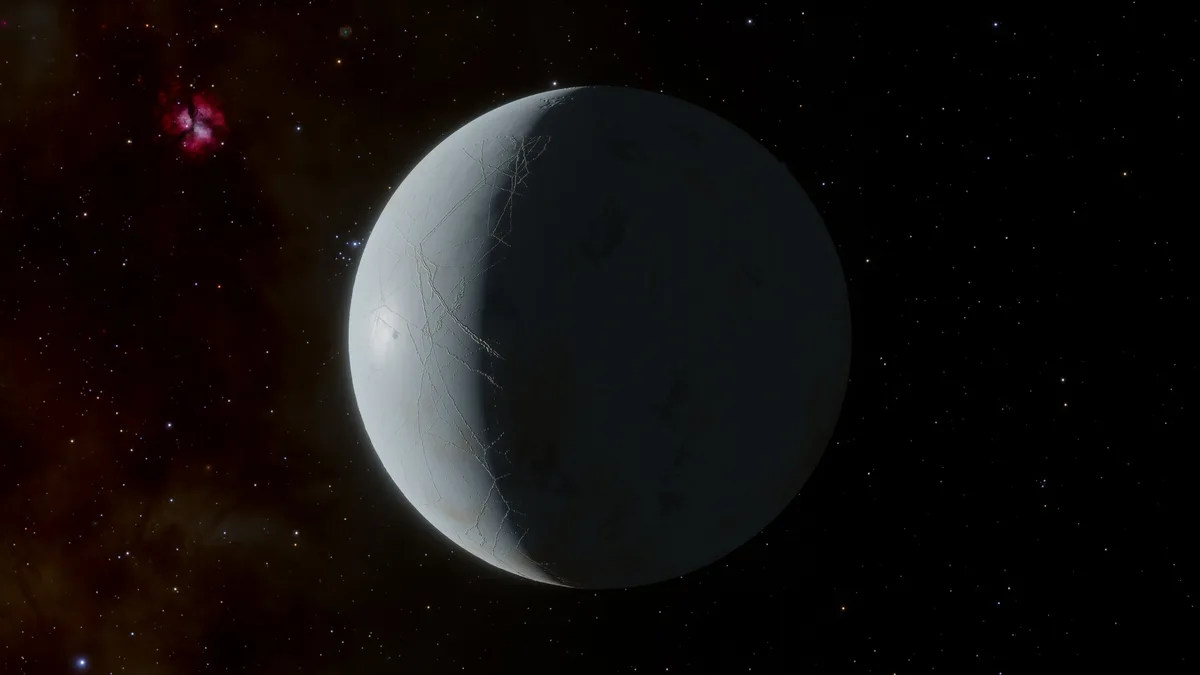
Planet X2, a hypothetical body of 1.5 to 2 Earth masses orbiting far beyond Neptune, is described in a paper published Monday, November 23, in the journal Monthly Notices of the Royal Astronomical Society. The research was led by Patryk Sofia Lykawka, an adjunct associate professor at the University of Southern Queensland (UniSQ) in Australia who works at Kindai University in Japan. The planet has not been discovered or observed. It exists only in a computer model.
What does the paper say about Planet X2?
The paper is titled “Signatures of an Earth-class Planet in the Distant Solar System.” Lykawka and colleagues from Kindai, UniSQ and the National Astronomical Observatory of Japan are credited as authors. Professor Jonti Horner of the University of Southern Queensland is a co-author. The study carries the DOI 10.1093/mnras/stag2033.
The team named the proposed planet Planet X2, or PX2 for short. According to the model, its orbit would be elliptical, with a semi-major axis of roughly 350 to 500 astronomical units. One astronomical unit is the average distance from Earth to the Sun, about 150 million kilometers, so the planet would sit roughly 52 to 75 billion kilometers away. Even at its closest point it would come no nearer to the Sun than 200 astronomical units.
The simulations cover 4.5 billion years of Solar System development, from its formation through the migration of the giant planets to the present day. In a Royal Astronomical Society statement, Lykawka described the starting idea this way:
“Imagine that after decades of mapping our Solar System, you discover that another planet has been hiding from us all this time.”
What puzzle is PX2 meant to solve?
Beyond Neptune lies a vast region of icy bodies known as trans-Neptunian objects. Most of them belong to the Kuiper Belt and move in a broad disk 38 to 50 astronomical units from the Sun. Over the past twenty years or so, astronomers have found a growing number of more distant bodies on elongated or steeply inclined orbits that the gravity of the known planets does not explain. Among them is Sedna, whose orbit is so stretched that it carries the body far beyond the space occupied by the known planets.
In the model, the gravity of Planet X2 would pull icy bodies out of Neptune’s influence or tilt their orbits at unexpectedly large angles. Lykawka says the consequences, if the planet exists, would reach beyond this one puzzle:
“If this planet exists, it could change our understanding of the history of the Solar System and of how its most distant objects ended up on such unusual orbits.”
How does it differ from Planet Nine?
The Planet Nine hypothesis assumes a much more massive body. Planet X2 is lighter, at 1.5 to 2 Earth masses, so the model is presented as a different answer to the same question. The search for an unknown planet beyond Neptune has a long history: Percival Lowell’s hunt for Planet X led to the discovery of Pluto in 1930, but Pluto later proved too small to explain the irregularities in planetary motion that had launched the search in the first place.
How could the hypothesis be tested?
A test could come from the Legacy Survey of Space and Time at the Vera C. Rubin Observatory, which is already under way. Horner says there is now an opportunity to try it:
“The exciting thing is that we now have a chance to put this idea to the test.”
He adds: “As the Rubin Observatory surveys the sky, we will find new clues that help us understand the distant reaches of the Solar System, and whether another planet is waiting to be discovered.”
What does this paper not prove?
The paper does not prove that the planet exists. The model explains some orbital patterns but not all, and the authors say so themselves. Lykawka put it this way:
“Our model reproduces several unusual orbital patterns observed in distant icy objects, although there are still differences between the model and the observations that we need to examine further.”
A computer simulation shows what could be possible, not what is. Until the body is spotted in the sky, Planet X2 remains one possible explanation, alongside Planet Nine and other hypotheses about the odd orbits beyond Neptune.