BepiColombo set to enter Mercury orbit tonight
The European-Japanese spacecraft fires its engines for 37 minutes from 7:24 p.m. Serbian time so Mercury can capture it in orbit. The outcome is not yet officially confirmed.
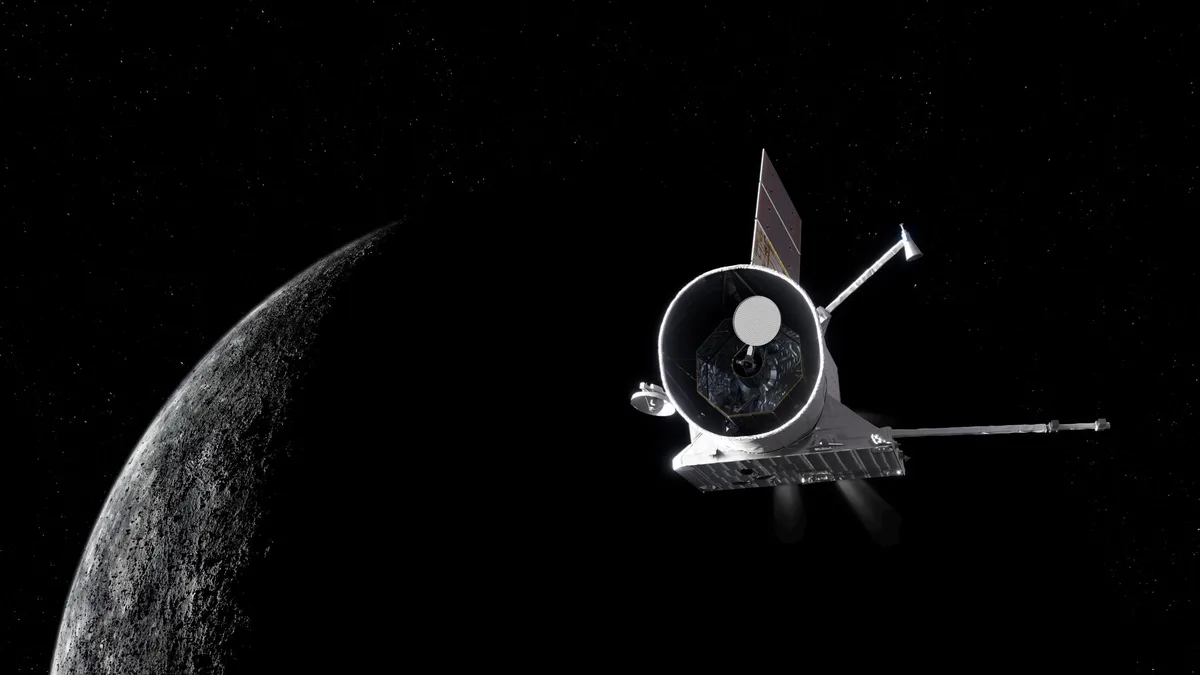
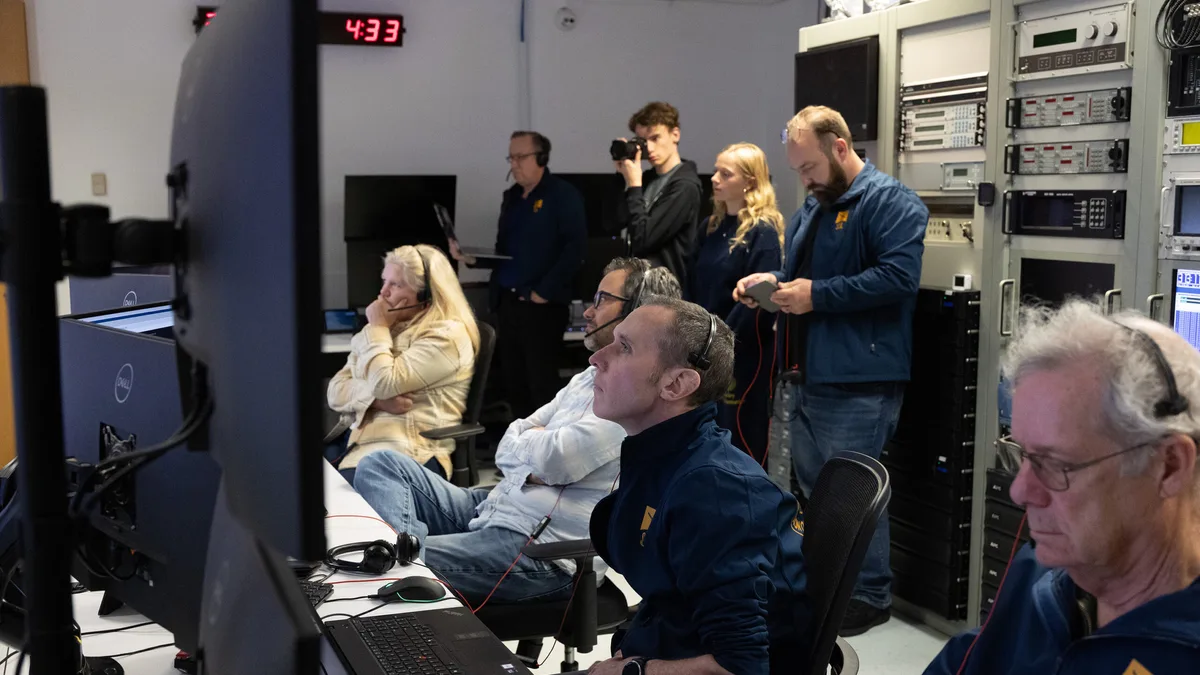
The European-Japanese spacecraft BepiColombo fires its engines tonight so that Mercury’s gravity can capture it in orbit, eight years and one month after launch. According to Space.com, the burn begins on Saturday, November 21, at 18:24 GMT, which is 7:24 p.m. Serbian time, and lasts 37 minutes, until about 8:01 p.m. The European Space Agency (ESA) reportedly posted the same start time on X, based on search results, but we did not open the post itself.
What has been said about the outcome of the maneuver?
Sources diverge here. Time.news writes that the spacecraft reached orbit early on Saturday, in a piece published at 5:58 a.m. That is before the time given by ESA and Space.com, so there is no confirmation that the maneuver has already been carried out. At the time of writing we found no statement from ESA or the Japan Aerospace Exploration Agency (JAXA) saying that orbit insertion succeeded. ESA’s page on the arrival says the spacecraft will be in orbit on November 21, 2026, and according to mlq.ai the agency notes that exact dates may change for operational reasons.
Two spacecraft, one orbit
ESA and JAXA run the mission jointly. It consists of the European Mercury Planetary Orbiter (MPO) and the Japanese Mercury Magnetospheric Orbiter, named Mio. They launched on October 20, 2018, on an Ariane 5 rocket from Kourou in French Guiana. To reach Mercury they traveled about 10 billion kilometers.
Mercury is hard to reach because it sits close to the Sun: a spacecraft speeds up on the way in and must shed a large share of that speed before Mercury’s weaker gravity can hold it at all. That is why the trajectory included nine flybys: one of Earth, two of Venus and six of Mercury.
The original plan called for a flight of about seven years. Space.com reports that a solar panel fault cut the power of the transfer module’s electric engines, extending the journey by a year. According to mlq.ai, the fault occurred in April 2024, the flight was extended by about 11 months, and arrival had originally been scheduled for December 2025.
Tonight’s braking is performed by the four engines of the European MPO orbiter, while the spacecraft passes near Mercury’s south pole. Mio is still attached to the MPO, and the first orbit is elongated. The transfer module, which provided propulsion and power during the flight, separated on September 3, 2026, more than 200 million kilometers from Earth.
What comes before science work begins
Tonight’s burn is the first of 16 that continue until March 2027, according to mlq.ai, and the farthest point of the initial orbit is about 178,000 kilometers from the planet.
- December 9 and 10, 2026: MPO and Mio separate.
- December 16: MPO jettisons Mio’s sunshield.
- March 10, 2027: MPO reaches its final orbit.
- April 6, 2027: science operations begin.
The final orbits differ. MPO, carrying 11 instruments to study the planet’s surface, geology and interior, will follow a path of 480 by 1,500 kilometers. Mio, built to study the magnetic field and Mercury’s interaction with the solar wind, will follow a path of 590 by 11,640 kilometers. For the first time, two spacecraft will observe Mercury simultaneously from two different orbits.
The mission’s operations manager, Elsa Montagnon, said in September, according to mlq.ai: “It will be six months of non-stop activity.”
The instruments have already been checked. The BELA laser altimeter fired more than 700,000 pulses into space in 21.5 hours, and the Mercury Imaging X-ray Spectrometer (MIXS) carried out 55 pointing changes over 39 hours on September 11 and 12 while observing the Crab Nebula, 6,500 light-years away. The principal investigator for MIXS, Emma Bunce of the University of Leicester, commented on the result this way:
“We have waited a long time to make measurements with MIXS, and it is great to see it working flawlessly in space.”
Time.news also reports her view that Mercury is “a bit of an underloved planet” among the inner planets, which, she said, is one of the reasons it is so appealing to explore.
Why Mercury is a puzzle
BepiColombo is only the second mission to orbit Mercury. The first was NASA’s MESSENGER (2011 to 2015), while the Mariner 10 spacecraft flew past the planet three times, in 1974 and 1975. The cost of the mission was estimated in 2017 at 1.65 billion euros.
Mercury is the smallest planet in the Solar System, with a diameter of 4,880 kilometers, and according to Scientific American its iron core extends about 60 percent of the way from the center to the surface, compared with 15 percent for Earth. Researchers hope the two orbits will explain how its magnetic field works, why there is ice in permanently shadowed craters at the poles, and what creates the depressions known as “hollows.”
Until ESA or JAXA announces the result of the burn, the success of the maneuver is a plan, not a confirmed fact, and the dates in the schedule may shift.