First Iranian tankers leave blockade zone as Hormuz oil resumes
After two months of a US naval blockade, Iranian supertankers loaded with crude oil cleared the Strait of Hormuz, two days before a deal is due to be signed.

- After two months of a US naval blockade, the first Iranian supertankers loaded with crude oil have cleared the Strait of Hormuz.
- Two tankers, Diona and Hero 2, left on Tuesday carrying a combined 3.8 million barrels, while a third, Sonia I, exited on Wednesday with about 1 million barrels.
- In total, roughly 4.8 million barrels reached the market, and oil prices fell on news that the strait was reopening.
For Serbia, which buys crude on a market shaped by the sanctions regime and by price swings in the Gulf, news that the Strait of Hormuz is reopening is not a distant geopolitical abstraction but a question that will be felt at the pump and in the budget. After two months of a US naval blockade, the first Iranian supertankers carrying crude oil have left the blockade zone in the Strait of Hormuz, just two days before the signing of an agreement between Washington and Tehran is scheduled in Switzerland.
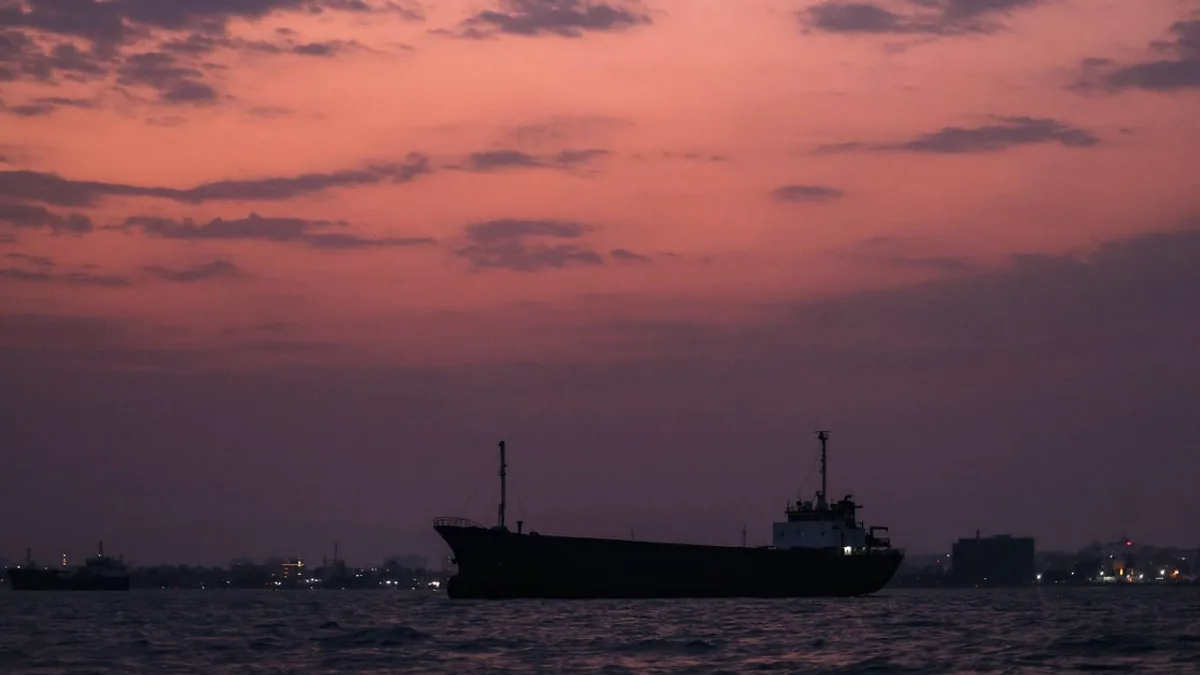
A specialist tanker-tracking service confirmed Iran’s first crude oil exports in two months by cross-referencing digital vessel data with satellite imagery. Two NITC supertankers, Diona and Hero 2, crossed the blockade line on Tuesday carrying a combined 3.8 million barrels. A third tanker, Sonia I, left the blockade on Wednesday at 01:11 GMT with about 1 million barrels, while the tanker Stream was sailing toward Iranian ports at the same time. Together, roughly 4.8 million barrels moved onto the world market.
Why is this more than a symbolic gesture?
The movement of these ships is measurable, physical proof that de-escalation is beginning on the water and not only on paper. Traffic through the strait had been largely blocked since February 28, 2026, when the United States and Israel launched war against Iran, so every full supertanker that clears the strait is a signal that oil traders read before they read any diplomatic statement. Prices fell almost immediately on news that the Strait of Hormuz would reopen, a sign of how seriously the market took this first departure of ships.
Behind the physical movement sits a legal framework. According to the announcements, Washington will allow Iran to begin selling oil and fuel immediately under the memorandum, with sanctions waivers covering banking, transport and insurance. Those three sectors are, in practice, the backbone of any oil trade, because without vessel insurance and access to banking channels no buyer can legally take delivery of a cargo. The fact that the tankers set out before the agreement was formally signed suggests both sides are counting on the document being ratified.
What does this mean for Serbia and the region?
The reopening of one of the world’s most important shipping lanes for oil may look remote, but through the price of a barrel it reaches every European economy that depends on imports, including Serbia’s. A lower price for crude on the world market eventually feeds into the cost of fuel and of production, while stability in the Gulf reduces the risk of the sudden spikes that strain the budget. For the region, which is watching both the energy and the diplomatic dimension of this war, any sign that the announced agreement is being carried out in practice is worth more than formal declarations.
The high-level diplomacy taking shape in Switzerland thus found its advance party in four tankers that, quietly, took the first concrete step. The question that remains for readers is whether the signed agreement will truly bring a lasting reopening of the strait and more predictable fuel prices, or whether this first departure of tankers is only a brief pause in a conflict that is not yet over?