Iran Again Closes Hormuz, Accuses US and Israel of Breach
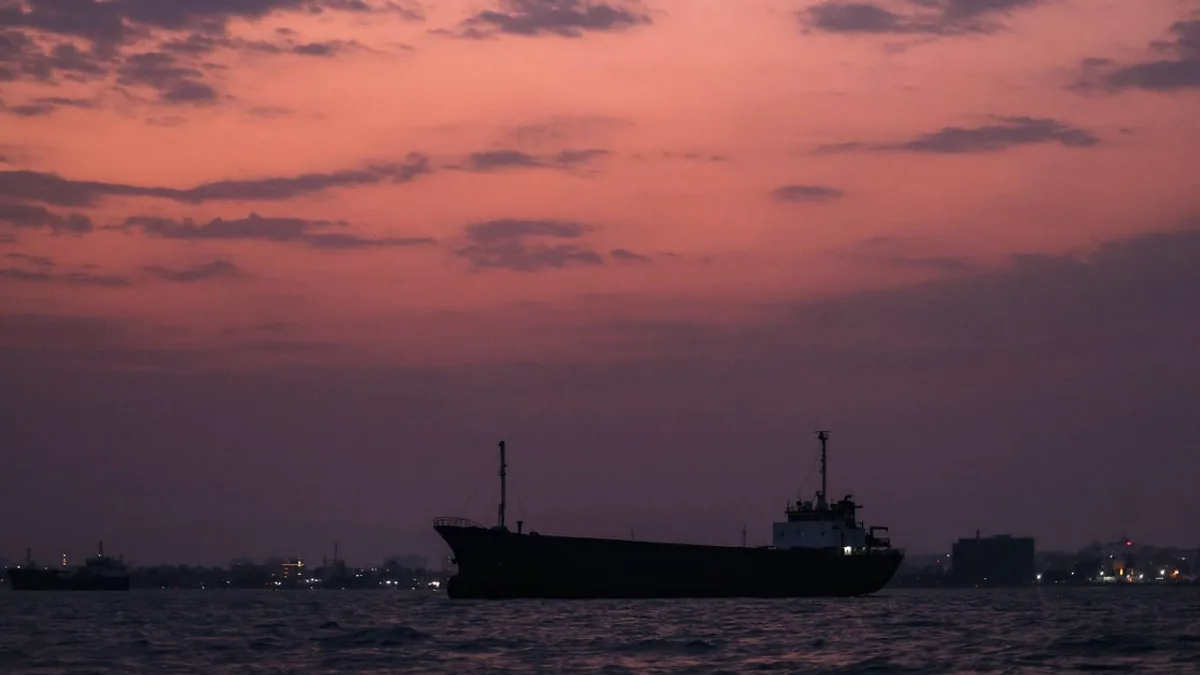
Tehran declared the Strait of Hormuz closed again on June 20, citing Israeli troops in Lebanon as a breach of the memorandum. US Centcom denies Iran controls the waterway.

- On June 20, Iran again declared the Strait of Hormuz closed, citing the presence of Israeli troops in Lebanon as a breach of the signed memorandum.
- The Revolutionary Guard warned vessels to stay away because their safety would be at risk, while the military command called the move a first step in its response.
- US Central Command denied the claims: Iran does not control the strait, and traffic is continuing.
- Earlier that same day, 55 commercial ships carrying about 17 million barrels of oil passed through the strait.
For a country that pays for fuel and heating at prices tied to the world market, every crisis in the Strait of Hormuz reaches Serbian filling stations before it reaches the headlines. That is why Tehran’s June 20 decision, declaring this narrow waterway closed for the second time in a short span, is news that concerns Belgrade and not only the Gulf. Iran cites the presence of Israeli troops in Lebanon as its reason, reading it as a breach of the memorandum of understanding, a document whose signing only weeks ago looked like the start of a de-escalation.
The Revolutionary Guard, the elite branch of Iran’s armed forces, issued a warning that vessels should not approach the strait because, as it stated, their safety would be compromised. Iran’s joint military command described the move as a first step in its response to what Tehran calls a failure by the United States and Israel to honor their commitments. This is language that leaves room for escalation but also for retreat, a pattern Iranian diplomacy uses when it wants to send a message without fully closing the door.
Can Iran really close the strait?
US Central Command, better known as Centcom, quickly rejected the Iranian announcement. Its statement said Iran does not control the Strait of Hormuz and that traffic is continuing, an effort by Washington to calm markets before panic could push the price of a barrel higher. The figures support that claim. Earlier the same day, before the closure was announced, 55 commercial ships carrying about 17 million barrels of oil passed through the strait, a recovery after weeks of restrictions that suggested the declared closure is, for now, exactly that: a declaration.
The geopolitical reality of the strait, however, is more complicated than the simple question of who physically holds it. Iran does not need to block the entire waterway to cause disruption. It is enough for insurers to raise premiums, for companies to reroute ships, for deliveries to slow. The market reacts to risk, not only to an actual closure, and it is precisely on that distinction that Tehran builds its bargaining power. Traffic that continues and a threat that hangs in the air can exist at the same time.
What a closure means for Europe and the region
Brussels is watching this episode with an unease it does not voice loudly. The European Union’s High Representative for foreign affairs has already, during earlier Gulf crises, called for restraint and open diplomatic channels, while the European Commission has repeatedly stressed that the security of energy routes is part of the European security calculation. For the Union, which redirected part of its imports toward other suppliers after Russia’s invasion of Ukraine, every new shock in the Middle East means its room to maneuver narrows further.
For Serbia and the region the implication is concrete and measurable. World-market oil prices spill over into prices at the pump, into transport costs, into inflation felt in every household budget. The countries of the Western Balkans, which import most of their energy, lack the instruments to absorb sudden price spikes the way large economies can. A diplomatic channel leading toward a renewed calm is therefore not an abstraction from distant capitals but a question that touches household finances directly.
For now there is one thing that both Tehran and Washington appear to want to avoid, namely the moment when rhetoric turns into an actual incident on the water. The memorandum that was meant to be the basis for a truce is now the subject of a dispute over who broke it first. If closing the strait is truly only a first step, as Iran’s military command says, how many steps will it take before one of the actors decides to return to the table rather than send the next message through the shipping lanes?