Dinar mid-rate against euro steady at 117.4
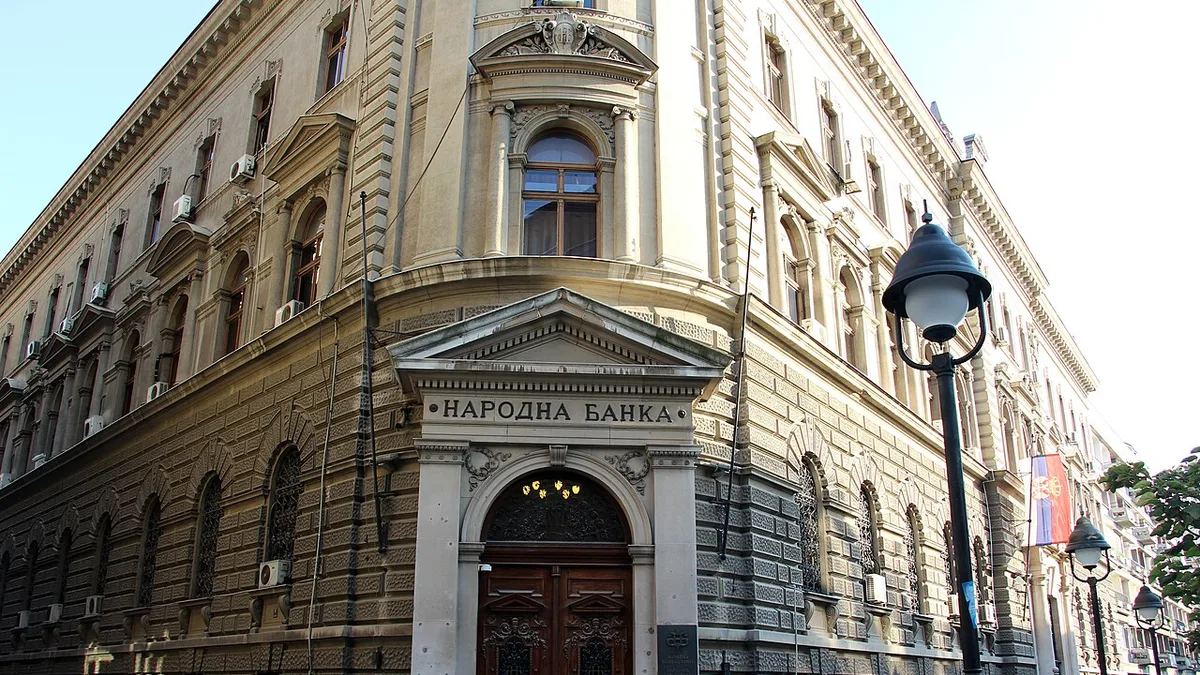
The official mid-rate set by the National Bank of Serbia for 25 May 2026 stands at 117.4182 dinars to one euro, continuing a stretch of more than 18 months inside a band of barely 0.1 per cent.

The official mid-rate of the dinar against the euro, published by the National Bank of Serbia and effective from 8 a.m. on 25 May 2026, stands at 117.4182 dinars to one euro. Across the whole of May the rate has moved within a range of 117.3773 (6 May) to 117.4182 (25 May), an amplitude of under 0.04 per cent, according to data the NBS publishes on its official FX bulletin service.
Against the US dollar, by contrast, the rate has shown markedly more volatility over the same period. On 21 May the official rate was 101.1982 dinars to one dollar, while in the first week of the month it was closer to 103 dinars, reflecting dynamics on international EUR/USD markets. The spread between buying and selling rates at authorised retail bureaux in Belgrade has moved between 1.2 and 1.9 dinars per euro over the past seven days.
Mechanism of stability
The NBS maintains the rate against the euro through a managed float regime, with intervention purchases or sales on the interbank FX market whenever the rate nears the upper or lower edge of an informal corridor. According to governor Jorgovanka Tabakovic’s most recent half-year report to parliament, delivered in March, Serbia’s foreign currency reserves stood at 28.3 billion euros at the end of 2025, a level that covers more than nine months of goods and services imports.
Former NBS deputy governor Veroljub Dugalic told the daily Politika at the end of April that the current EUR/RSD stability has been “operationally achieved at the cost of routine intervention purchases of foreign currency in the combined monthly volume of 400 to 600 million euros”, offsetting above-average demand for dinars connected to public-sector external debt service.
What this means for citizens and companies
For exporters into the euro area, exchange-rate stability means predictability in margin calculations on a quarterly horizon, simplifying working-capital planning. For importers from countries where the dollar is strengthening, the picture is harder: margins on imported goods from China and the United States have faced 2 to 3 per cent cost-pressure risk over the past quarter. Banca Intesa, Komercijalna Banka and Banka Postanska Stedionica offer forward hedging products to corporate clients with annual turnover above 2 million euros, but according to the Association of Serbian Banks only around 11 per cent of the SME sector actively uses these instruments.
Historical context of stability
Today’s level of 117.4 dinars to one euro is much weaker (a stronger dinar) compared with 2003, when the dinar was reintroduced in its current form at around 65 dinars to one euro, but the global financial crisis of 2008 triggered a depreciation cycle that, by 2013, took the rate to parity at 115 dinars. Since 2017 the NBS has held a policy of stabilisation within a narrow band, which is also a feature that distinguishes Serbia from most other Western Balkans economies with more flexible exchange rate regimes. Over the same period the Albanian lek has appreciated by 22 per cent against the euro, while the Macedonian denar runs within a 0.5 per cent fixed-peg corridor in either direction.
What this means for business pricing
The stability of the EUR/RSD rate has a direct bearing on how companies set price lists. Retail chains Maxi, Idea and Lidl, which import a sizeable share of food products from the euro area, hold pre-VAT margins between 18 and 24 per cent according to the Belgrade Chamber of Commerce, a range that leaves room to absorb small exchange-rate swings without shelf-price changes. The industrial sector with exports to the euro area, particularly the automotive parts producers Yura Corporation, Brose and Continental, posts stable operating results in dinar terms, but loses competitiveness compared with producers in Romania and Bulgaria, where the local currency is more exposed to depreciation.
Spreads between banks and bureaux
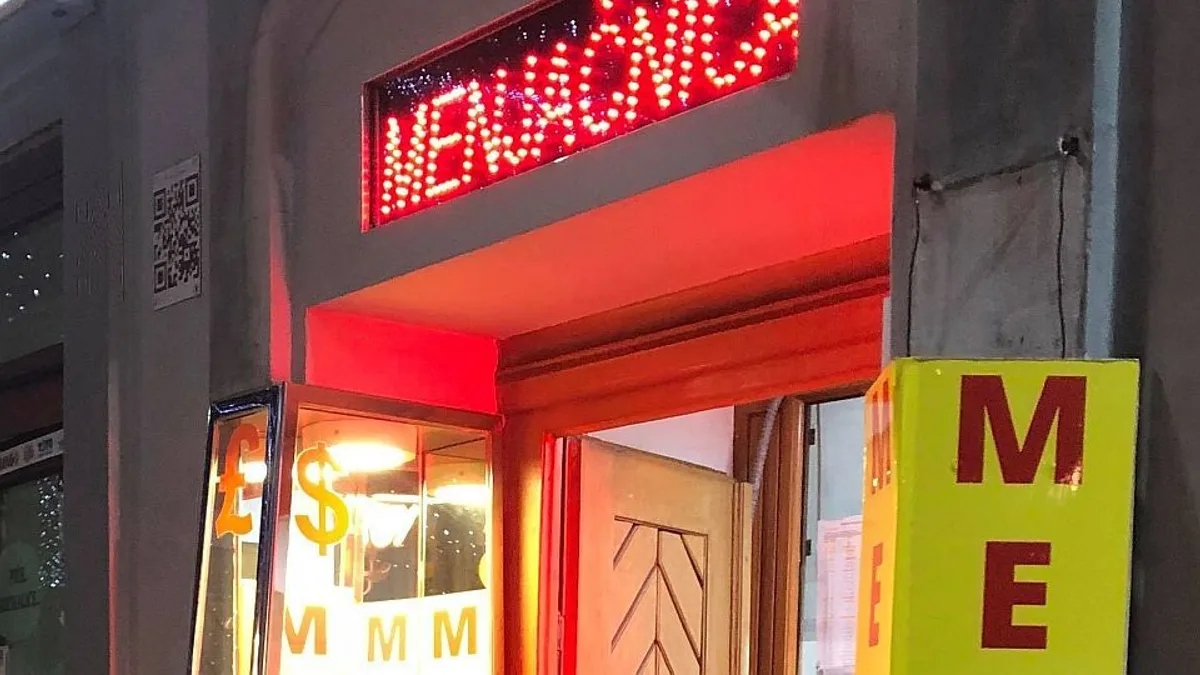
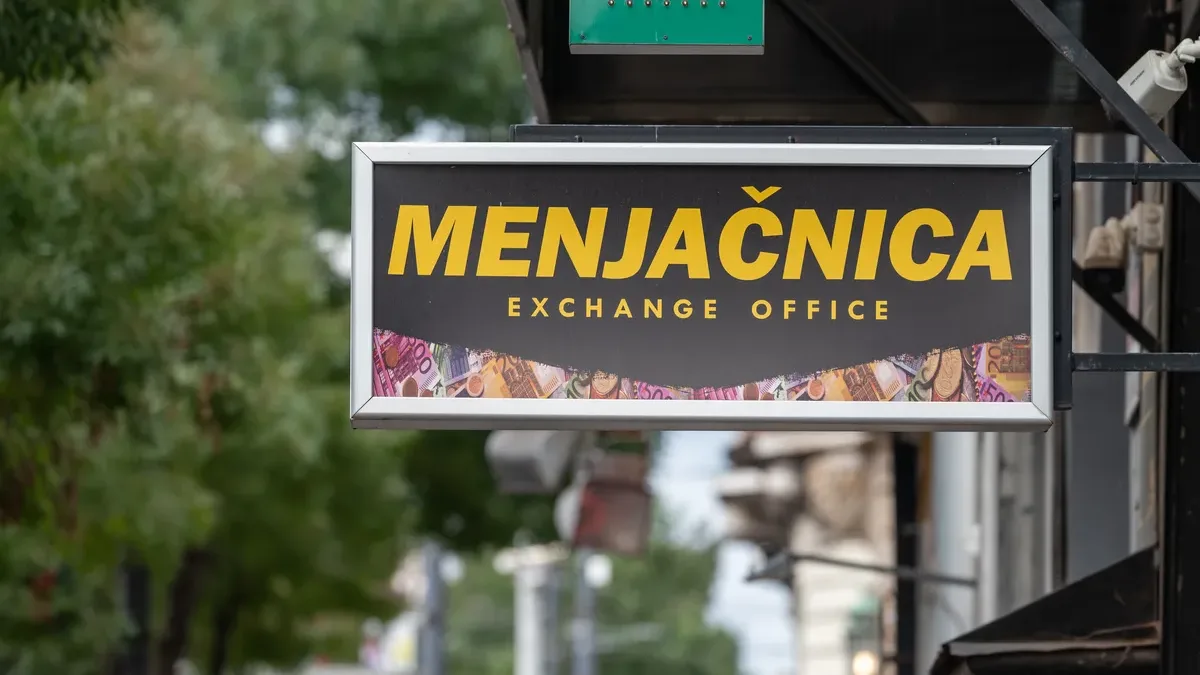
A customer changing 1,000 euros into dinars at the counter of the authorised Forex bureau near Republic Square in Belgrade on 25 May around noon receives 117,150 dinars, while the theoretical value at the NBS mid-rate would be 117,418 dinars. The difference of 268 dinars is the bureau’s margin, which on a small transaction is 0.23 per cent one-way. Commercial banks offer better rates to customers via mobile applications: in May, Banca Intesa and AIK Banka apply margins of 0.12 to 0.15 per cent one-way on transactions above 500 euros.
The next NBS Executive Board meeting on the policy rate is scheduled for 12 June 2026. The policy rate currently stands at 5.75 per cent and has been unchanged since February.